IPM for Harvesting, Pruning, and Defoliation
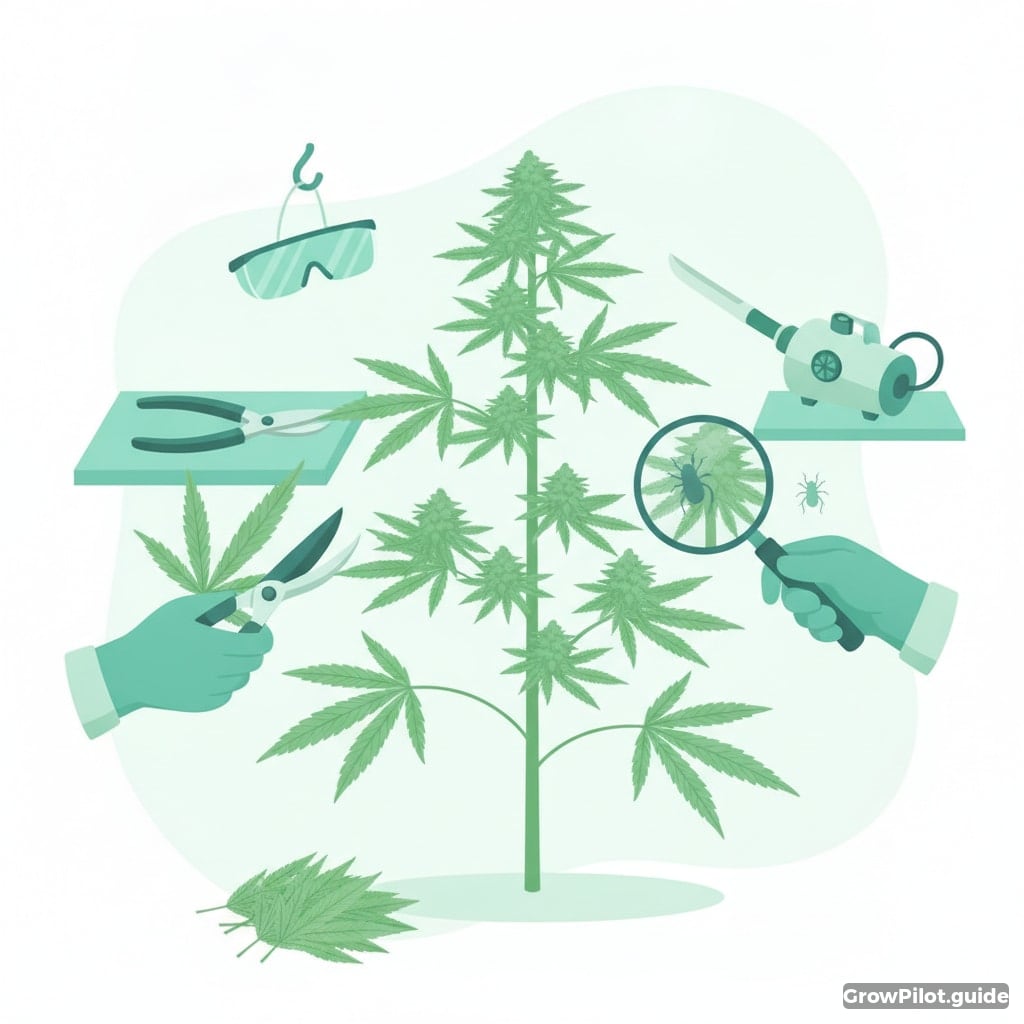
This guide shows you how to plan harvesting, pruning, and defoliation as a separate IPM risk window to specifically limit the spread of pests, wound stress, and the build-up of infestations.
Introduction
Pruning, defoliation, and harvesting operations constitute a distinct IPM risk window in cannabis cultivation. In a short period of time, many plants are handled, leaves and shoots are moved, tools are used repeatedly, and plant tissue is damaged. It is precisely during these activities that pests, eggs, spores, and contaminated plant sap can be mechanically spread from plant to plant or from zone to zone. At the same time, intensive handling causes short-term stress and alters the microclimate within the crop.
This guide therefore does not cover general hygiene throughout the grow operation or the diagnosis of individual pests, but rather the IPM strategy surrounding manual interventions on the plant.
Why These Tasks Are Relevant to IPM
Every manual intervention temporarily increases the risk of:
- mechanical spread via hands, gloves, shears, and clothing
- open wounds on petioles and shoots
- stress reactions if too much is done in a short period of time
- altered airflow in the crop after defoliation or pruning
- unnoticed spread of infested material through discarded cuttings
In this context, IPM means organizing the work so that the intervention itself does not become a means of spread.
Assess the Work Window in Advance
Do not plan major interventions blindly based on the calendar, but rather based on the condition of the stand. Before starting, check:
- Are there plants with suspicious spots that should be treated separately?
- Is the foliage dry? Wet surfaces increase the risk of spread and microbial pressure.
- Is the ambient air stable enough to mitigate additional stress after the intervention?
- Is there enough time to work carefully rather than hurriedly?
Postpone extensive work if plants are already significantly stressed or if there is an unclear suspicion within the population that must first be contained.
Order: Always from clean to risky
A key IPM principle for manual work is: treat the unremarkable plants first, and the risky ones last.
In practice, this means:
- Treat young, healthy, or unremarkable plants first.
- Handle plants with questionable symptoms separately and last.
- If possible, work by zones and avoid moving back and forth between areas.
- After handling plants showing symptoms, change gloves or wash your hands and disinfect tools.
This order reduces the likelihood of actively spreading problems throughout the space.
Tool and Hand Hygiene During Work
Scissors, knives, tying materials, and gloves are the most important vectors for disease transmission during these tasks. To maintain a clean IPM protocol:
- Only bring clean tools into the field.
- Clean cutting tools regularly, especially when switching between plants or zones.
- Do not let sticky plant residues dry, as particles will adhere to them.
- Keep a separate set of tools on hand for suspicious plants, if separation is possible.
- Change gloves as soon as they become heavily soiled or wet with plant sap.
Remove trimmings from the growing area immediately
Leaves and shoots left lying around increase the risk of biological material spreading throughout the room or being stirred up during subsequent movements. Therefore:
- Place trimmings directly into closed collection containers
- Do not place anything on the floor, on pots, or on the edges of the grow tent
- Remove collection containers from the growing area immediately after work
- Clean work surfaces upon completion
Especially during defoliation work involving large amounts of leaf matter, this point greatly determines whether the IPM protocol remains intact.
Stage Interventions Moderately Rather Than Aggressively
Excessive defoliation or severe pruning in a single pass can unnecessarily stress plants. Stressed plants are less able to compensate and become more susceptible to subsequent problems. From an IPM perspective, it therefore makes sense to:
- Divide major interventions, if possible, into clearly planned stages
- Do not remove more foliage than is necessary for air circulation, accessibility, and the intended work objective
- Allow plants time to stabilize between interventions
This is not a training manual, but an IPM principle: Work with minimal stress so as not to increase susceptibility yourself.
Follow-up Inspection Within 24 to 72 Hours
A brief IPM check should follow pruning or defoliation work. Observe:
- whether wound sites are drying cleanly
- whether new abnormalities appear in previously dense areas
- whether plants are drooping excessively or developing symptoms of stress
- whether any residues were overlooked on surfaces or tools
This follow-up check is important because some problems do not become visible during the work itself, but only shortly afterward.
Harvesting as a Key IPM Moment
Harvesting is also a manual process with a high risk of contaminant carryover. Therefore, the same principles apply:
- a clean sequence of operations
- clear separation of work materials
- immediate removal of plant debris
- Cleaning of areas and tools upon completion
After harvest, plants are no longer watered. The harvested material should be placed in a clean drying environment with proper air circulation to ensure the harvest process does not lead to a hygiene issue.
Conclusion
Pruning, defoliation, and harvesting are not merely routine tasks, but critical IPM moments. Organizing the work sequence, tool hygiene, pruning waste management, and follow-up checks properly significantly reduces the risk of contamination. Above all, good IPM practice here means working calmly, separately, cleanly, and in a traceable manner.
Pro Tips
- Always start by pruning the plants that aren't very noticeable.
- Clean cutting tools even while you're working.
- Don't leave any clippings in the stand.
- Plan major pruning only when the leaves are dry.
- Check the inventory again 1 to 3 days later.
More Growing Knowledge & Smart Grow Help
GrowPilot.guide is the cannabis grow tracker and weed cultivation app with smart plant analysis, indoor cannabis growing guide, grow diary, community, cups and autoflower grow tracker for growers worldwide.
Open GrowPilot.guide App →