Tea Time: Genetics, Growth, and What Is Known About the Variety

Tea Time is a modern hybrid strain that has been relatively rarely documented. This article provides a source-critical analysis of its genetics, growth, flowering, terpenes, effects, and practical growing tips.
# Tea Time: Genetics, Growth, and What Is Known About the Strain
Tea Time is not a strain that is as consistently documented in international strain archives as White Widow, Northern Lights, or OG Kush. This is precisely the most important starting point for a reliable classification. While the name appears repeatedly in seed bank listings, forums, strain databases, and grower reports, the information regarding its lineage, growth habit, and aroma profile does not always match up completely. For growers, this means that the strain name alone is not sufficient to establish reliable expectations regarding structure, flowering time, or yield. The specific breeder, the stated parent lines, and the phenotypes actually observed are always decisive.
Despite this variation, a cautious set of core characteristics can be described. Tea Time is classified in several descriptions as a modern hybrid line with a breeding focus on aroma. Recurring descriptions include sweet-spicy, herbal, and sometimes citrusy or floral notes, along with generally medium growth and a structure that, depending on the phenotype, can range from compact and bushy to moderately tall and slender. Those who grow Tea Time should therefore work less with a rigid strain profile and more with a phenotype range.
What is truly established regarding Tea Time’s genetics?
The name Tea Time has not yet been established worldwide as a clearly standardized elite line. Unlike clone-only classics or historically well-documented seed bank strains, there is often a lack of a source history consolidated over many years. This has several consequences:
- Different suppliers may offer non-identical lines under the same name.
- Individual plant batches may show visibly greater variation than with more stable classics.
- Statements regarding THC content, flowering time, or yield should always be understood as range-based approximations.
From a critical evaluation of sources, the available data suggests that Tea Time should be understood not as a genetically fully standardized variety, but rather as a phenotypically variable hybrid family with a stable name. This is not a judgment of quality, but rather a classification based on the available documentation.
How does Tea Time typically grow?
In recurring descriptions, Tea Time usually exhibits medium-sized hybrid growth. Many reports point to a plant that produces a good number of side shoots during the vegetative phase without automatically becoming extremely wide or extremely tall. The stretch during early flowering is generally described as moderate to medium, but can be more pronounced depending on the phenotype if Sativa-dominant traits come through.
Typical structural characteristics mentioned in several grower reports:
- medium internode spacing
- good to solid lateral branching
- Generally even canopy formation after training
- Flowering pattern ranging from moderately compact to compact, depending on the phenotype
Training and Structure Management
Tea Time generally appears to be suitable for classic methods of canopy management:
- LST can help bring side shoots up to light level early on.
- Topping is usually well tolerated by sufficiently vigorous plants.
- Defoliation should be done in moderation, as heavy defoliation can increase stress depending on the phenotype.
- A SCROG net can make better use of the space for plants that tend to stretch.
What flowering time and yield are realistic?
Since Tea Time is not a uniform strain across the board, flowering time and yield estimates should never be taken as fixed targets. The range indicated by breeder data and practical reports suggests a medium flowering time. For photoperiodic versions, many descriptions fall within the range of approximately 8 to 10 weeks of flowering. Some phenotypes may be ready slightly earlier, while others take longer if they mature with a more airy structure or exhibit stronger sativa characteristics.
When it comes to yield, it’s wise to be conservative. Exaggerated catalog figures are of little help in practice. In well-managed indoor setups, a range of around 350 to 500 g/m² seems more realistic, although phenotype, light levels, pot size, training, and climate play a major role. Outdoors, under favorable conditions, moderate to good yields per plant are reported, though without the consistency of classic high-yield strains like Critical or Moby Dick.
What factors particularly influence yield?
- Stability of the specific seed line
- Early control of stretching
- Adequate light distribution to the side shoots
- Careful moisture management during late flowering
- Restrained nitrogen application after the transition to flowering
How does Tea Time smell and taste?
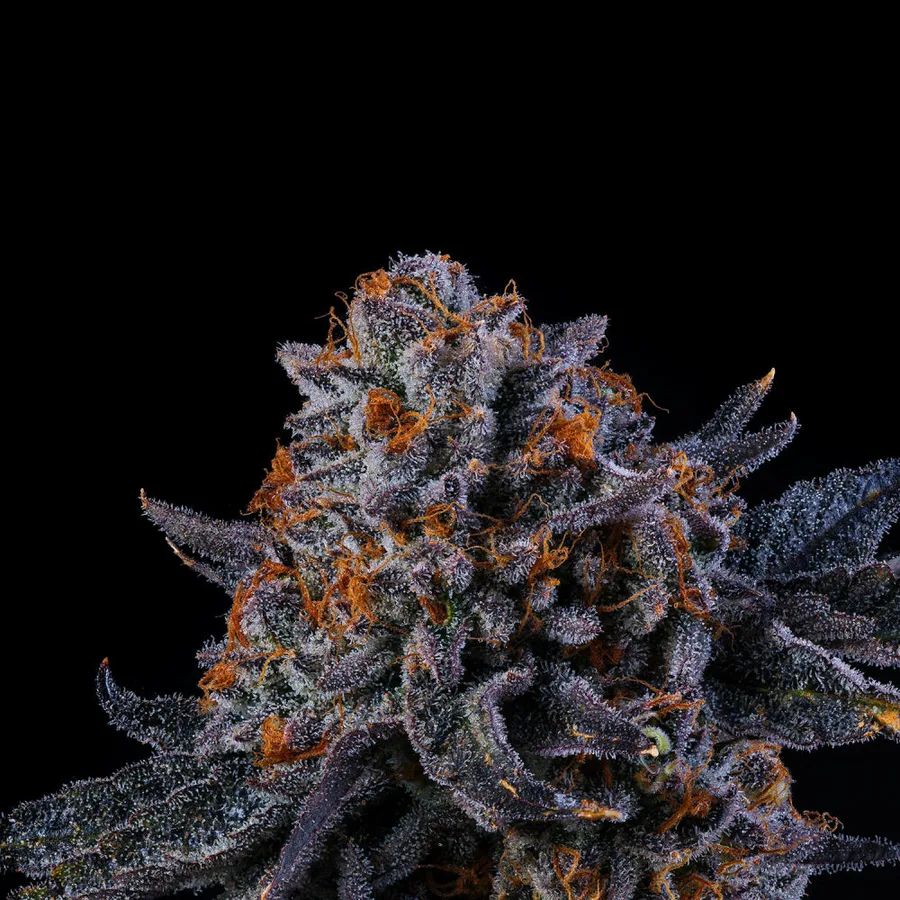
The aroma profile is the area where the name “Tea Time” raises the highest expectations. The available descriptions actually point more frequently to a herbal-spicy, sweet, and partly floral profile than to a heavy fuel or dessert dominance. Recurring comparisons include herbs, mild spices, citrus peel, floral notes, and occasionally slightly creamy or earthy undertones.
Regarding the terpene profile, no reliable conclusions can be drawn without batch-specific laboratory data. However, based on the odor descriptions, it can be cautiously inferred that, depending on the phenotype, terpenes such as limonene, caryophyllene, myrcene, and in some cases linalool or humulene might play a role. This classification remains an aroma interpretation, not laboratory confirmation. Reliable statements would require specific analyses of the respective batch.
What effects do growers and users describe?
The same applies to the effects: statements from user reports are subjective experiences and not medical facts. In recurring descriptions, Tea Time is generally classified as a balanced hybrid. Frequently mentioned effects include:
- a calm, clear onset
- mild mental clarity or focus
- later, a tendency toward physical relaxation
- overall, a balanced rather than extreme effect profile
Who is Tea Time suitable for when growing?
Based on the available information, Tea Time does not seem like a particularly dangerous choice for beginners, but it’s also not a strain that can be grown entirely without supervision. The level of difficulty falls more in the lower to mid-range. Those who already have a feel for climate, watering schedules, and canopy management should be able to handle this strain better than someone who treats every breeder’s specification as a fixed, final value.
Tea Time seems particularly well-suited for growers who:
- are looking for a spicy-floral profile rather than a purely gassy or dessert-like one
- prefer medium plant heights
- can handle phenotypic variation
- don’t select a strain based solely on maximum yield
What should growers pay special attention to with Tea Time?
The most important rule is: observe first, then optimize. Especially with less standardized strains, it makes sense to document as many characteristics as possible during the first few weeks. These include leaf placement, internode spacing, response to feeding, and the rate of stretching.
Practical Growing Tips
- Temperature: Moderately warm during the vegetative stage; during flowering, avoid sharp temperature spikes. Excessively high leaf and flower temperatures can negatively affect terpene expression and flower structure.
- Humidity: Moderate in the early phase; reduce significantly in late flowering, especially for more compact phenotypes.
- Air Movement: Consistent air circulation helps reduce the microclimate within the canopy.
- Nutrients: Increase gradually rather than fertilizing aggressively. Aroma-focused hybrids are reportedly sometimes more sensitive to over-fertilization than to slightly conservative feeding schedules.
- Training: Start early. If you wait too long to correct the stretch, you’ll quickly lose control of the canopy.
- Harvest window: Don’t rely solely on the calendar; instead, evaluate trichomes, bud swelling, and the withering of fresh stigmas together.
Conclusion: Is Tea Time Worth It?
Tea Time is particularly interesting for growers who want to work outside the realm of fully defined mainstream classics and are willing to critically evaluate a strain’s origins. The available data points to an aromatically interesting hybrid line with mostly medium growth, medium flowering time, and a profile ranging from sweet, herbal, spicy, and floral. At the same time, this strain isn’t one to meet rigid expectations. Anyone growing Tea Time should take its specific breeding background seriously, expect phenotypic variation, and actively monitor the plants. That’s exactly when the strain can truly shine: not as a myth, but as a well-managed, characterful hybrid.
Frequently asked questions about Tea Time
What is actually known about Tea Time's genetics?
According to the article, Tea Time is not a clearly standardized elite line recognized worldwide. The available data suggests it is more likely a hybrid family with a consistent name but phenotypically variable, in which the specific breeder and the stated parent line serve as the most important reference.
How does Tea Time typically grow?
Tea Time is usually described in the recurring description image as a medium-sized hybrid with solid lateral branching. Its stretch during early flowering is generally considered moderate to medium, but can be more pronounced depending on the phenotype.
What is a realistic flowering period for "Tea Time"?
Flowering times listed in Tea Time should not be interpreted as strict targets, because there is no single, uniform timeline that applies everywhere. The article often specifies a range of about 8 to 10 weeks for photoperiod varieties, although individual phenotypes may mature earlier or later.
According to the descriptions provided, what does Tea Time smell and taste like?
The descriptions often point to a herbaceous, spicy, sweet, and sometimes floral profile. Herbs, mild spices, citrus zest, floral notes, and occasionally slightly creamy or earthy undertones are frequently mentioned.
Who is "Tea Time" at Grow particularly suited for?
According to the article, Tea Time doesn't seem like a major pitfall for beginners, but it does require careful observation and a realistic approach to phenotypic variation. It seems particularly well-suited for growers who are looking for spicy-floral profiles, medium plant heights, and don't require maximum uniformity.
Matching seeds from our partner
PARTNER OFFER
TEA TIME - Feminisierte Cannabis-Samen
Available from 10 % Vorteil bei CANA TRAVA – exklusiv für GrowPilot.guide Nutzer
Fruity, sweet, candy-like. fem; 50/50 Indica/Sativa. 8–9 weeks flowering. Breeding goal (according to the breeder): 22% THC.
Product details and prices supplied by the partner.


