Digital harvest monitoring and drying optimization
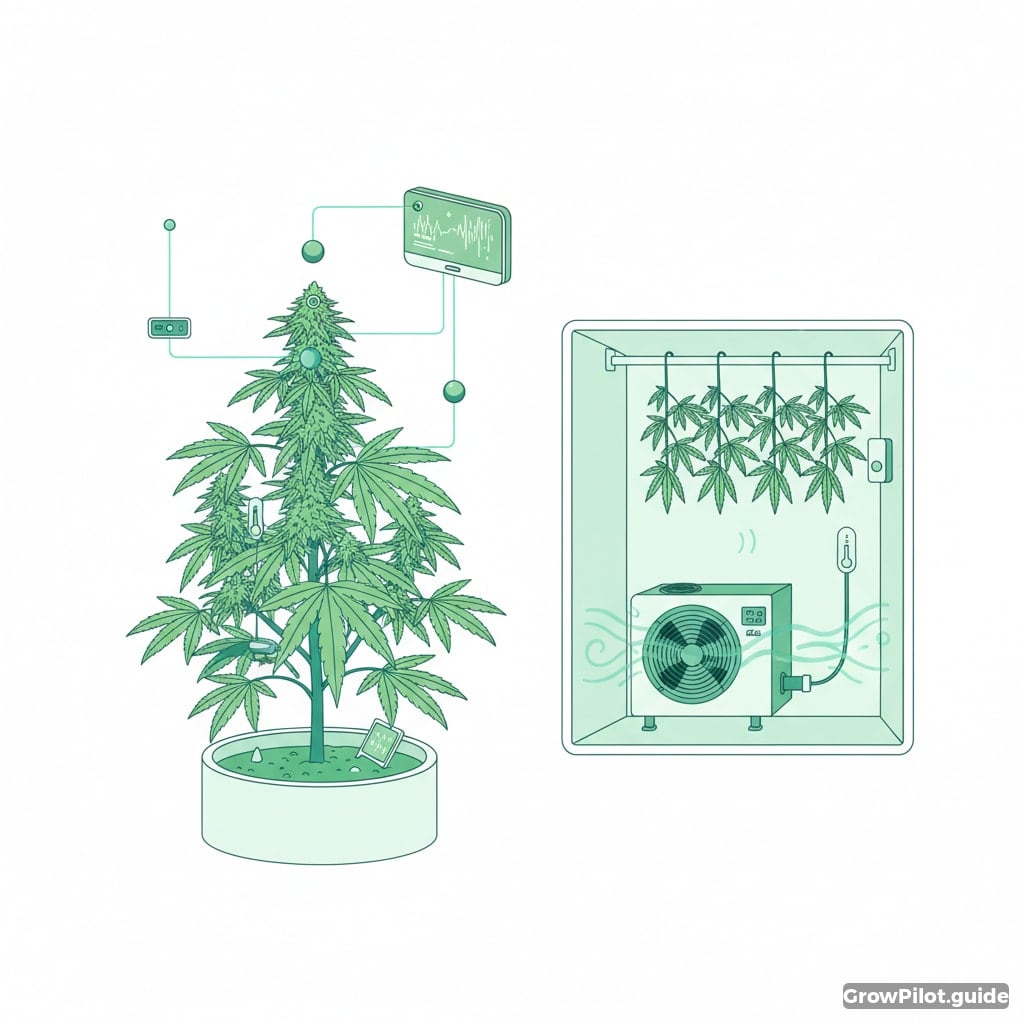
Monitor and optimize hydroponic harvesting processes using digital sensor technology: from precise pruning to data-based drying and curing management.
Introduction
Hydroponically grown cannabis plants require special care in the harvesting process. In addition to the precise determination of the harvest time based on the trichomes, post-harvest treatment is particularly important. In this guide, you will learn how digital sensor technology and data-based monitoring optimize drying and curing management. This is intended exclusively for hydroponic growers where parameters such as pH (5.5-6.0), EC values and water temperature (18-22 °C) are critically controlled - even in the transition to the harvest phase.
1 Hydrophilic harvesting process - special features in hydroponics
In hydroponic cultivation, the roots accumulate nutrient salts and organic substances, which behave significantly after harvesting. Unlike in soil-based cultivation, a targeted flush is often carried out to minimize salt residues. During the harvest itself, it is essential to carry out the cut quickly and cleanly, as fresh hydroponic plants do not receive any additional watering. Even the slightest mechanical damage can lead to an increased loss of terpenes under hydroponic conditions.
2 Use of digital sensors in the harvesting process
Digital monitoring can make all the difference, especially in the transformation phase from freshly cut bud to optimally drying flower. Modern approaches use IoT sensors that measure parameters such as:
- Humidity (target: constant 60% RH)
- Room temperature** (between 18-22 °C)
- Air circulation**
- light intensity (ideally complete darkness in the drying room)
measure continuously. Wireless data loggers record and visualize all measured values in real time. This makes it possible to adjust the drying process based on the data. For example, in the event of unexpected temperature fluctuations, immediate action can be taken and the ventilation modified to ensure optimum conditions.
3 Digitally assisted drying and curing
After precise pruning, the hydroponic buds should be quickly transferred to the drying room. Digital sensors help to control the process optimally:
- Drying phase: Hang the buds in a darkened room. Continuously monitor the humidity and temperature. For hydroponics, an even 60 % RH and 18-22 °C are ideal to prevent mold infestation and ensure gentle terpene preservation. Alarm signals emitted by the sensors can be used to intervene immediately in the event of subtle deviations.
- Curing phase:** After around 10 to 14 days of drying, curing takes place in airtight containers. Here it is important to keep the humidity inside the jars stable (optimally 55-65% RH) for weeks and months. Digitally monitored environments facilitate burping (ventilation) - either manually or via an automated system - and thus help to avoid temperature fluctuations and excessive moisture build-up.
4 Data-based analysis and optimization
The data collected during the drying and curing phase provides valuable information:
- Trend analyses: The graphical display of temperature and humidity curves allows you to recognize fluctuations and plan future harvests better.
- Alerting:** If a critical value (e.g. humidity > 65% RH) is reached, you will receive an immediate notification so that you can take immediate action.
- Comparative analyses:** By comparing several harvest cycles, specific adjustments can be made to optimize quality consistency.
Conclusion
Data-based harvest management is an effective means of ensuring the postharvest quality of your cannabis buds, especially in hydroponic cultivation. By using state-of-the-art sensor technology to monitor humidity, temperature and air circulation during the drying and curing phase, you can implement largely automated and precise processes. This digital harvest monitoring ensures that no compromises are made in terms of flower quality despite hydroponic peculiarities. Invest in the appropriate technology not only to optimize the harvesting process, but also to ensure the consistency and top quality of your produce in the long term.
Use the possibilities of digital data acquisition to react precisely to changes and continuously improve your harvest conditions. In the dynamic world of hydroponic cultivation, this is a decisive competitive advantage.
Pro Tips
- Calibrate sensors before starting the harvest.
- Create regular measurement logs.
- Use alarm systems for critical parameters.
- Ensure constant air circulation in the drying room.
- Compare data from different harvest cycles.
Frequently Asked Questions
How can I use digital sensors to monitor my cannabis crop?
Digital sensors can be used to monitor temperature, humidity, and light conditions in order to ensure optimal growing conditions and precisely determine the harvest time.
What are the best methods for drying cannabis after harvest?
The best drying methods involve using controlled environments with low humidity and optimal temperatures to prevent mold growth and preserve the terpenes.
How can I optimize the curing process for cannabis?
The curing process can be optimized by regularly opening the containers to allow for ventilation and by monitoring humidity levels with digital sensors to promote even curing and preserve the flavors.