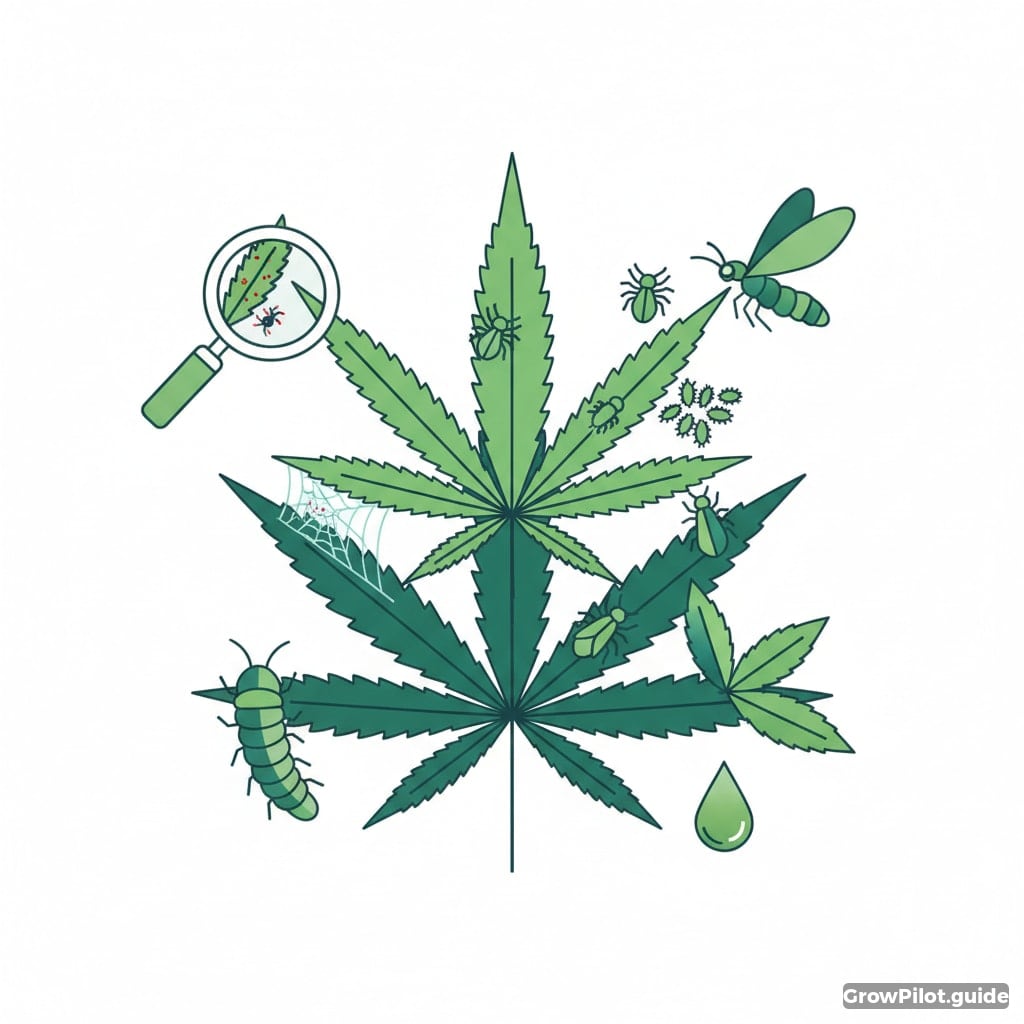
Indoor pest control: strategies for stable plant populations
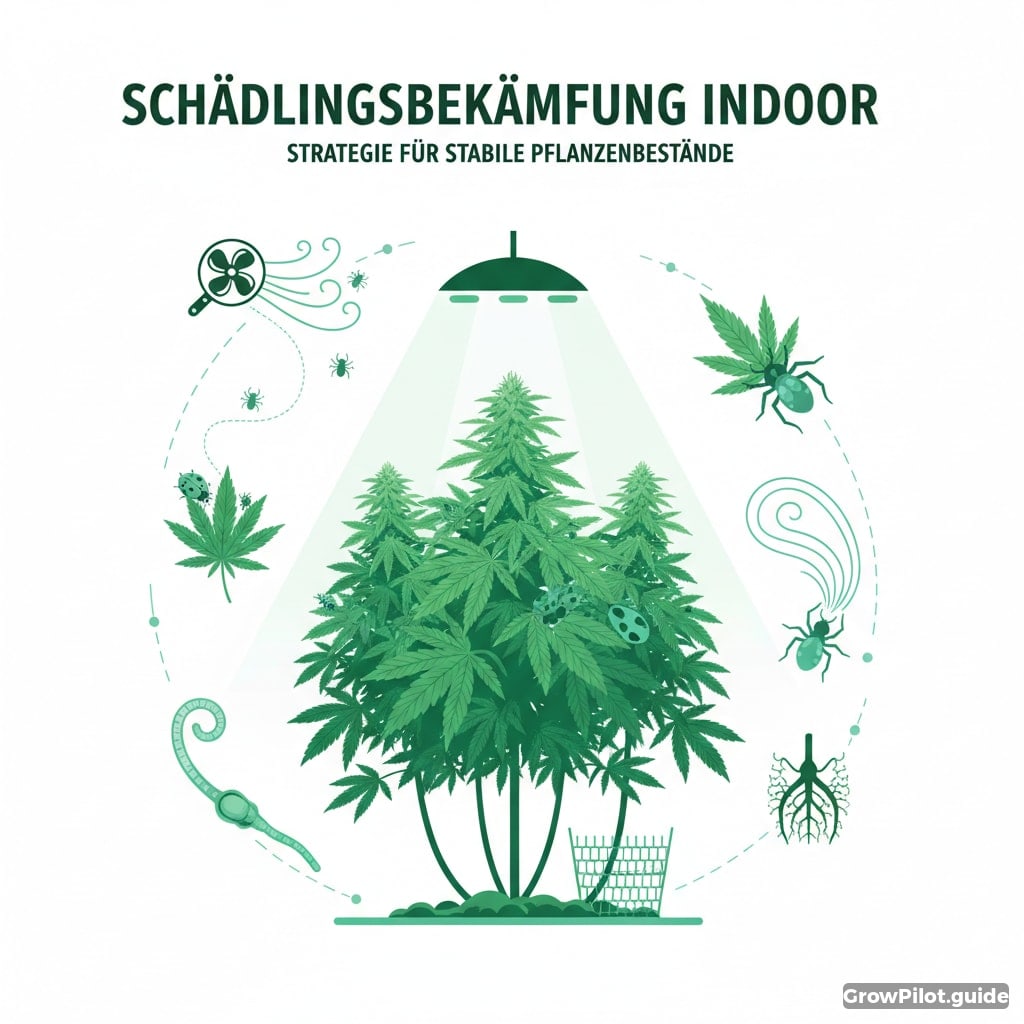
Practical guide to indoor pest control: reducing infestation pressure, using beneficial insects sensibly, avoiding mistakes and systematically coordinating measures.
Indoor pest control works best if you do not only react when there is a visible mass infestation. Indoor pest control is above all a system of observation, hygiene, climate control and appropriate countermeasures that suit the respective pest and crop phase.
Unlike outdoors, indoors there is often a lack of natural balance with weather changes and antagonists. At the same time, constant temperatures, dense plant growth and recurring work processes create conditions under which certain pests can multiply very quickly. This is precisely why a clear plan is worthwhile: first recognize, then classify, then take targeted action.
Why do pests often escalate so quickly in indoor cultivation?
Several factors come together in indoor cultivation:
- Constant warmth accelerates the development of many species from egg to adult.
- Dry air** often favors spider mites, while permanently moist substrate surfaces promote fungus gnats.
- Dense vegetation** makes air movement and visual inspection more difficult.
- Lack of beneficial fauna** means that pests often spread unchecked.
- Entry from outside** via clothing, cuttings, tools, soil or ornamental plants is often underestimated.
Which pests are particularly common in indoor cultivation?
Correct classification is crucial for indoor pest control. Similar damage patterns can have different causes.
Fungus gnats
Typical are small dark flies above the substrate. The larvae in permanently moist soil are particularly problematic. They feed mainly on organic material and microorganisms, but can also damage young roots and seedlings if they are heavily infested.
Spider mites
They often sit on the undersides of leaves, causing fine light-colored speckles and later webs. Warm, dry air significantly increases the risk. Due to their rapid reproduction, they are one of the most persistent problems indoors.
Thrips
Thrips leave behind silvery-looking feeding marks, dotted droppings and like to sit in protected leaf areas. They are good at hiding and are therefore often only noticed late.
Aphids and whiteflies
These pests suck on plant tissue and excrete honeydew, on which sooty mold fungi can colonize. In indoor setups, they are less common than fungus gnats, spider mites or thrips, but by no means impossible.
How do you recognize an infestation early enough?
Early detection is the most important lever. Indoor pest control** will be much easier if you don't react when many plants are already showing visible damage.
Weekly control routine
Schedule at least two short visual inspections per week, or more frequently for young plants:
- Check the upper leaf surfaces for speckles, brightening and deformation
- Check the undersides of leaves with a magnifying glass
- Look at shoot tips and young leaves
- Observe substrate surface for larvae, algae film and flying insects
- Only use yellow or blue boards for monitoring, not as the sole solution
Typical warning signs
- Individual light spots on leaves
- silvery scrape marks
- sticky coatings due to honeydew
- Sudden decline in growth without any recognizable nutrient cause
- small flying insects when watering or moving the pot
What is part of an effective prevention strategy?
The best indoor pest control starts before the first infestation.
Hygiene in the work process
- First observe new plants separately
- Clean tools, scissors and coasters regularly
- Remove plant debris and dead material immediately
- Do not place garden plants or cut flowers directly in the grow room
- Change work clothes after contact with the garden or balcony if problems are already known
Keep climate and irrigation clean
- Avoid waterlogging
- Allow the substrate surface to dry out properly between watering, as far as the plant phase allows
- Improve air movement without permanently stressing plants
- Do not set the temperature and humidity to unnecessarily extreme levels
Quarantine and incoming inspection
A common mistake made by beginners is to integrate new plants or cuttings immediately. A separate observation phase with close inspection of the undersides of leaves, shoot tips and substrate makes sense.
Which measures help against which pest?
Not every method is suitable for every species. This is precisely where indoor pest control often fails in practice.
Against fungus gnats
- Check watering rhythm and reduce surface moisture
- Keep infested areas clean
- Nematodes of the species Steinernema feltiae are used against larvae in commercial and hobby horticulture
- Yellow charts help to detect adults and monitor their progress
Against spider mites
- Remove heavily infested leaves early if the plant condition allows it
- Improve plant spacing and air movement
- Biological antagonists such as predatory mites are often used in protected cultivation
- Monitor the infestation closely, as relapses are frequent
Against thrips
- Use blue boards for observation
- Check the undersides of leaves and young plant parts particularly thoroughly
- Predatory mites and other beneficial insects may be used depending on crop management
- Do not move infested plants unnecessarily between healthy crops
Against aphids and whiteflies
- Remove local infestations early
- Clean honeydew and soiled areas
- Beneficial insects can also be part of an integrated strategy here
- Avoid nitrogen oversupply, as very soft tissue can favor pests
How useful are beneficial insects in hobby growing?
Beneficial organisms are not a panacea, but they are scientifically well-established components of integrated pest management. Their success depends heavily on which pest is present, how early they are used and whether the climate and application are suitable.
It is important to set expectations: beneficial insects work biologically, not abruptly. They are particularly suitable for early to medium infestation pressure and as part of an overall plan. If plants are already heavily infested with webs, larvae or extensive damage, late application of beneficial insects alone is often no longer sufficient.
What are the most common mistakes made by beginners when controlling pests?
- Reacting too late:** Not acting until many plants are visibly damaged
- Misidentifying:** Confusing thrips with spider mites or watering problems with pest damage
- Change everything at the same time:** Adjusting climate, fertilizer, watering quantity and agents in parallel makes causes unclear
- Only control adults:** In the case of fungus gnats, for example, the relevant stages are in the substrate
- End control too early:** New generations often hatch after apparent improvement
Step by step: How to take a structured approach to infestation
1. confirm infestation
- Use a magnifying glass
- Check the undersides of the leaves
- Evaluate panels and damage pattern together
2. assess the extent
- single plant or several?
- Only a few leaves or over a large area?
- only adults or also larvae, eggs, webs?
3. check cultivation conditions
- Watering behavior
- Air humidity
- temperature
- Air movement
- Plant spacing
4. choose the appropriate measure
- Remove mechanically where appropriate
- Improve hygiene
- Use beneficial organisms or other suitable methods appropriate to the pest
5. document progress
- Note the date
- Roughly record the level of infestation
- Check again after 3 to 7 days
Conclusion
Indoor pest control is not a single measure, but a properly structured management system. Reducing entry paths, regularly checking plants, maintaining a stable climate and irrigation and tailoring measures to the actual pest significantly reduces the risk. The biggest difference between a persistent problem and a manageable situation is usually not the strongest remedy, but the early, systematic response.