Vertical cannabis cultivation: efficient use of space
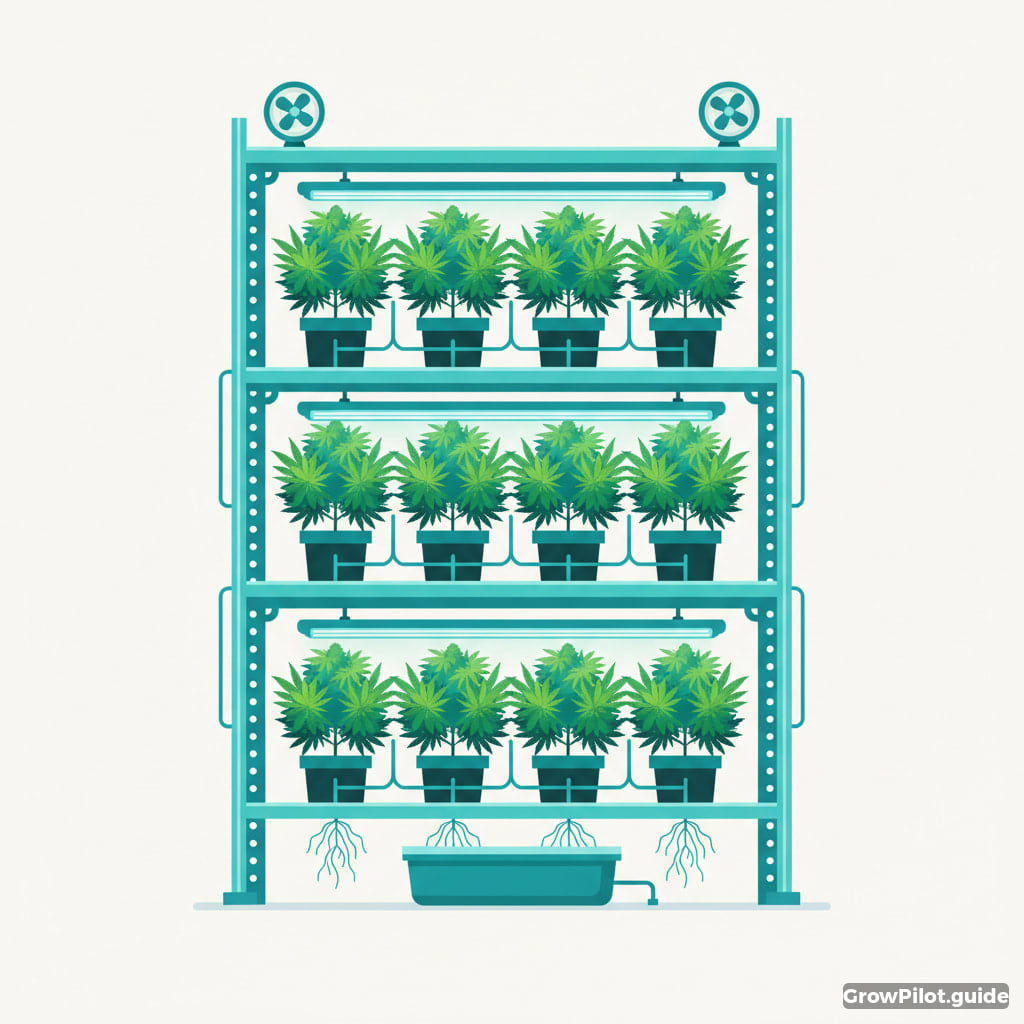
Vertical cannabis cultivation: make the most of indoor floor space — planning, setup and adapting lighting and climate for maximum yield.
Introduction
Vertical cultivation offers a modern method of making optimum use of the limited square meters available in an indoor grow. This technique is becoming increasingly popular, especially in urban environments or among hobby growers who want to maximize the available space. In this guide, you will learn how to plan and implement a vertical cultivation system professionally. We emphasize scientifically sound principles and practical tips to sustainably improve the growth and yield of your plants.
Planning and design of the vertical system
The basis of successful vertical cultivation begins with careful planning. Think about which elements you want to use before setting up. Here are some important aspects:
- Space dimensions and layout: Determine the total area as well as the height of the growing space. Vertical use means that several levels will be set up. Plan sufficient space between the levels to ensure even light distribution and air circulation.
- Choice of material**: Choose sturdy shelving systems or specially designed growing stands that can support the weight of the plants and water. Make sure that these materials are resistant to moisture and mold growth.
- System types**: Decide whether you will use hanging systems, stackable tables or modular shelving rails. Each system has advantages and disadvantages in terms of handling and light access.
Structure and organization of the system
Once the planning is complete, the assembly begins. Follow this structured approach:
Structure assembly
- Install frames and shelves: Begin by assembling sturdy frames that will serve as the base for your shelves. The design should be chosen so that each level is easily accessible.
- Consider drainage: Make sure the system also allows for efficient irrigation. Drip irrigation or an easily accessible irrigation system are ideal as they ensure an even flow of water to all levels.
- Plan for flexibility**: Plan for modular units that can be expanded or rearranged as needed. This allows for adjustments when plant density or varieties change.
Integration of the lighting system
A key factor in vertical cultivation is the optimum supply of light:
- Adjust light sources: Use LED panels that are adjustable in intensity to suit the different levels. The aim is to provide uniform lighting for all plants.
- Reflectors and diffusers: Light can be better distributed by using reflectors. Diffusers help to avoid excessively intense points of light and create a homogeneous lighting environment across all levels.
- Distance and alignment: Ensure that the light source is positioned at an ideal distance from the upper levels without shortening the lower lanes. Experiment with different heights to achieve the best compromise between intensity and coverage.
Optimization of climate and air circulation
In addition to light, air circulation also plays an important role:
- Set up ventilation systems: Install fans that circulate the air in vertical structures at regular intervals. Good air circulation prevents overheating and helps to prevent mold growth.
- Temperature and humidity control**: Use digital hygrometers and thermometers to constantly monitor the indoor climate. If necessary, climate control systems can be adapted to ensure ideal growing conditions at all levels.
- Air ducts and open spaces**: Ensure that there are sufficient open spaces between the racks so that air can circulate freely.
Advantages and challenges of vertical cultivation
Advantages
- Space efficiency**: The use of the vertical axis makes it possible to maximize the use of available space.
- Yield increase: In optimal conditions, more plants can be grown per square meter, resulting in higher overall yields.
- Even light distribution: With adapted lighting systems, optimum irradiation of all levels is achieved.
Challenges
- System complexity: A vertical system requires precise planning and regular monitoring to guarantee uniform growth.
- Climate adjustment: Balancing light and ventilation across multiple levels can be experimental at first and often requires minor adjustments.
- Maintenance effort: More tiers also mean more effort in maintaining and monitoring the plants.
Conclusion
Vertical cannabis cultivation offers numerous advantages for making efficient use of indoor grow space and maximizing yield. Careful planning, the use of modern lighting and ventilation systems and regular monitoring are crucial for success. Despite the initial challenges, you can achieve impressive results with a well-structured vertical growing system. Use this guide as a starting point to continuously improve your system and create the optimal growing environment for your plants.
Good luck with the implementation and optimization of your vertical growing system!
Pro Tips
- Use modular shelving systems for flexibility.
- Use adjustable LED lighting systems for uniform lighting.
- Regular monitoring of temperature and humidity is essential.
- Plan irrigation solutions that supply all levels evenly.
- Test and optimize the alignment of the fans for best air circulation.
Frequently Asked Questions
What are the advantages of vertical cannabis cultivation?
Vertical cannabis cultivation maximizes the use of space, increases light utilization, and allows for more efficient irrigation and nutrient delivery, which can lead to higher yields.
How do I adjust the lighting in a vertical garden?
Lighting should be evenly distributed and adjusted to the different levels to ensure that all plants receive sufficient light; LED lights are often the best choice.
What climate control factors are important in vertical farming?
Precise control of temperature, humidity, and air circulation is crucial for preventing mold growth and promoting optimal growth.