The right lighting for cannabis cultivation
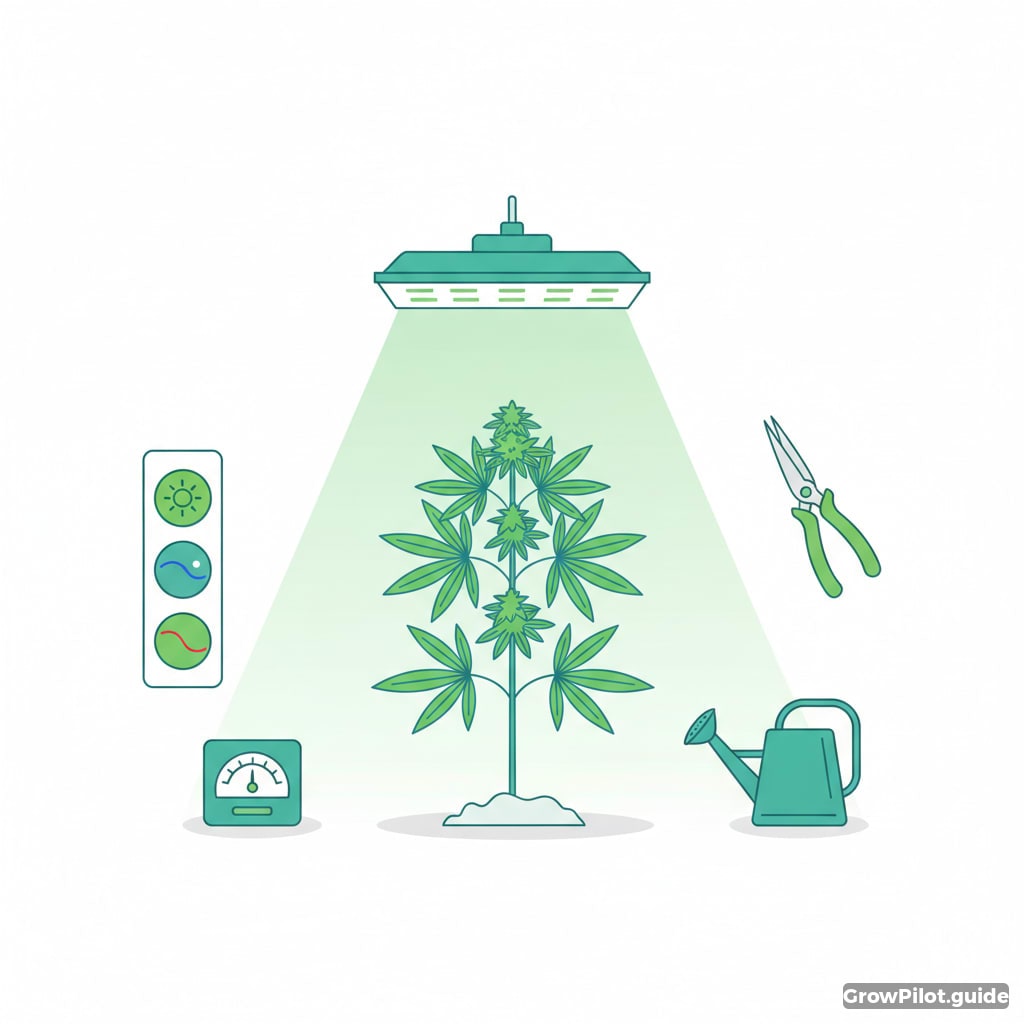
The right lighting for cannabis: LED, HPS and CMH compared — light cycles, intensity and spectrum for healthy growth and maximum flowering yield.
Introduction
Lighting plays a central role in cannabis cultivation, as it directly influences growth, flowering and yields. This guide explains the different types of light, their advantages and disadvantages and the best way to use them for cannabis cultivation.
Types of light in cannabis cultivation
There are several types of lighting systems used in cannabis cultivation:
1. LED lights
LEDs are energy efficient and produce little heat. They offer a wide spectrum of light colors, making them ideal for all stages of growth.
2. HID lamps (high-pressure sodium vapor lamps and metal halides)
HID lamps are powerful and produce a lot of light, but require more energy and produce more heat. They are generally cheaper to buy, but the operating costs are higher.
3. fluorescent lamps
These lamps are ideal for growing seedlings and young plants. They are inexpensive, but less powerful for the flowering phase.
Illuminance and distance
The right light intensity is crucial for plant growth.
1. Lumen and PAR values
Light intensity is measured in lumens. For cannabis plants, at least 400-600 µmol/m²/s PAR (Photosynthetically Active Radiation) should be provided.
2. Distance to the plant
The distance between the light source and the plants varies depending on the type of light:
- LED lamps: 30-60 cm
- HID lamps**: 60-90 cm
- Fluorescent lamps**: 10-30 cm
Too short a distance can lead to light burns, while too long a distance slows down growth.
Determine the light cycle
The light cycle influences the growth phases of the plants:
- Vegetative phase: 18 hours of light and 6 hours of darkness.
- Flowering phase**: 12 hours of light and 12 hours of darkness.
These cycles imitate the natural light conditions and promote growth and flower formation.
Optimal positioning
The positioning of the lamps is crucial to ensure even light distribution.
1. Use reflectors
Reflectors can help to use the light more efficiently and optimize the light distribution in the grow room.
2 Regular adjustment
Monitor the growth of the plants and adjust the spacing of the lamps regularly to ensure that the plants receive enough light without being burnt.
Conclusion
The right lighting is crucial for successful cannabis cultivation. Find out about the different types of light, their advantages and disadvantages and adapt the lighting to the needs of your plants. With the right lighting conditions, you can promote healthy growth and maximize your yields.
Pro Tips
- Use a luxmeter to measure the light intensity.
- Make sure that the temperature in the grow room does not rise above 28°C.
- Change the lamps regularly to ensure constant light quality.
- Use timers to control the light cycles automatically.
- Take into account the specific light requirements of your cannabis strain.
Frequently Asked Questions
What type of lighting is best for growing cannabis: LED, HPS, or CMH?
LEDs offer high energy efficiency and a broad spectrum, while HPS lamps are known for their high light intensity. CMH lamps combine the advantages of both and provide a broad spectrum with good color rendering.
How long should I provide light for my plants each day?
For the vegetative phase, 18 hours of light and 6 hours of darkness are ideal, while 12 hours of light and 12 hours of darkness are recommended for the flowering phase.
How does the light spectrum affect the growth of cannabis?
Blue light promotes vegetative growth, while red light stimulates flowering. A balanced spectrum is crucial for the healthy development of plants.