Moby Dick: Genetics, Yield, and How to Master the Stretch

Moby Dick is known for its vigorous growth, high light requirements, and high yield potential. This article explains its genetics, flowering, terpenes, effects, and practical growing tips.
# Moby Dick: Genetics, Yield, and How to Manage the Stretch
Moby Dick is one of those strain names that, in grow reports, is unusually often associated with the same three characteristics: vigorous vegetative growth, significant stretching during early flowering, and above-average yield potential for many setups. This is precisely why the strain is of interest to growers who want to specifically manage large plant structures, efficient light utilization, and long colas. At the same time, Moby Dick is not a name under which every line in circulation is completely identical. As with many well-known hybrids, phenotypes can vary visibly depending on the breeder, selection process, and conservation efforts.
Historically, Moby Dick is usually described as a cross between White Widow and Haze. The strain became particularly widespread through European seed bank breeding efforts; and it has appeared in strain archives and breeder descriptions for many years as a sativa-dominant hybrid with vigorous growth. In practice, what matters less is the myth surrounding the name than the question of which traits are consistently described across different sources. This is precisely where a relatively clear picture emerges: Moby Dick is generally not a strain suited for cramped, unprepared spaces, but rather a strain that performs best with ample space, light, and active canopy management.
What is known for certain about Moby Dick’s genetics and origin?
The most commonly cited parentage is White Widow x Haze. This classification also aligns with the profile described by many growers: on the one hand, vigorous resin production and a robust hybrid structure; on the other hand, significant height growth, longer internodes, and a rather airy, light-seeking appearance during early development.
It’s important to note, however, that Moby Dick is not a botanically uniform, natural constant, but rather a cultivated strain that can vary slightly depending on the supplier. While seed bank descriptions, databases such as SeedFinder, and numerous grow logs reveal stable basic patterns, there is no absolute uniformity. Some phenotypes lean more toward the Haze lineage and grow taller and slimmer with more stretch. Others exhibit slightly more compact branching and a denser flower structure.
For growers, this means:
- The strain name alone is not sufficient for a complete classification.
- Breeder specifications, flowering windows, and observed phenotypes are crucial.
- Especially with cutting lines and offspring, behavior may deviate from the known reference.
How does Moby Dick grow in practice?
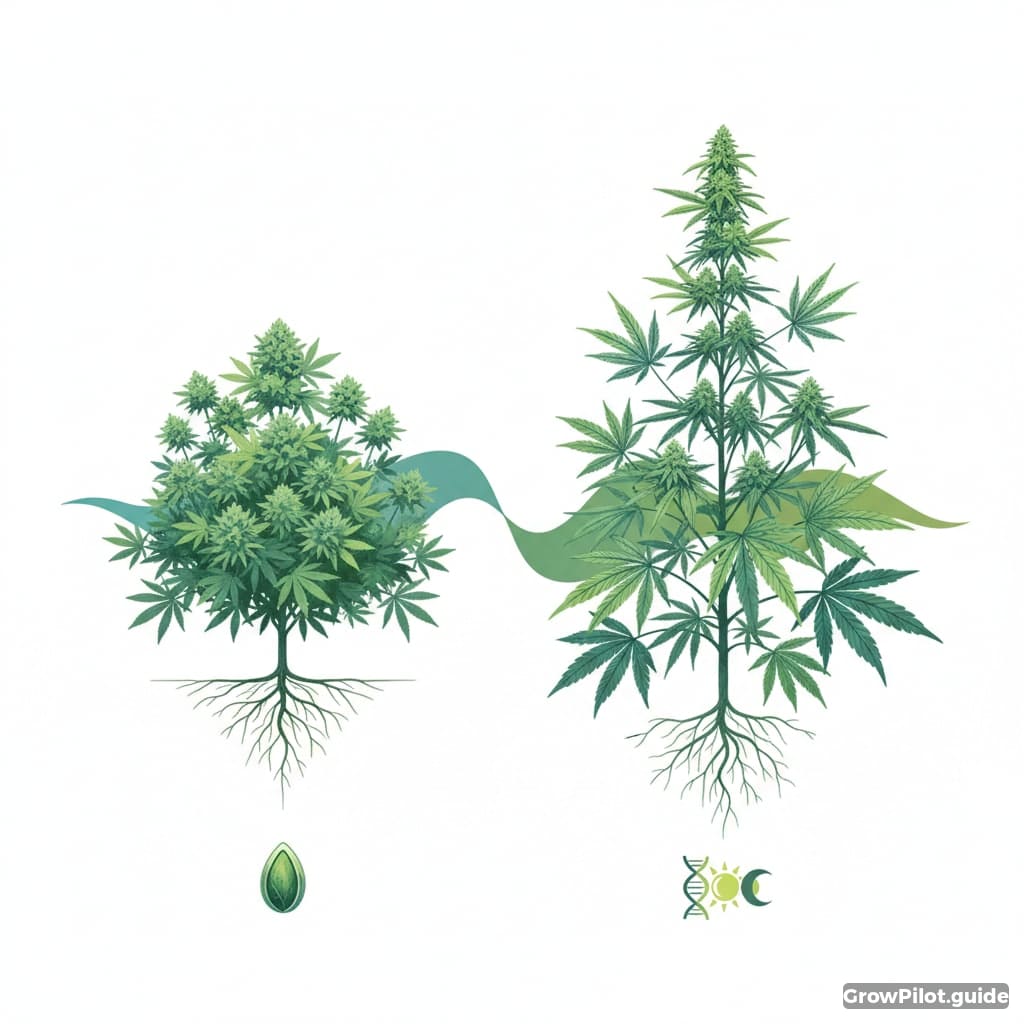
In everyday growing, Moby Dick is usually described as a vigorous hybrid with a clear Sativa tendency in growth. Typical characteristics include rapid early growth, a good response to high light intensity, and pronounced stretching once flowering begins. Indoors, height can quickly become problematic without training. Outdoors or in a greenhouse, the strain often develops its structure better, provided the climate, season length, and support are suitable.
Typical Growth Profile
- Indoor height: often medium to tall, typically around 100 to 180 cm depending on the veg period and training
- Outdoor height: significantly taller under good conditions, often exceeding 200 cm
- Structure: strong main stem, long side shoots, rather open to semi-open branching
- Stretch: usually strong during the first weeks of flowering
- Suitability: best suited for rooms with controllable height or for outdoor/greenhouse setups with ample space
What flowering time and yields are realistic?
For photoperiodic Moby Dick strains, a flowering time of about 9 to 11 weeks is usually specified. Phenotypes with a higher Haze influence may tend toward the longer end of this range. Shorter flowering times specified by manufacturers cannot always be replicated in practice under all conditions, especially when temperature, light intensity, or phenotype aren’t optimally aligned.
As always, when it comes to yield, manufacturer figures tend to represent upper limits under ideal conditions. Realistic figures based on grow reports often fall within the following ranges:
- Indoor: frequently around 450 to 650 g/m² in well-managed setups
- Outdoor: often high yields per plant; under favorable conditions, several hundred grams per plant, and in some cases significantly more for large plants
- sufficiently strong and consistent light exposure
- early control of stretching
- good air circulation through the canopy
- consistent nutrient management without over-fertilization
- proper support for heavy flower clusters during late flowering
What does Moby Dick smell and taste like?
The aroma profile is typically described in international archives, seed bank descriptions, and user reviews as a blend of citrus, Haze spice, wood, pine, and sweet undertones. Depending on the phenotype, the fresh, light notes may be more prominent or accompanied by earthy, resinous components.
Probable Terpene Profile
Without batch-specific laboratory analysis, an exact profile cannot be guaranteed. However, terpenes that match the described aroma notes are frequently mentioned, including:
- Terpinolene for bright, fresh, somewhat herbal, and Haze-typical notes
- Myrcene for earthy, slightly sweet depth
- Limonene for citrus accents
- Pinene for a resinous, piney freshness
What effects do growers and users describe?
Reports on Moby Dick typically describe the effect as clear, stimulating, alert, and mentally present, often with physical relaxation setting in later. This pattern aligns with its frequent classification as a Sativa-dominant hybrid. Nevertheless, the subjective effect depends not only on the strain name but also on individual sensitivity, dosage, method of consumption, terpene profile, and the actual chemical composition of the batch.
To put it more objectively:
- Many users describe energy, focus, and talkativeness.
- Some also report mental intensity at higher doses.
- Haze-dominant profiles are not tolerated equally well by everyone, especially if a more calm, body-focused effect is expected.
Who is Moby Dick suitable for when growing?
Moby Dick is generally classified as a strain for advanced beginners to experienced growers. It isn’t necessarily extremely finicky, but it is less forgiving of mistakes in space planning and canopy management than more compact, slower-growing hybrids.
Best suited for
- Growers with sufficient ceiling height
- Setups with strong lighting
- Training techniques such as topping, LST, SCROG, or supercropping
- Outdoor grows with a long growing season and good airflow
Less suitable for
- Very small grow boxes with no headroom
- Growers who prefer minimal training
- Humid environments with a consistently dense, poorly ventilated canopy
What growing tips are particularly important for Moby Dick?
1. Keep the vegetative phase intentionally short
Since Moby Dick often stretches significantly, an overly long vegetative phase indoors is one of the most common mistakes. Many growers fare better if they switch to flowering early or work with smaller plants in an SCROG net.
2. Start training early
According to many reports, this strain responds well to topping and low-stress training. The goal isn’t cosmetic shaping, but rather a wider, flatter canopy with better light distribution.
3. Adjust the climate to the plant mass
In practice, the following generally applies:
- Vegetative phase: Moderately warm temperatures and medium humidity
- Early flowering: Good air circulation to keep the stretch controlled and healthy
- Late flowering: Lower humidity to reduce the risk of dense flower clusters
4. Don’t Confuse Nutrients with Yield
The vigorous growth can tempt growers to fertilize very heavily early on. However, many reports show that too much nitrogen in early flowering can further intensify the stretch and keep the flower structure unnecessarily soft. A stable but controlled nutrient regimen is advisable, with attention to leaf color, tips, and internode spacing.
5. Support the branches
Due to long colas and heavy flower weight, Moby Dick may need mechanical support in late flowering. Nets, plant stakes, or yo-yos help prevent kinking and shading.
Conclusion: Why does Moby Dick remain appealing to many growers?
Moby Dick really shines when you take its biological logic seriously: it requires a lot of vigor, plenty of light, and significant stretching—but in return, it often offers high yield potential and a distinctive, fresh Haze hybrid profile. Those looking for compact, easily manageable plants will usually find more suitable alternatives. On the other hand, those who have space, training methods, and climate under control will often find that Moby Dick is a strain that impresses precisely because of its size, dynamism, and yield profile.
The key point, therefore, is not whether Moby Dick is legendary as a name, but whether your own setup is suited to large-framed, light-loving hybrid genetics. If so, it remains one of the strains that stands out in many grow reports—not because of myths, but because of its clear practical characteristics.