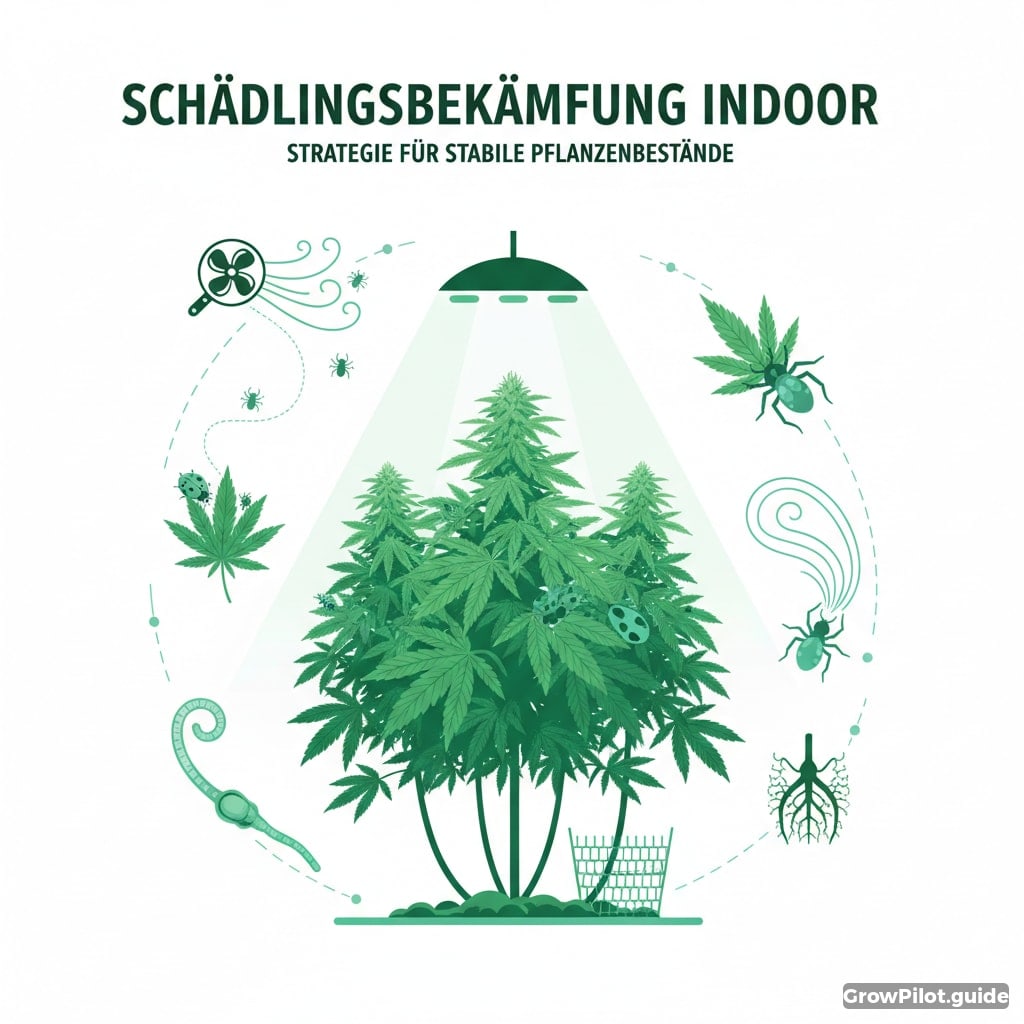
Indoor gardening for beginners: indoor gardening tips compact

A practical introduction to indoor gardening: location, light, climate, substrate, watering and typical beginner's mistakes explained clearly - for a stable start indoors.
Indoor gardening often seems complex at first, but with the right indoor gardening tips, getting started becomes much easier. If you understand light, climate, water and substrate as an interconnected system, you can avoid many typical mistakes even before you have planted your first pot.
It is particularly important for beginners: indoor plants do not grow "on their own", but react directly to their environment. Good indoor gardening tips therefore do not start with individual products, but with the basics of light intensity, temperature, humidity, root space and watering.
What do you need to get off to a good start with indoor gardening?
The most common beginner's mistake is to start off too expensively. For the first few runs, a clear setup that is easy to control is sufficient.
The basic equipment
- Lighting: Artificial light is crucial for the interior because window sun is usually not constant enough. Plants mainly use radiation in the photosynthetically active range. Modern LED lights generally work more efficiently than older systems and generate less waste heat.
- Pot with drainage**: Waterlogging is one of the most common causes of growth problems. Pots therefore need drainage holes.
- Substrate**: For beginners, a loose, airy potting soil with good water retention capacity is usually easiest to handle.
- Air movement**: A small fan helps to avoid stagnant air. This supports a more even gas exchange at the leaves and reduces the risk of damp microclimates.
- Measuring devices: A simple thermo-hygrometer is often more important than additional technology. Without temperature and humidity values, research into the causes of problems remains inaccurate.
Less is often better at the beginning
Many beginners buy too many accessories and then change several factors at the same time. It makes more sense to have a small, stable system. This makes it easier to recognize later whether problems are caused by light, water or climate.
How important is the right light really?
Very important. In indoor gardening, light is not just "brightness", but the energy source for photosynthesis. Too little light often leads to weak, stunted growth. Too much light can cause stress, especially if the temperature and watering are not right.
What beginners should look out for
- Distance to the lamp: If the light is too close, the risk of heat or light stress increases. If it is too far away, plants grow less compactly.
- Even illumination: An unevenly lit area leads to plants with very different growth.
- Light duration: The appropriate lighting duration depends on the plant species and development phase. A constant rhythm is particularly important.
Why are temperature and humidity so important?
Plants do not react to individual factors in isolation. Among other things, temperature and humidity influence transpiration, i.e. the release of water through the leaves. If the air is very dry, water loss increases. If it is too humid, the substrate dries out more slowly and the risk of problems in the root area increases.
A practical target range
For many common indoor crops, reasonably warm temperatures and not permanently too high humidity are a good starting point. Extreme fluctuations between day and night make adaptation more difficult.
You should pay attention to this in everyday life
- Do not place plants directly next to radiators
- Do not allow permanently stagnant, humid air
- Do not judge the climate by feel, but by measured values
- After watering, check how quickly the pot and surface dry out again
Which substrate is best for beginners?
A structurally stable, loose substrate is usually the best choice for beginners. The roots not only need water and nutrients, but also oxygen. Compacted soil impairs aeration of the root zone.
Good properties of a beginner-friendly substrate
- Stores water without becoming waterlogged
- remains airy
- does not sink quickly
- enables even root growth
How do you water properly without stressing the roots?
Too much water is usually more problematic in indoor gardening than too little in the short term. Roots need oxygen. If the substrate remains permanently wet, the availability of air in the root zone drops significantly.
A simple watering routine
- Check the pot weight before watering
- Check the top layer of substrate
- It is better to water thoroughly and then take a break than to constantly add small amounts
- Remove excess water from saucers
Typical warning signs
- Permanently heavy, wet pot
- slow growth despite sufficient light
- drooping leaves both in dry conditions and when overwatered
- musty odor from the substrate
Do beginners need fertilizer right away?
Not always. Many pre-fertilized soils already provide nutrients for the initial period. Additional fertilizer can then do more harm than good. Excessive salt concentrations in the root area impair water absorption.
Sensible procedure
- First check whether the substrate used is already pre-fertilized
- Start cautiously with young plants
- Make changes slowly, not abruptly
- Observe leaf color and growth over several days, not hourly
Which beginner's mistakes are particularly common?
1. too many changes at the same time
If you change the light distance, watering quantity, fertilizer and location on the same day, it's almost impossible to assign the effect later.
2. poor hygiene
Dead plant remains, permanently wet surfaces and dirty saucers promote problems with microorganisms and pests.
3. wrong pot size
A very large pot for a small plant often dries out slowly. This increases the risk of overwatering.
4. impatience
Plants do not react immediately. Many measures take days, sometimes longer, to show a clear development.
5. no documentation
A short grow log with dates, watering quantities and climate values helps enormously. Good indoor gardening tips do not end with the setup, but start with careful observation.
A simple timetable for the first two weeks
Day 1 to 3
- Determine location and light
- Set up a thermo-hygrometer
- Pot up in a loose substrate
- Water only moderately
Day 4 to 7
- Check the climate daily
- Pay attention to leaf position and growth
- Do not make any hectic corrections yet
Week 2
- Practice the watering rhythm based on the pot weight
- Optimize the air movement
- Only readjust if clearly necessary
Conclusion
Indoor gardening for beginners becomes manageable if you prioritize the basics. Light, climate, substrate and watering always work together. Starting small, measuring regularly and not overreacting creates the best conditions for healthy plants indoors. The most useful indoor gardening tips are therefore often the unspectacular ones: a simple setup, stable conditions, clean work and patient observation.