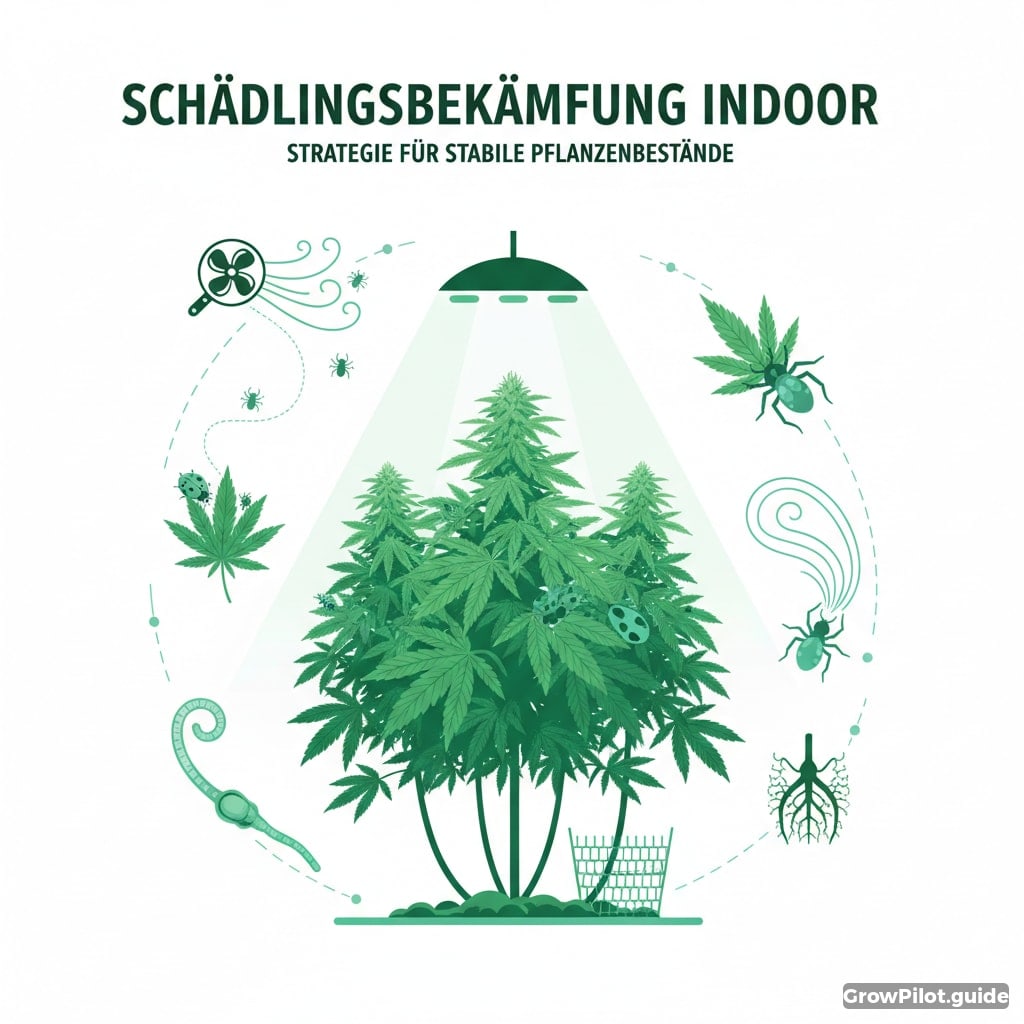
Cannabis pest control: FAQ for early detection and control
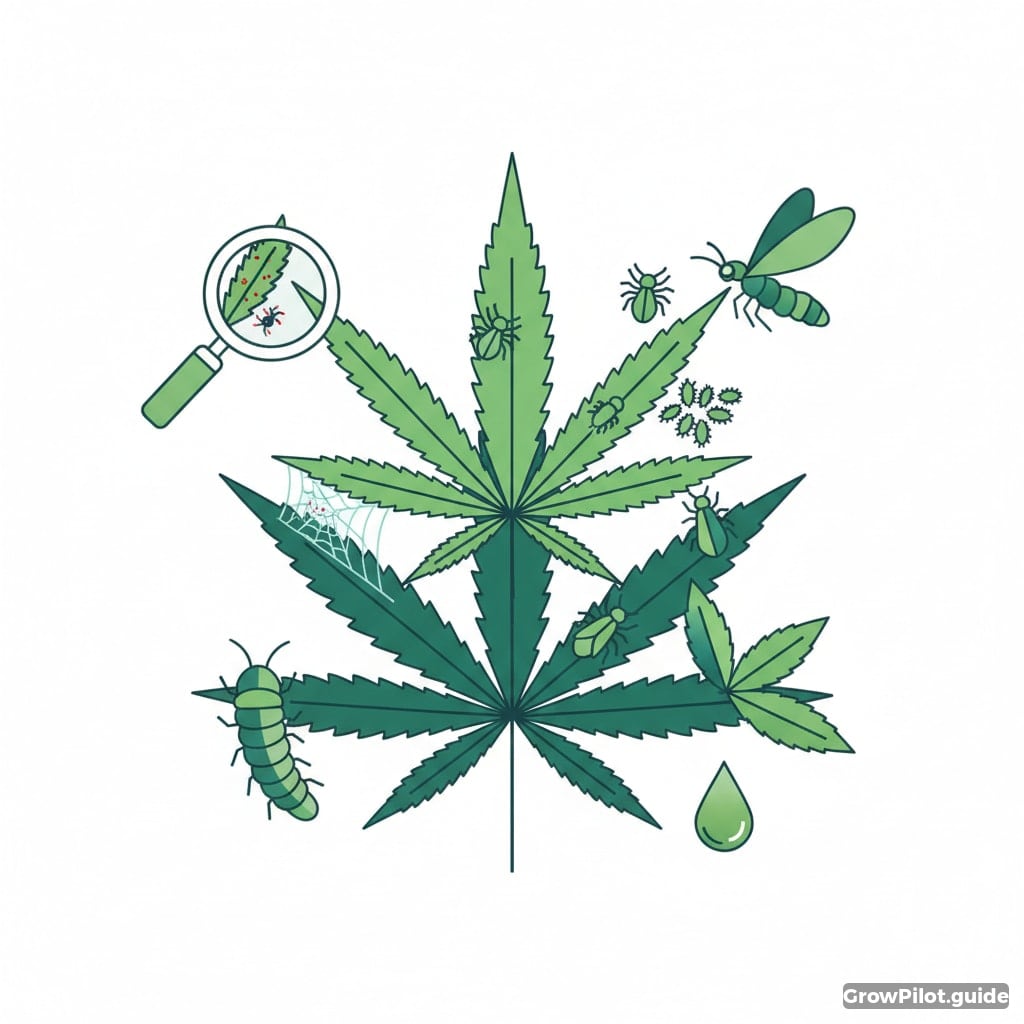
This FAQ guide explains how to recognize pests on cannabis plants at an early stage, reduce infestation pressure and counteract them with hygiene, climate and beneficial insects.
Pest control in cannabis does not start with spraying, but with close observation, clean working methods and a stable cultivation climate. If you regularly check the leaves, substrate surface and undersides of the leaves, you will recognize many problems early on and can take more targeted and gentle action when controlling cannabis pests.
**Question: Which pests are particularly common in cannabis in indoor and greenhouse cultivation? The most common problems include dragonflies, spider mites, thrips, aphids and, less frequently, whiteflies. These organisms benefit above all from a warm, dry or permanently moist microclimate, dense plant growth and introduced plant residues. In practice, it is important to note that not every flying insect found immediately indicates a serious infestation, but repeated sightings should always trigger a systematic inspection.
**Question: How can I recognize an infestation as early as possible? Early warning signs are silvery feeding marks, spotted brightening, bent young leaves, sticky coatings and small animals on the undersides of leaves or in the substrate. Spider mites often cause light speckles and later fine webs, thrips leave shimmering scrape marks, and fungus gnats are usually first noticed as small black flies above the ground. For effective pest control in cannabis, a fixed routine helps: check the undersides of leaves, shoot tips and the top few centimetres of the substrate at least two to three times a week.
**Question: Why is prevention usually more important than actual control? Many pests reproduce quickly under favorable conditions, so that a small infestation can turn into a significant infestation within a few days. Prevention therefore reduces the infestation pressure before visible damage occurs. Clean tools, separate clothing after outdoor gardening, removal of dead plant parts, restrained watering and sufficient air movement in the crop are particularly effective.
**Question: What role do climate, watering and plant hygiene play in pest control in cannabis? Climate and hygiene are key factors because they directly influence how comfortable pests and their developmental stages feel. A substrate that is permanently too wet favors fungus gnats, while warm, dry air often favors spider mites; at the same time, stagnant air can make control more difficult. In terms of pest control for cannabis, this practically means: do not keep the substrate permanently wet, do not fill saucers with standing water, do not place plants unnecessarily close together and remove fallen leaves immediately.
**Question: Which non-chemical measures often work best for hobby growers? In everyday life, a combination of mechanical reduction, monitoring and biological control works well. Yellow boards can make flying fungus gnats and whiteflies visible and partially catch them, but are no substitute for eliminating the cause; heavily infested leaves can be carefully removed as long as the plant is not excessively weakened as a result. Studies and horticultural standards indicate that beneficial insects such as predatory mites or nematodes can be very useful, depending on the pest, if the temperature, humidity and time of application are suitable.
**Question: How do I use beneficial insects sensibly without having false expectations? Beneficial insects work best early, i.e. when the infestation begins or is moderate, not only when the plants are massively damaged. It is crucial that the organism used is suitable for the target pest: In practice, nematodes are often used against fungus gnat larvae, while various predatory mite species can be used against spider mites or thrips, depending on the situation. The following therefore applies to pest control in cannabis: Before use, determine the pest with certainty, check the climatic conditions and follow the application instructions exactly, as unsuitable use can significantly reduce the effect.
**Question: When are plant protection products problematic and what should I pay attention to in legal and practical terms? Not every product offered in the ornamental plant sector is automatically suitable for every crop and every application. In Germany, the approved use, labeling, safety requirements and the specific area of application are decisive; in addition, residues on consumed plant parts can pose a relevant risk. For this reason, particular caution is advisable when controlling pests in cannabis: first correct the cultivation conditions, determine the pest with certainty and only use products whose legal and practical use has been clearly clarified.
**Question: What typical mistakes made by beginners make an infestation worse? A common mistake is actionism without diagnosis: Spraying is carried out even though it is unclear whether there is a pest at all or perhaps a nutrient or climate problem. Excessive watering, infrequent inspections, bringing in untreated foreign plants and the simultaneous use of many measures without a plan are also problematic. It makes more sense to follow a simple pattern of observing, determining, eliminating the cause, reducing the infestation pressure and checking the effect again after a few days.
**Question: What does a practical 7-day plan look like at the first signs? Day 1 starts with the diagnosis: check the undersides of the leaves, take photos, place yellow plates and adjust the watering behavior immediately if the substrate is too wet. On days 2 and 3, heavily affected parts of the plant are removed, the area is cleaned and air circulation is improved; if the pest is certain, a suitable biological measure can then follow. On days 4 to 7, a brief daily check is carried out to see whether new damage occurs, whether catch panels show more activity and whether growth stabilizes; it is precisely this structured follow-up check that makes pest control in cannabis in the hobby sector significantly more successful than individual measures without documentation.