Efficient light distribution & shadow management
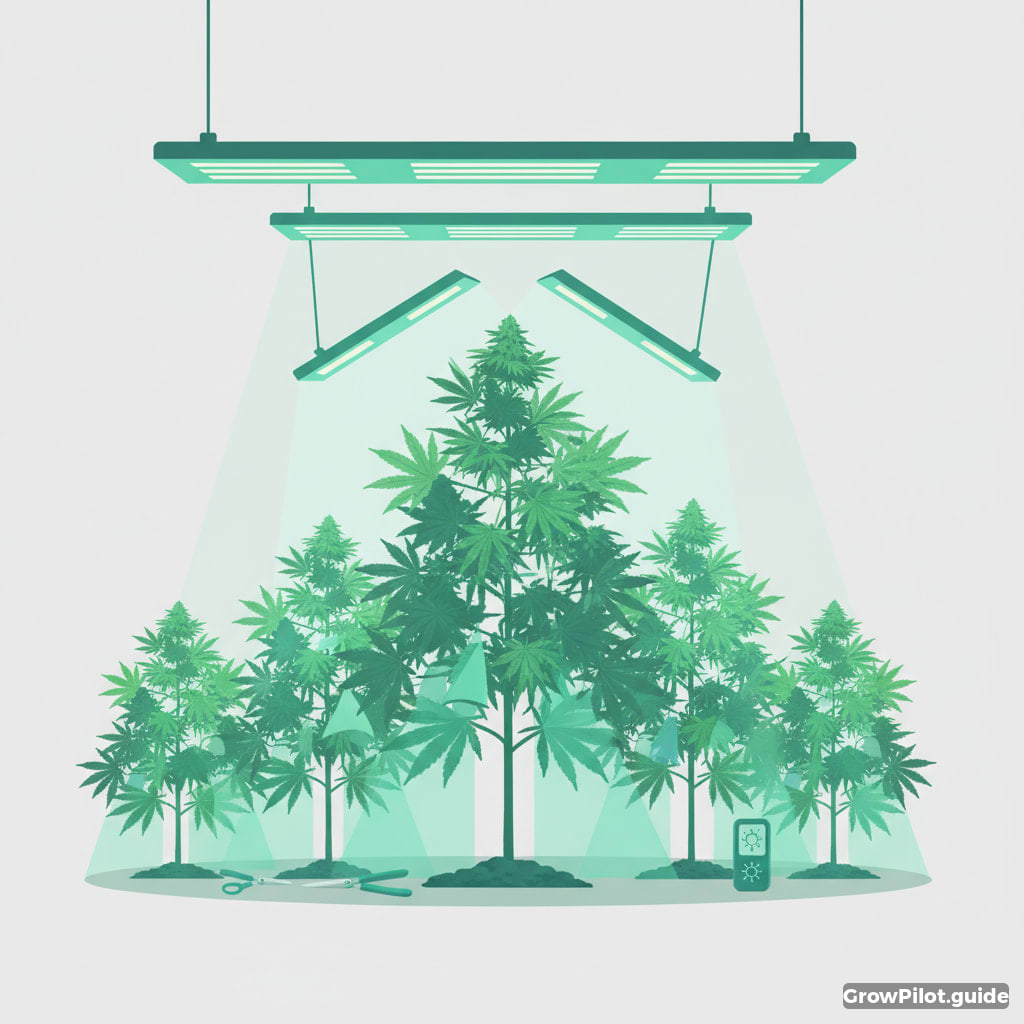
Optimum use of light in soil cultivation: Reduce shadows and provide optimum lighting for every plant with reflectors, diffusers and precise measurement.
Introduction
Homogeneous light distribution is essential when growing indoors in soil. Organic soil buffers nutrients and provides stability, but all parts of the plant still need to be evenly lit. Uneven light distribution leads to weak growth and uneven yields. This guide shows how optimum lighting conditions can be created through targeted shade management and the use of reflectors and diffusers.
Basics of light distribution
In soil cultivation, uniform irradiation plays a central role, as organic soils tend to offer less control over nutrient availability than hydroponic systems. The aim is to avoid hotspots and shaded areas so that each plant receives the necessary amount of photosynthesis-activating energy. The following points are important:
- Uniformity: Avoid strong differences in brightness between the areas under the lamp and the peripheral zones.
- Illumination area:** Adjust the distance and positioning of the light source to the covered cultivation area in the tent.
- Placement:** Even with stable soils that buffer nutrients in the long term, correct light diffusion is important for uniform growth.
Causes and detection of light shadows
Irregularities in the lighting are often caused by:
- Direct shadows: Large pots, upright equipment or unevenly arranged plants cast shadows on neighboring areas.
- Unsuitable light sources:** Some lamps create hotspots that are not evenly diffused. This applies in particular to spot LEDs without external diffusers.
- Incorrect distance:** Too much distance from the light source leads to reduced light intensity, while too little distance favors overexposure of local areas.
A regular hand test and PPFD measurements help to detect such shadow zones at an early stage and take countermeasures.
Use of reflectors
Reflectors are an effective means of directing light that would otherwise be lost back onto the plants. The following materials can help in soil cultivation:
- Mylar or reflective sheeting: They provide a high reflection rate and are flexible to use. Attach these to the tent walls to reflect back light that is lost in marginal zones.
- Aluminum panels:** Robust and durable option that can be used primarily for spot lighting (e.g. with HPS lamps).
The correct alignment and distance of the reflectors to the light source and plants are crucial to avoid unevenness.
Use of diffusers
Diffusers help to distribute the light more evenly. With LED panels in particular, diffuser plates can achieve the following:
- Scatter the light: Reduce harsh shadows and hotspots. The light is distributed more gently and evenly over the entire mounting area.
- Protection against light burn: Softer light distribution minimizes overexposure and prevents damage to the tips of the leaves.
Plan the use of diffusers directly at the time of light installation to avoid subsequent adjustments.
Light measurement as a control instrument
Regular light measurements should be carried out to check the success of the measures. PPFD measuring devices provide precise values for the following points:
- Intensity at critical points: Check the light intensity in the center of the cultivation area as well as in peripheral zones.
- Effects of reflectors and diffusers: Compare measured values before and after use to validate the efficiency of the measures.
Use this data to adjust the spacing of the lamps or install additional reflectors if necessary.
Practical implementation and summary
Steps for implementation:- plan the lighting setup in advance, including determining the cultivation area and possible shadow zones.
- install reflectors at strategic points to minimize light losses on the tent walls.
- supplement your lighting system with diffusers to avoid harsh shadows and achieve uniform illumination.
- carry out regular PPFD measurements to objectively determine whether further adjustments are necessary.
Through targeted light management, you can create optimal growing conditions despite the natural light diffusion in ground-based setups. Remember that each setup is individual - adjustments should be made based on measured values and direct observation. In this way, you will not only achieve uniform irradiation, but also an increase in harvest quality without changing the soil-bound, organic character of your cultivation.
Pro Tips
- Check the light intensity regularly with a PPFD meter.
- Test different reflector positions to achieve optimum reflection.
- Use diffuser plates if hard shadows occur.
- Ensure that the entire cultivation area is evenly illuminated.
- Make adjustments step by step and document measurement data.
Frequently Asked Questions
How can I reduce shade when growing cannabis?
Use reflectors to distribute the light more efficiently, and position your plants so that they receive even lighting. Also, pay attention to the arrangement of the plants to avoid overlap.
What role do diffusers play in light distribution?
Diffusers help distribute light more evenly, preventing hotspots and ensuring that each plant receives better light exposure. This can improve growth and yields.
How do I measure light intensity for my plants?
Use a lux meter or a PAR meter to measure light intensity at various locations in the growing area. This will help ensure that each plant receives enough light.