Boron deficiency in cannabis: symptoms and solutions
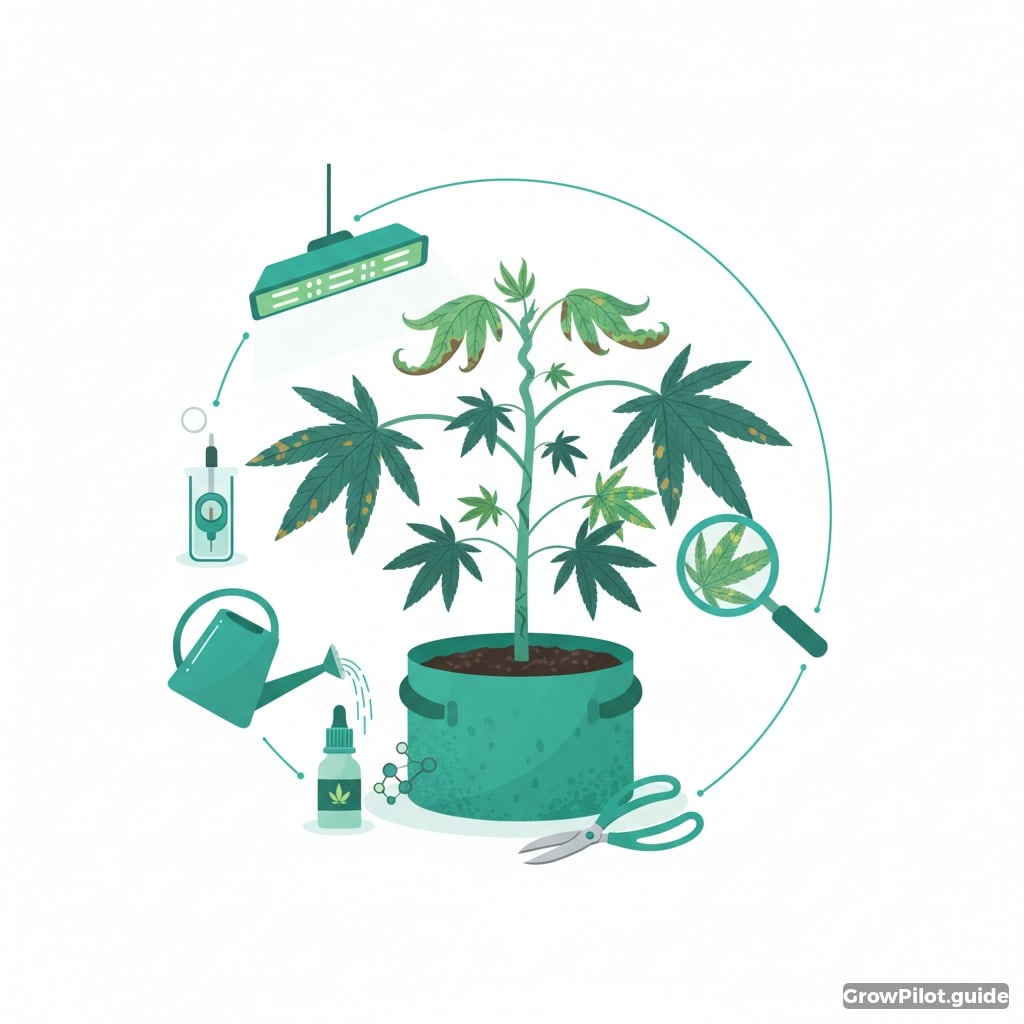
Recognize boron deficiency in cannabis and find out how you can counteract it with targeted measures.
Boron deficiency in cannabis
Importance of boron
Boron is an essential micronutrient that plays an important role in cell wall formation and the stability of the cell structure. A boron deficiency can lead to significant growth problems in cannabis plants, as boron also supports the absorption and transport of other nutrients.
Symptoms of boron deficiency
A boron deficiency manifests itself in cannabis plants through
- Delayed growth: Young shoots and leaves grow very slowly or not at all.
- Deformed leaves**: Leaves may become deformed, curled or brittle.
- Dying tips**: The tips of new shoots die back or show necrosis.
- Flowering problems**: In severe cases, boron deficiency can interfere with flower formation.
Cause analysis
Boron deficiency often occurs when the pH of the substrate is too high, as this reduces the availability of boron. Other causes can be insufficient boron fertilization or uneven watering, which hinders an even distribution of nutrients.
Corrective measures
To correct a boron deficiency, you should take the following steps:
- Check pH: Make sure the pH of the substrate is in the optimal range (around 6.0 to 6.5 for soil, 5.8 to 6.2 for hydroponics).
2 Adjust top dressing: Use a high-quality fertilizer that contains boron, or add boron selectively in the form of Borax. Pay attention to the dosage to avoid over-fertilization.
3 Optimize irrigation: Ensure even watering to improve nutrient distribution.
Prevention
To prevent boron deficiency, you should:
- Regularly check and adjust the pH value.
- Use a balanced fertilization scheme that covers all micronutrients.
- Monitor the plants regularly** and look out for the first signs of deficiencies.
Conclusion
Early detection and correction of boron deficiency can protect your cannabis plants from growth problems and ensure yields. Preventive measures and a balanced nutrient supply are crucial for successful cultivation.
Pro Tips
- Check the pH value of the substrate regularly.
- Use high-quality nutrient solutions.
- Ensure that the plants are watered evenly.
- Monitor plants regularly for the first signs of deficiency.
- Boron deficiency occurs more frequently at high pH values.
Frequently Asked Questions
What are the symptoms of boron deficiency in cannabis?
Symptoms of boron deficiency in cannabis include distorted or deformed leaves, a slowed growth rate, and brown spots along the edges of the leaves.
How can I correct a boron deficiency in my cannabis plants?
To correct a boron deficiency, you can use fertilizers or foliar fertilizers containing boron and ensure that the soil's pH is within the optimal range.
How often should I apply boron fertilizer?
Boron fertilizer should be applied sparingly and at intervals of 2–4 weeks to avoid over-fertilization, as boron can be harmful in high concentrations.