Safe containment of Pythium in the Hydro-Grow
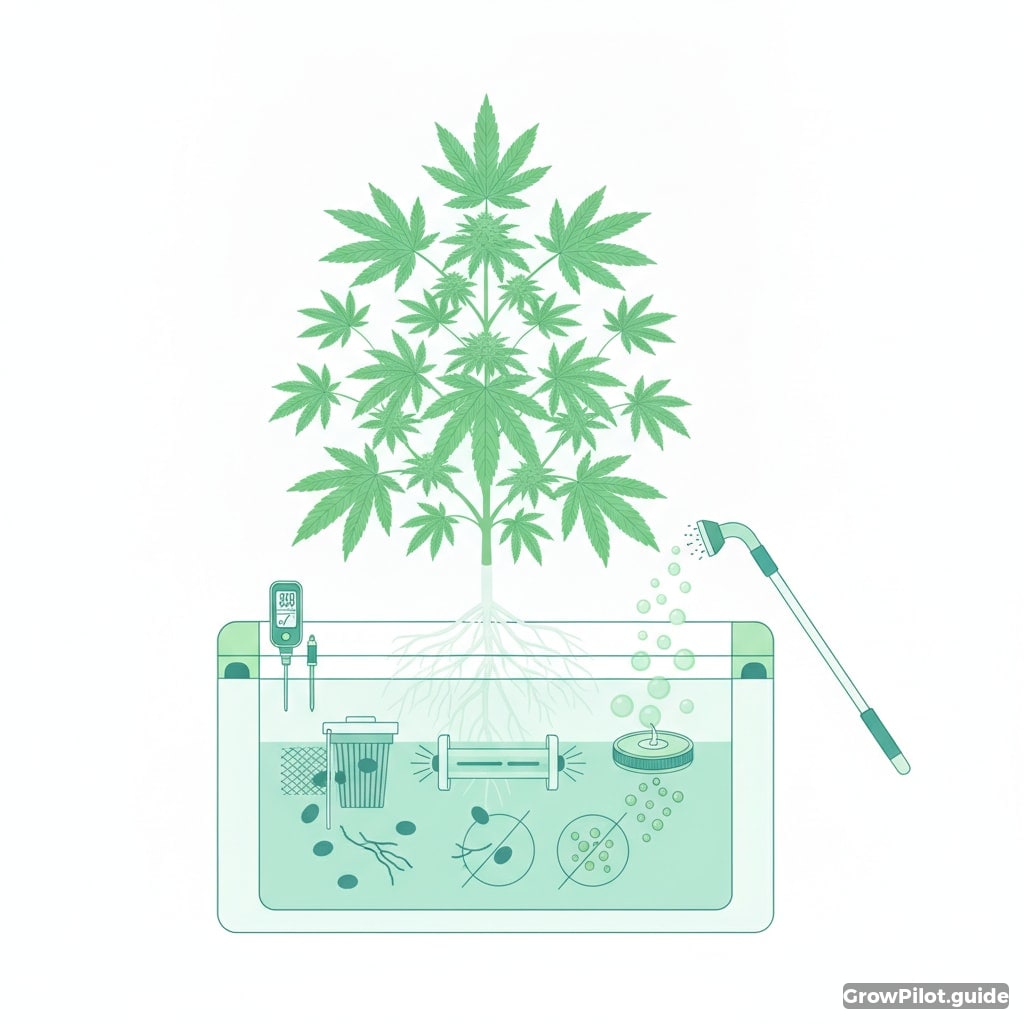
Pythium often attacks roots in hydro systems insidiously. This guide shows you how to reliably recognize the disease, distinguish it from algae and effectively contain it in the reservoir.
Introduction
Pythium is a common cause of root diseases in hydroponic cannabis systems. It is not algae, but a fungus-like pathogen (oomycete) that spreads particularly well in warm, low-oxygen and sanitized nutrient solutions. Unlike general guides on root rot or algae infestation, this guide focuses exclusively on Pythium in hydro-grow: Detection, Delimitation, Containment and Prevention.
Typical symptoms of Pythium in hydro
On the plant
Look for the following signs:
- limp leaves despite sufficiently filled reservoir
- slowed growth
- Reduced water absorption
- dull, powerless overall effect
- with progress: wilting despite apparently correct supply
These symptoms are non-specific. It is therefore always crucial to check the root area.
At the roots
Healthy hydro roots are usually:
- light to white
- firm
- fresh smelling
Indications of Pythium are against it:
- beige to brown discoloration
- slimy or slippery surface
- soft, decaying root sections
- musty, putrid odor
- dying fine roots
reliably distinguish Pythium from algae
This is important because both problems can often occur at the same time, but are not the same thing.
Rather algae
- Greenish coating on pipes, net pots or reservoir walls
- especially where light meets nutrient solution
- Roots may still be relatively intact at first
More likely Pythium
- Brown, slimy roots
- foul odor directly from the root area
- Significant loss of vitality of the plant
- Problems even without visible green coating
Algae can put a strain on the system and consume oxygen, but are not the actual cause of Pythium. Pythium is mainly caused by an unfavorable combination of too warm nutrient solution, too little dissolved oxygen and inadequate system hygiene.
Common risk factors in the hydro system
Pythium occurs particularly frequently with:
- nutrient solution above about 22 °C
- poor aeration of the reservoir
- Biofilm in hoses, pumps and tanks
- dead root material in the system
- Light leaks in the reservoir
- Reused, insufficiently cleaned components
- Strongly fluctuating temperatures
DWC, RDWC and other systems with permanently wet, heavily loaded root zones are particularly critical.
Immediate measures in case of suspicion
If you suspect Pythium, act quickly:
- Isolate affected plants if the system allows it.
- completely empty the reservoir**.
- clean all accessible parts: Tank, pipes, stones, pumps, hoses, net pots.
- carefully remove heavily dead, slimy root parts.
- restart the system with fresh, clean nutrient solution.
- consistently lower the water temperature and keep it stable.
- improve aeration immediately.
Important: Heavily damaged root systems do not always regenerate completely. The first aim is often to stop the spread.
Treatment options
Culturally-technically
The most important control does not start with a remedy, but with system correction:
- Ideally keep the nutrient solution at 18 to 20 °C
- Ensure strong aeration with sufficient air stones or circulation
- Keep the reservoir light-tight
- Remove biofilm consistently
- Remove dead root mass from the system
Biological
In some hydro systems, microbial products with beneficial bacteria or microorganisms are used to stabilize the root zone. This can be useful if the product is specifically suitable for hydro. The important thing is:
- only use cleanly dosed products suitable for the system
- Do not mix indiscriminately with disinfectants
- Maintain product logic consistently: either biologically managed system or sterile managed system
Chemical or disinfectant
Depending on the country and approval, disinfecting water treatments are sometimes used in water systems to reduce germ pressure. The following applies here:
- Only use approved products that are suitable for the system
- Strictly observe the label and culture approval
- Do not combine with living microbes if the product kills them
Prevention against re-infestation
The best Pythium control is prevention:
- Keep the reservoir consistently cool
- Eliminate any light leaks
- clean and disinfect the entire system between runs
- Check pumps, hoses and dead corners regularly
- Do not place any plants with damaged roots in the system
- Never neglect water movement and oxygen input
Conclusion
Pythium in Hydro-Grow is primarily a problem of the root environment. If you only treat the symptoms on the leaves, you are falling short. A clear diagnosis, clear differentiation from algae and immediate corrections to temperature, oxygen supply and hygiene are crucial. In this way, the infestation can often be contained before the entire system collapses.
Pro Tips
- Always check roots directly, not just leaves.
- If possible, keep the nutrient solution at 18 to 20 °C.
- Light-tight reservoirs significantly reduce the system risk.
- Biofilm in tubes is a frequent source of germs.
- Do not mix microbial products with disinfectants.
More Growing Knowledge & Smart Grow Help
GrowPilot.guide is the cannabis grow tracker and weed cultivation app with smart plant analysis, indoor cannabis growing guide, grow diary, community, cups and autoflower grow tracker for growers worldwide.
Open GrowPilot.guide App →