Safely diagnosing nitrogen deficiency in cannabis
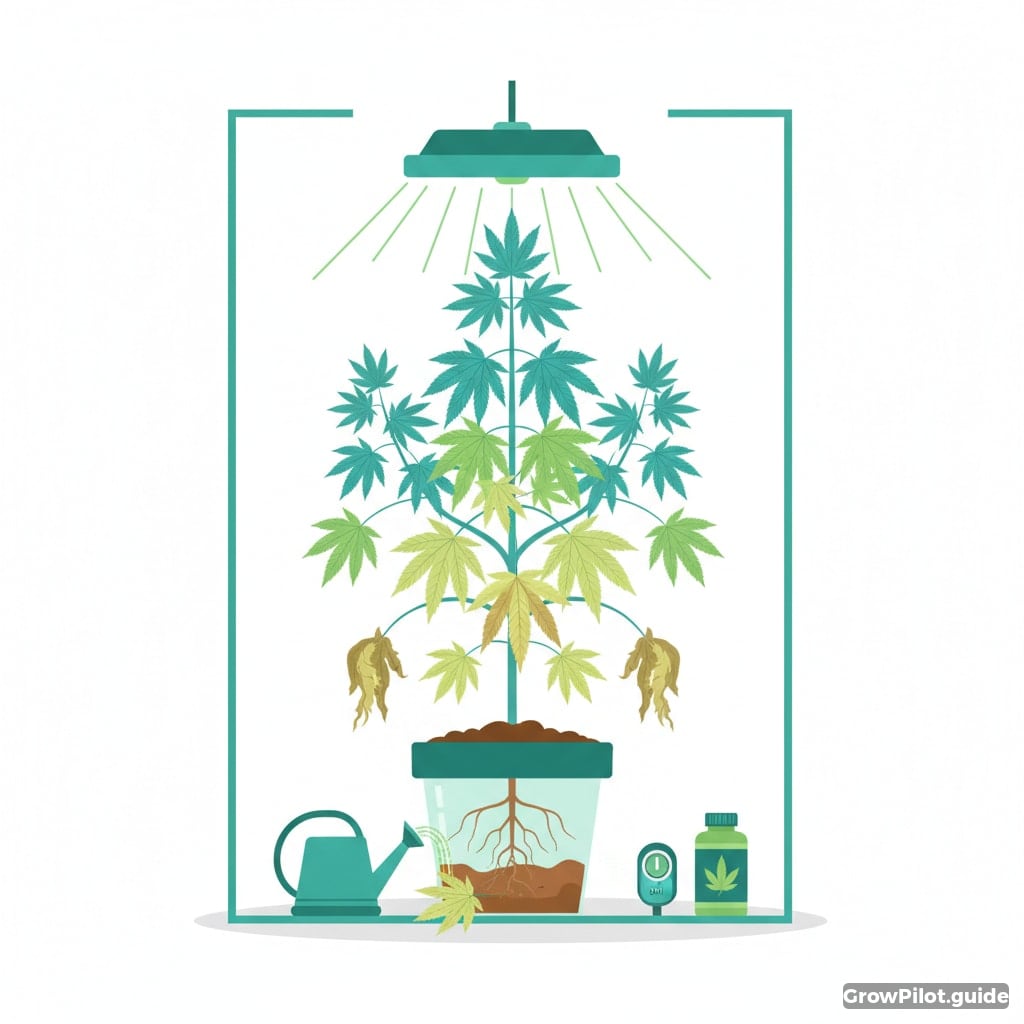
Nitrogen deficiency in cannabis: recognise typical symptoms on older leaves, identify causes and correct N-deficiency in soil, coco and hydro cleanly.
Classification
Nitrogen (N) is a mobile macronutrient. The plant can transfer it from older leaves to young tissue if there is an undersupply. This is precisely why a real nitrogen deficiency typically starts at the bottom of the plant and affects older fan leaves first.This guide deals exclusively with the diagnosis and correction of nitrogen deficiency. This refers to a genuine N deficiency or an N uptake deficit due to an unsuitable pH value, insufficient fertilization or root stress.
Typical symptoms
Early signs
- Light green to yellowish discoloration** on older, lower leaves
- Lightening usually evenly over the whole leaf, not just between the leaf veins
- Slower vegetative growth
- Thinner shoots and less vigorous growth overall
Advanced deficiency
- Clearly yellow lower leaves
- The yellowing moves from the bottom to the top
- Affected leaves lose resilience and eventually die off
- Premature shedding of older leaves
Classify correctly in the flower
During flowering, the nitrogen requirement is lower than during the vegetation phase. A slight natural lightening of older leaves late in flowering is therefore not automatically a deficiency. It becomes critical if the yellowing occurs early, quickly or over a large area and the plant visibly loses vitality.
How to distinguish nitrogen deficiency from similar problems
Compared to magnesium or iron deficiency
- Nitrogen deficiency:** uniform yellowing of older leaves
- Magnesium deficiency: often interveinal chlorosis, i.e. yellow between green leaf veins, usually also on older leaves
- Iron deficiency: typically begins on young leaves
Against overfertilization
- With N excess, leaves tend to be dark green, often with a "claw shape"
- With N deficiency, older leaves become light green to yellow
Compared to natural ageing
Individual old shade leaves may degrade in the course of the life cycle. However, a real deficiency is indicated by systematic spreading and a decline in the overall performance of the plant.
Common causes
- Too little nitrogen in the fertilizer plan
- Switching to nutrients with a strong flowering emphasis too early
- pH value outside the suitable range with limited N uptake
- Heavily leached substrate during prolonged cultivation without top dressing
- Root stress due to waterlogging, lack of oxygen or heavily compacted medium
- Very low EC values in mineral systems
Diagnosis: sensible instead of rash
Before you correct, check three points:
- **Where do the symptoms start?
2 **What does the yellowing look like?
- Uniform yellow coloration indicates N deficiency rather than many micronutrient deficiencies.
3 **Is the supply correct at all?
- Check the fertilization schedule, pH and, in the case of mineral fertilization, also EC.
Sensible pH orientation
- Soil:** about 6.0-6.8
- Coco/Hydro:** about 5.5-6.2
If the pH is permanently outside these ranges, nitrogen can be absorbed less easily despite the presence of nutrients.
Corrective measures
1. Stabilize pH first
If the pH is clearly off, this error should be corrected first. Otherwise, additional fertilization often only has a limited effect.
2. increase nitrogen moderately
- Use a growth-oriented fertilizer with a higher N content
- Increase the dose gradually, not by leaps and bounds
- Observe the plant for 3-7 days for new, healthier leaf color in fresh growth
Old leaves that are already completely yellow will usually not turn green again. The decisive factor is whether new growth appears healthy and stops the spread.
3. improve the root zone
- Avoid waterlogging
- Ensure adequate drainage
- Do not keep in wet substrate all the time
A stressed root zone can severely limit N uptake, even if enough fertilizer is available.
4. do not overreact
A common mistake is aggressive top dressing. This can lead directly to over-fertilization. Always increase nitrogen in a controlled manner and do not overdo several corrections at the same time.
What you can expect after the correction
- The progression of yellowing should stop
- New leaves should appear more vibrant green again
- Growth normalizes within a few days to about two weeks, depending on the severity of the deficiency and root condition
Conclusion
Nitrogen deficiency is usually easy to recognize if you pay attention to the sequence of symptoms: first older leaves, uniform yellowing, then slower growth. The safest solution is a combination of pH control, moderate nitrogen application and a healthy root zone. In this way, the deficiency can usually be reliably stopped without creating new problems through over-fertilization.Pro Tips
- Look for older, lower leaves first.
- Uniform yellowing indicates N deficiency.
- Check the pH before every heavy top dressing.
- Yellow old leaves often do not recover.
- New leaf color is the most important indicator of success.
Frequently Asked Questions
How can I tell if my cannabis plants are deficient in nitrogen?
Nitrogen deficiency usually manifests as yellowed, older leaves that turn brown at the edges and die off. The plants may also appear weaker and smaller overall.
What are the causes of nitrogen deficiency in cannabis cultivation?
Nitrogen deficiency can be caused by insufficient nutrient supply, pH problems in the growing medium, or excessive watering, all of which hinder nutrient uptake.
How can I correct nitrogen deficiency in my plants?
To remedy nitrogen deficiency, you can use a nitrogen-rich fertilizer or work compost into the soil. Be sure to adjust the amount based on your plants' needs.