Pulsating light in hydroponics: Intermittent cycles
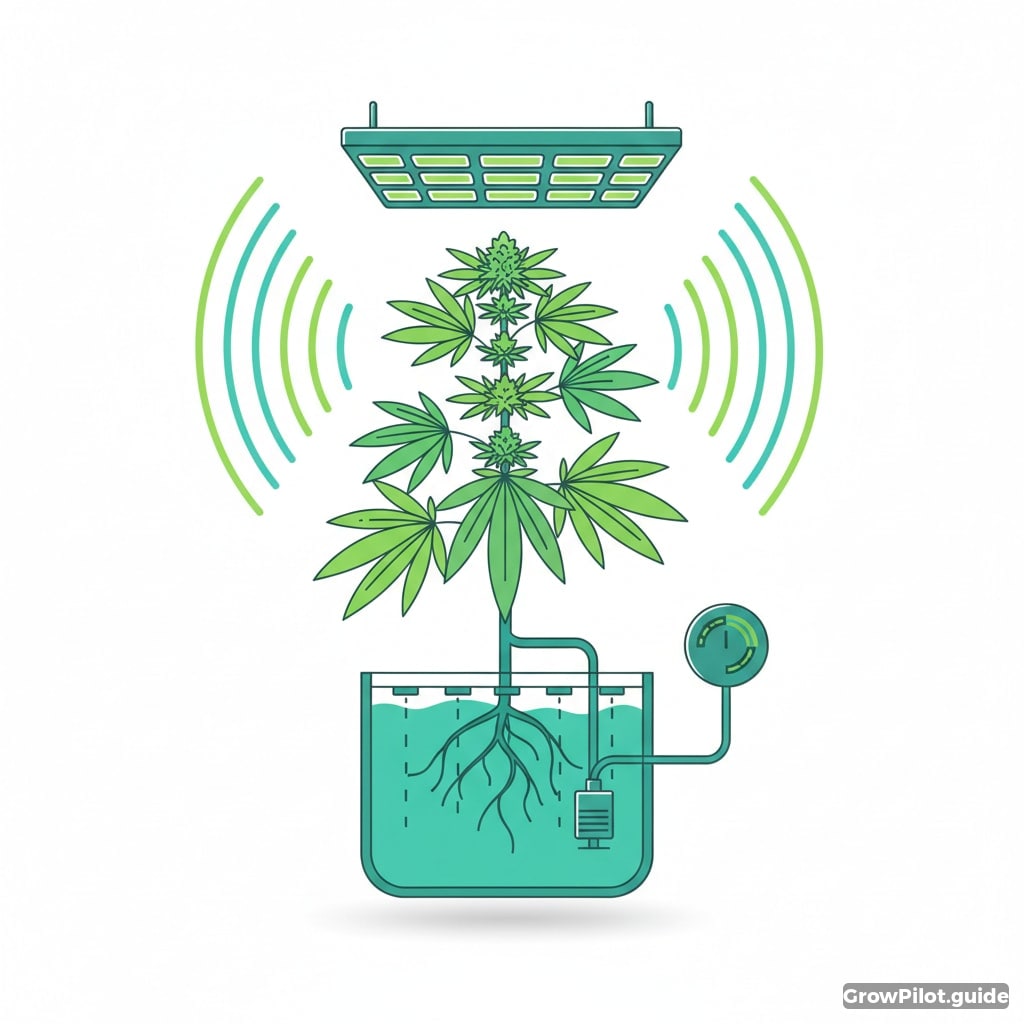
Intermittent light cycles in hydroponics: scientific background and practical implementation of pulsating light for optimum plant growth.
Introduction
Lighting plays a key role in hydroponic cultivation. In addition to classic light cycles, an alternative method is coming into focus: intermittent or pulsating light. This involves lighting in defined pulses rather than continuously. This guide sheds light (in the truest sense of the word) on the scientific background, advantages and implementation strategies of pulsed light cycles in the hydroponic environment. Important: All information relates exclusively to hydroponic systems. The pH value of the water (5.5-6.0), precise EC control, optimum water temperature (18-22°C) and a high oxygen supply to the roots must be considered separately.
Scientific principles
Photosynthesis and light pulses
Photosynthesis is the process by which light energy is converted into chemical energy. Studies have shown that plants can benefit from light pulses under certain conditions. With intermittent light, the lighting phase is divided into short, high-intensity pulses and pauses. Some studies suggest that these pulsating light phases can increase the efficiency of the chloroplasts as they relieve the reaction centers. The intermittent light cycles allow the photoreceptors to recover during the pauses, which can lead to increased uptake and utilization of photons.
Hydroponics and light adaptation
In hydroponic cultivation, where plants grow directly in a nutrient solution, the precise control of environmental parameters offers a particular advantage. By precisely controlling the light pulses, hydroponicists can modulate the energy flow in a targeted manner. It is essential to keep an eye on the pH target value (5.5-6.0) and the EC value - not because they directly change the influence of light, but so that the plants can make full use of their photosynthetic advantages. The ability to switch precisely between impulse and dark phases makes it possible to find an optimum balance between light energy and recovery phases.
Technical implementation
Selection of suitable light sources
Modern full-spectrum LEDs and CMH lamps should be considered for the use of intermittent light cycles. These systems enable precise adjustment of the light intensity and offer the following advantages:
- Fast dimming: Allows the light source to be switched on and off sharply.
- Full spectrum:** Supports all stages of development without the need for multiple systems.
Setting the pulse parameters
The most important parameters when implementing pulsed light are the pulse duration, the dark phase and the total duration of the cycle. Typical settings can be:
- Pulse duration: 1-3 seconds of high intensity
- Dark phase:** 0.5-2 seconds pause
- Total duration:** Fixed setting to ensure an average daily PPFD
Colors and spectra should not be neglected. During the pulses, a slightly increased blue component in the light radiation can promote vegetative growth, while a balanced full spectrum also supports the flowering phases. It is crucial that the light parameters are measured continuously - using PPFD sensors and DLI calculations, which are essential in hydroponic systems.
Implementation in the hydroponic system
Control and automation
Integration into an automated lighting control system is crucial. Modern controllers allow precisely defined light pulses to be programmed and monitored via sensors. Pay attention to this:
- Use precise timers to avoid minimal deviations.
- Use software solutions** that enable statistical evaluation of the pulse cycles.
Calibration and adjustment
Test runs should be carried out before permanent use. This checks whether the set pulse frequency keeps the desired PPFD within the target range. Regular checks and adjustments are essential, as hydroponic systems - without a buffer effect - require immediate corrections. Proven measuring methods here are the use of quantum meters, which provide exact values and thus help to optimize the light quality.
Measurement & control
To verify the success of the intermittent light cycle, the following monitoring points should be observed:
- PPFD measurement: Ensure that the peak values are also achieved during the pulse phases.
- DLI calculations:** Despite the pulsing, the daily integral value must be in the optimum range.
- Visual control: Observe the plant behavior with regard to leaf color and thickness.
Conclusion
Intermittent light offers hydroponic growers an innovative way to efficiently modulate photosynthesis. By using precise, automated control systems, light pulses can be adjusted to save energy and optimize plant growth. Although the method is still the subject of ongoing research, initial practical applications offer promising results. Continuous monitoring and adjustment of the light parameters is the key to long-term success. This light technology expands the repertoire of modern hydroponic cultivation techniques and helps growers maximize their yields.
Pro Tips
- Start with short test cycles to check plant reactions.
- Use precise PPFD sensors to monitor the light pulses.
- Calibrate your controllers regularly to ensure accuracy.
- Ensure a uniform full spectrum to support all growth phases.
- Document results systematically for future optimization.
Frequently Asked Questions
What are the benefits of intermittent light cycles for cannabis cultivation?
Intermittent light cycles can increase photosynthetic efficiency and optimize plant growth by helping plants use energy more effectively and reduce stress.
How long should the light cycles be for cannabis grown hydroponically?
Recommended light cycles vary, but many growers use 18 hours of light and 6 hours of darkness during the vegetative phase and 12 hours of light and 12 hours of darkness during the flowering phase.
Which light sources are best suited for intermittent cycles?
LEDs are ideal for intermittent light cycles because they are energy-efficient, generate little heat, and allow for the emission of specific wavelengths of light.