Recognizing and eliminating excess potassium in soil
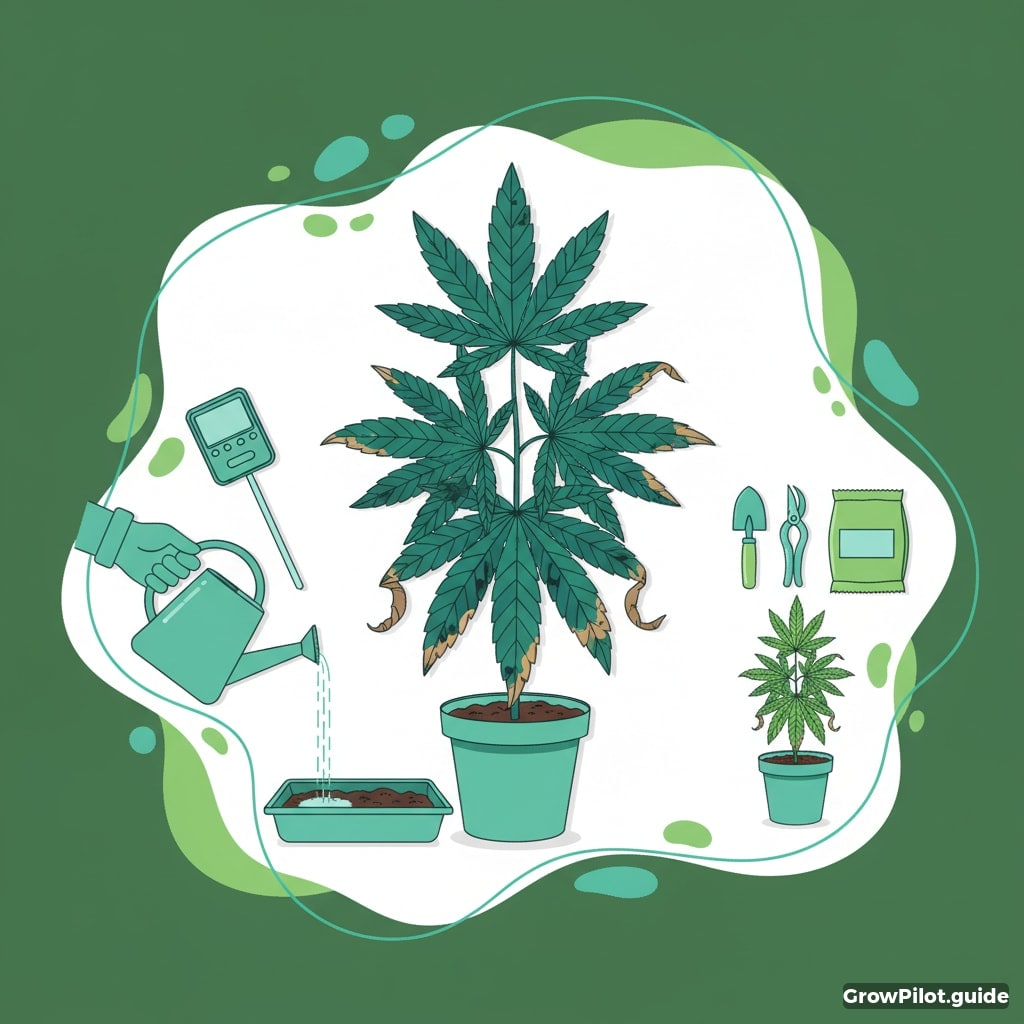
Excess potassium in soil: hidden secondary problems like calcium and magnesium blockages — recognise typical symptoms, diagnose reliably and correct.
Classification
Excess potassium is an often underestimated problem in soil cultivation. Unlike a pure potassium deficiency, too much potassium often manifests itself not only directly, but also indirectly via blockages of other nutrients. Calcium and magnesium** are often particularly affected in soil because an unbalanced cation ratio in the root zone makes it difficult for them to be absorbed.Especially in pre-fertilized soil, with additional bloom boosters or bloom fertilizers with a strong emphasis on potassium, an excess can slowly build up. Because soil buffers nutrients, symptoms are often delayed and do not disappear immediately after correction.
Typical symptoms of excess potassium
A true excess of potassium usually shows a mixed symptomatology of salt stress and antagonisms.
Direct signs
- Dark-looking foliage** without a healthy, lush appearance
- Burnt leaf tips and edges**, especially on older leaves
- Leaf edges appear dry, brittle or necrotic
- Partially leaf edges curved upwards or downwards
- Slowed growth despite regular fertilization
Indirect consequences due to nutrient blockage
Too much potassium can hinder the uptake of other cations. Then additional symptoms appear:
- Magnesium-like symptoms: interveinal chlorosis on older leaves
- Calcium-like symptoms**: irregular spots or weakened new growth
- Overall unbalanced plant health despite sufficient amounts of fertilizer
Important: This combination is often misinterpreted as a simple multiple deficiency, although the cause may be potassium oversupply.
How to clearly differentiate excess potassium
1. check fertilizer history
Excess potassium is more likely if you:
- have used additional PK boosters or potassium-rich bloom additives
- have fertilized according to the scheme with every watering, although the soil was still pre-fertilized
- used many organic potassium sources in parallel
- have already seen brown tips and still continued to apply high doses
2. keep the pH in the soil range
In soil cultivation, the root zone should be around the pH 6.0 to 7.0 range. If the pH is significantly outside this window, symptoms may resemble or intensify an excess. Therefore, always check first whether there is also a pH-related absorption problem.
3. do not confuse with potassium deficiency
Potassium deficiency also shows marginal necrosis, but typically occurs when there is a real undersupply. You will usually find an excess:
- Already high or frequent fertilizer applications
- dark foliage that appears to be under stress
- additional indications of Ca and Mg blockage
- Salt stress in the substrate
Common causes in soil cultivation
- Overdosed flowering fertilizers with a high K content
- Too early or too frequent use of PK additives
- Combination of several fertilizers with similar nutrient profiles
- Heavily charged soil plus additional liquid fertilization
- Too little watering volume, causing salts to accumulate in the pot
- Continuous watering without sufficient watering breaks
The latter is particularly important in soil: if the substrate remains constantly wet, root activity suffers. This exacerbates over-fertilization and blockage problems.
Correct excess potassium in soil
Immediate measures
- Stop potassium-containing additives immediately
- Flowering additives with a high K content
- Liquid fertilizers with a high potassium content
- Rinse the substrate if the symptoms are clear
- Rinse slowly and evenly to remove excess salts from the root zone
- Only rinse in soil if an excess is really likely, as organic systems are more sensitive to unnecessary leaching
- then let the substrate dry off
- Use the finger test before watering again
Feed again after the correction
After rinsing, do not fertilize again immediately.
- Start with a mild, balanced application of nutrients
- Avoid additional boosters for several watering sessions
- Above all, observe new growth, not just old leaves
- Leaf areas that have already been burnt will not heal; it is crucial that there is no new damage
Evaluate progress correctly
The plant reacts slower in soil than in hydro or coco. A visible improvement can take a few days to over a week. Old necroses remain. This is a positive sign:
- no new burnt leaf edges
- more stable new growth
- less progression of chlorosis
- normalized leaf position after drying of the substrate
Prevention
The best prevention is a simple, non-overloaded fertilizer regimen. In soil, cannabis often needs less rapid correction because the substrate stores nutrients and soil microbes make organic sources available in the first place. Therefore, moderate doses and patience are usually safer than frequent topping up.
Pay particular attention to a balanced ratio of the main nutrients and only use potassium-rich additives when the plant really needs them.
Pro Tips
- Brown leaf edges plus Mg/Ca symptoms often indicate potassium excess.
- Never reflexively fertilize in soil if the tips are already burnt.
- Keep the pH in the soil between 6.0 and 7.0 for stable nutrient uptake.
- After a flush, always allow to dry before watering again.
- Judge the success on new growth, not on old, damaged leaves.
Frequently Asked Questions
How can I tell if there's too much potassium in my soil?
An excess of potassium often manifests as brown leaf tips, discoloration of the leaves, and a general delay in plant growth.
What symptoms indicate a calcium or magnesium blockage?
Symptoms of calcium or magnesium deficiency include yellow leaves with green veins, necrosis along the leaf margins, and stunted growth.
How can I correct high potassium levels?
To correct a potassium excess, you should increase watering to flush out the excess potassium and, if necessary, perform a pH test to optimize nutrient uptake.