Recognizing excess copper in cannabis
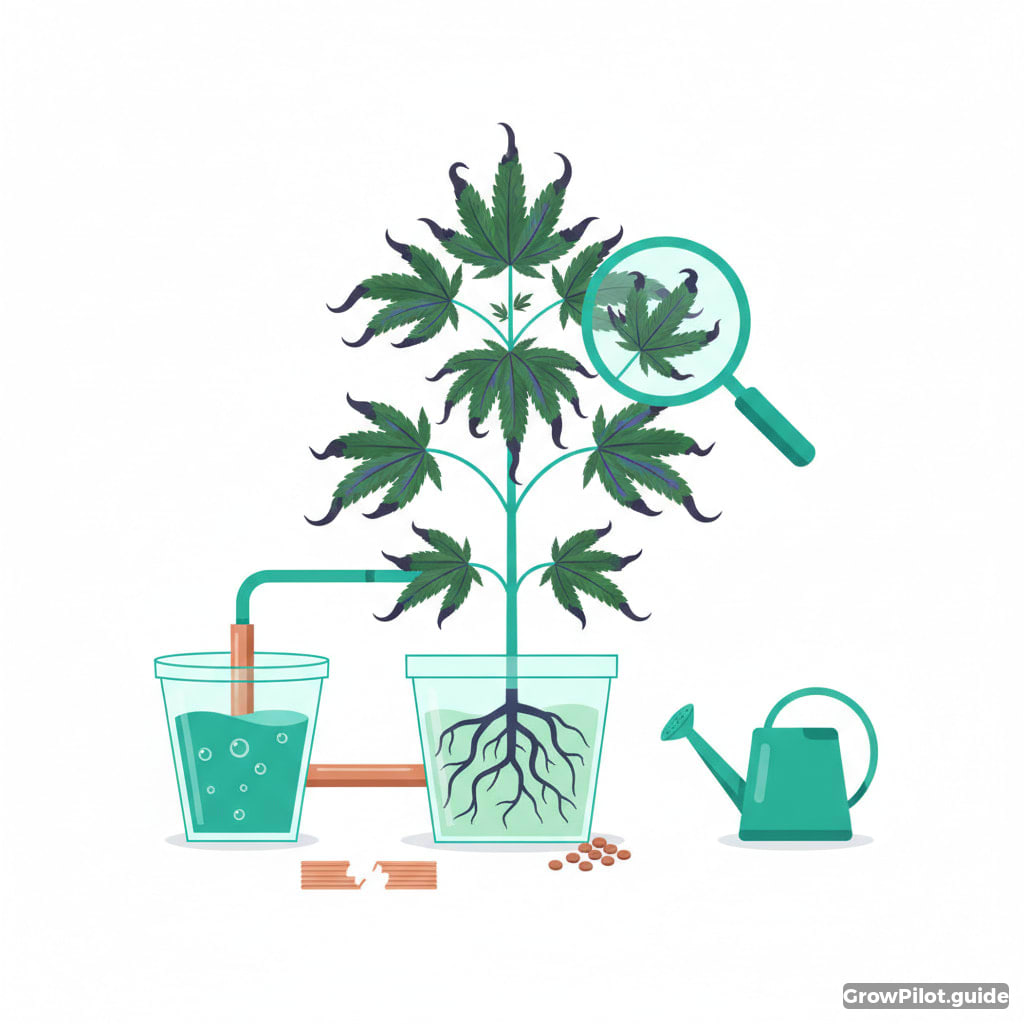
Excess copper is rare, but problematic. This guide shows typical symptoms, common causes, clear demarcations and clean corrections in the root zone.
Classification
Excess copper is much rarer in cannabis than a copper deficiency, but can occur in individual setups. Highly acidic root zones, multiple overlapping micronutrient sources or unsuitable supplementary products are particularly risky. The problem is not just too much copper itself: An excess can interfere with the absorption of other nutrients, especially iron, zinc and sometimes manganese.
This guide deals exclusively with excess copper. It does not deal with pests, diseases or general foliar problems unrelated to nutrients.
Why too much copper is problematic
Copper is only needed in trace amounts. In the right amount, it is important for enzymatic processes and metabolism. In excessive concentrations, however, copper quickly becomes toxic:
- it pollutes the root zone
- it can damage fine root tips
- it promotes secondary absorption problems of other micronutrients
- it worsens general growth despite apparently complete fertilization
Because copper is a micronutrient, overdosing often looks unspecific at first and is easily mistaken for pH lockout or mixing deficiencies.
Typical symptoms of excess copper
A true copper excess usually shows up as a combination of growth disturbance, leaf damage and secondary deficiency symptoms.
Early signs
- New growth appears slowed or irregular
- Leaves appear darker or dull
- Leaf tips and edges show the first signs of browning
- Roots work visibly worse, although enough nutrients are available
Advanced symptoms
- Necrosis** on leaf tips and edges
- blotchy brown to rusty damaged areas
- bent or uneven new growth
- Overall inhibited plant development
- secondary interveinal chlorosis due to impaired iron or zinc uptake
Important: Excess copper does not begin as clearly and textbook-like as some classic deficiencies. The picture is often mixed.
How to clearly differentiate excess copper
A reliable diagnosis can only be made by sampling plus root cause testing.
Indications that speak for excess copper
- Micronutrient preparations were used in addition to the basic fertilizer
- Foliar fertilizer and root fertilizer with trace elements have been combined
- The pH value in the root zone is permanently too low
- Symptoms worsen despite further micronutrient application
Frequent mix-ups
- Iron deficiency: primarily manifests itself on young leaves with clear interveinal chlorosis, often without typical necrosis at the edge at the beginning
- Zinc deficiency:** rather small, deformed young leaves and shortened internodes
- General overfertilization:** usually affects several nutrient salts at the same time and often shows stronger salt stress symptoms
- pH lockout:** can look similar, but is not automatically an excess of copper
Excess copper is more likely when an excessively acidic root zone is combined with additional trace element sources.
Common causes
The most important triggers are:
- Overdosing of micronutrient or "trace element" products
- Combination of several complete fertilizers with a similar trace element profile
- pH value in the root zone too low
- Long-term unbalanced nutrient solution
- in rare cases, contaminated water sources or unsuitable additives containing copper
In practice, it is not the tap water that is the main cause, but almost always an excessive external supply or a pH problem.
Corrective measures
1. remove the copper source immediately
Discontinue all additional micronutrient products, trace element boosters and unnecessary additives. Work temporarily only with a clean basic fertilizer in the correct dosage.
2. Stabilize pH in the target range
A pH value that is too low increases the risk of copper toxicity. Therefore, check the pH value of the watering solution or nutrient solution and the condition of the root zone.
Sensible target ranges:
- soil: about 6.2-6.8
- Coco/Hydro:** approx. 5.8-6.2
3. reduce salt and excess load
If you have clearly over-fertilized, it makes sense to flush the root zone gently. The aim is not to starve the plant, but to reduce excess salts and free copper.
Then continue working with a mild, balanced nutrient solution instead of immediately applying a full fertilizer again.
4. observe new growth
Leaves that have already been damaged will usually not recover. The decisive factor is whether the new growth appears cleaner, more even and more vital after correction.
What you should not do
- do not blindly add more iron, zinc or other micronutrients
- do not use several "problem solvers" at the same time
- don't make decisions based solely on leaf color without checking the pH and fertilization scheme
- Don't expect old necroses to disappear
Conclusion
Excess copper is rare, but real. It is usually caused by too many trace element sources or a too acidic root zone. The best solution is a sober diagnosis: stop the causes, stabilize the pH, remove excess from the root zone and then assess the new growth. In this way, the problem can be clearly distinguished from real deficiencies and corrected without guesswork.
Pro Tips
- Never stack micronutrient boosters in parallel
- If suspected, check pH and fertilizer first
- Old necroses no longer heal
- New growth is the best indicator of success
- Too acidic root zone increases copper risks
More Growing Knowledge & Smart Grow Help
GrowPilot.guide is the cannabis grow tracker and weed cultivation app with smart plant analysis, indoor cannabis growing guide, grow diary, community, cups and autoflower grow tracker for growers worldwide.
Open GrowPilot.guide App →