Nutrient interactions in coco cultivation
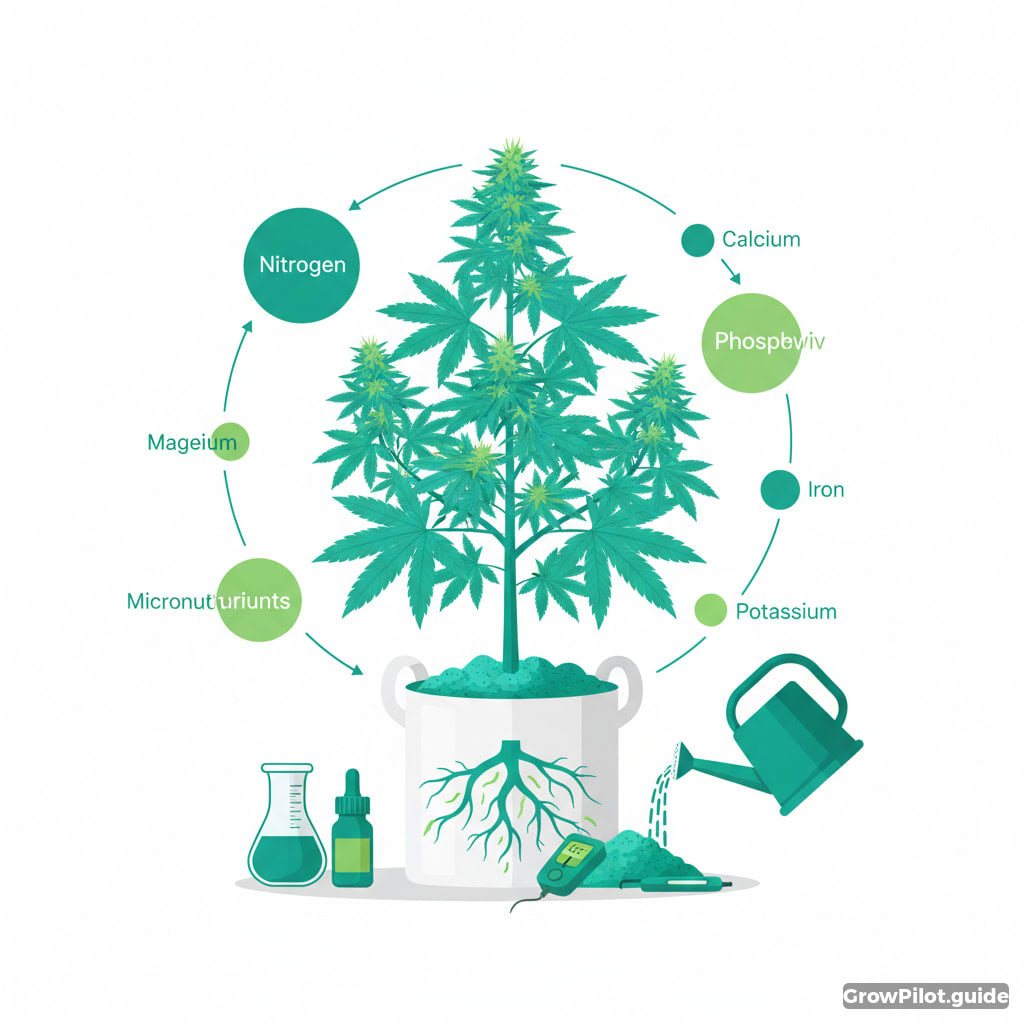
Nutrient interactions in coco: understand synergistic and antagonistic effects, maintain pH 5.8–6.0 and supplement calcium-magnesium as needed.
Introduction
When growing in coco coir, understanding nutrient interactions is essential. In a medium that has little buffering effect, synergistic and antagonistic effects can quickly lead to deficiencies or lockouts. This guide focuses exclusively on nutrient chemistry in coco cultivation, with a focus on precise measurements such as pH (5.8-6.0) and EC as well as targeted calcium-magnesium supplementation.
Basics of nutrient interactions
Nutrients have a more direct effect in coco than in soil. It is therefore important to know that:
- synergies: Some nutrients support each other's uptake. For example, an adequate supply of calcium (Ca) and magnesium (Mg) improves root activity and cell wall stability.
- Antagonisms**: Excesses of one element, e.g. potassium (K), can hinder the uptake of calcium and magnesium. These competitive relationships must be kept in mind and balanced by precise dosing.
Synergistic nutrient effects in coco
Calcium and magnesium
A balanced ratio (ideally between 3:1 and 5:1) is of central importance. In Coco, where the available nutrients react quickly, the correct dosage of Cal-Mag supplements prevents deficiency symptoms from occurring. A balanced supply supports:
- Root development: Stable cell walls and efficient nutrient uptake.
- Enzyme reactions**: Optimization of metabolic processes.
Trace elements in combination
In addition to macronutrients, micronutrients can also work in synergy. For example, zinc (Zn) often supports the function of enzymes that mobilize iron (Fe). A correct dosage avoids deficiency symptoms, which quickly become visible in coco.
Antagonistic interactions
Potassium vs. calcium and magnesium
An excess of potassium, often caused by high EC values, can block the absorption of calcium and magnesium. It is particularly important in coco, where there is a low buffering effect:
- Check the nutrient concentration regularly.
- Correct excess immediately by adjusting the nutrient solution.
Other antagonistic combinations
Interactions between other minerals can also lead to problems. For example, too much phosphorus (P) in combination with low calcium levels can lead to binding, which indicates a reduced availability of Ca and Mg to the plants. Please note:
- Regular measurements: Analysis tools for EC and pH help to detect deviations at an early stage.
- Immediate adjustment: If an imbalance is detected, the nutrient solution should be corrected.
Adjustment of the nutrient dosage
pH and EC as control parameters
In coco cultivation, the target range for the pH value is between 5.8 and 6.0. All changes in the composition of the nutrient solution have an immediate effect. Therefore, growers must:
- Perform daily pH checks to allow for quick responses to shifts.
- Adapt the EC values to the respective requirements. Too high EC can lead to lockouts, while too low values provoke deficiency symptoms.
Practical dosage recommendations
Some points to consider in daily use of Coco:
- Cal-Mag supplementation: Regularly, especially if potassium is elevated, to prevent deficiency symptoms.
- Adjustment in case of symptoms: If there are signs of nutrient antagonism, e.g. leaf burn or chlorosis, adjust further dosage immediately.
- Document fertilization plan: Keep records of each nutrient solution adjustment to track correlations between adjustments and plant responses.
Conclusion and recommendations
The mutual influence of nutrients in coco cultivation requires precise management. Synergies between Ca and Mg as well as the correct dosage of trace elements support healthy plant development. At the same time, avoiding antagonistic effects, such as an excess of potassium, is crucial to prevent nutrient blockages. With regular measurements, adapted supplementation and a structured fertilization plan, a balanced nutrient ratio can be achieved that does justice to the rapid reactions in coco. It is particularly important for hobby growers to be aware of the direct interactions and to take countermeasures at an early stage. The continuous optimization of the nutrient solution thus contributes to the long-term health and performance of the plants.
Important summary:- Precise measurements of pH and EC are essential.
- Balance and adjust calcium, magnesium and potassium to prevent deficiency symptoms.
- Make targeted use of synergistic effects to create optimum growth conditions.
Overall, understanding nutrient interactions in coco cultivation helps to meet the challenges of a fast-reacting medium and to cultivate healthy, high-yielding plants in the long term.
Pro Tips
- Measure pH and EC regularly
- Precise dosing of Cal-Mag additives
- Act immediately if there are signs of lockout
- Document nutrient processes
- Making targeted use of synergies and avoiding antagonistic effects
Frequently Asked Questions
What nutrient interactions are most important in coconut cultivation?
In coconut cultivation, the interactions between calcium, magnesium, and potassium are particularly important, as an excess of potassium can inhibit the uptake of calcium and magnesium.
How do I maintain the optimal pH level when growing plants in coconut coir?
The ideal pH level for growing coconuts is between 5.8 and 6.0 to maximize nutrient uptake and prevent nutrient lockout.
When should I add Cal-Mag when growing in coconut coir?
Cal-Mag should be supplemented specifically when signs of deficiency, such as yellowed leaves or necrotic spots, appear, especially during the growth phase.