Prevent phosphorus fixation in the substrate
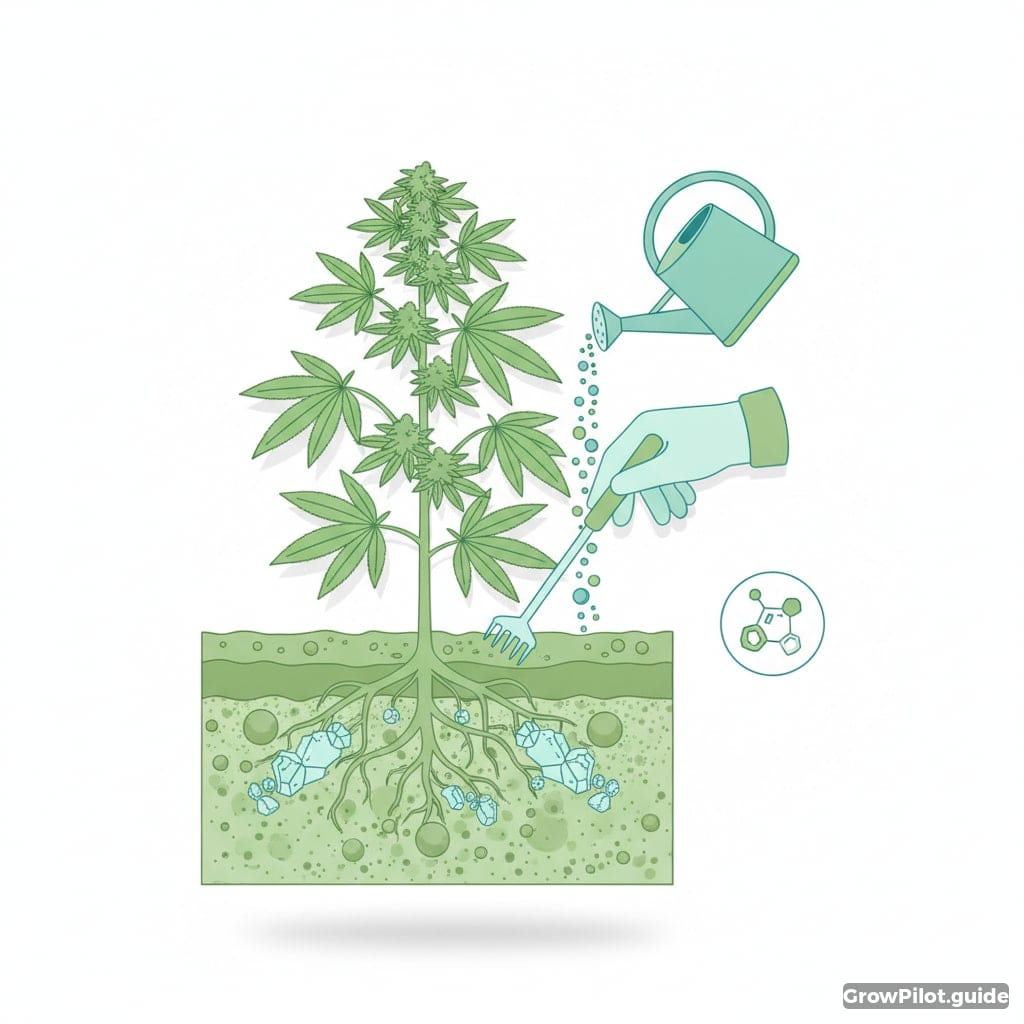
How phosphorus is bound in the root zone, how to recognize when it is poorly available, and how to adjust the pH, fertilizer type, and dosage so that phosphorus remains available.
Introduction
Phosphorus (P) is particularly important for cannabis in terms of energy transfer, root development, and flower formation. In practice, however, the problem often isn’t a lack of phosphorus in the fertilizer, but rather insufficient availability in the root zone. In such cases, P is present in the system but is chemically bound or poorly absorbed due to an unfavorable environment.
This guide specifically addresses the topic of phosphorus fixation in nutrient management. This refers to the binding of phosphorus to other elements or substrate components, making it less available to the plant. This is a different problem than an actual P deficiency caused by insufficient fertilization.
What Phosphorus Fixation Means
Phosphorus is usually present in nutrient solutions as phosphate. In the root zone, this phosphate can react with other ions to form less soluble compounds. This reduces the amount that is immediately available.
This is particularly relevant when there are high levels of:
- Calcium
- Iron
- Aluminum
- or a highly unfavorable pH value
In mineral systems, this often becomes apparent more quickly because the plant reacts more directly to changes. In more heavily buffered substrates, the problem may take longer to become apparent, but the underlying issue remains the same: P is present, but not sufficiently available to the plant.
Typical Causes in Nutrient Management
Inappropriate pH Range
The most common trigger is a persistently incorrect pH in the root zone. Phosphorus is readily available only within a limited pH range. Outside this range, its binding to other elements increases significantly.
As a practical guideline:
- Soil: approximately pH 6.2–6.8
- Coco: approximately pH 5.8–6.2
- Hydro: approximately pH 5.5–6.2
Short-term, minor deviations are usually less problematic than a persistently shifted range.
Excessive calcium or micronutrient load
A very high calcium input can promote the formation of poorly soluble calcium phosphates. This is particularly relevant when large amounts of phosphorus are also added. Excessive micronutrient applications can also unnecessarily disrupt the chemistry of the nutrient solution.
Important: This does not mean that calcium should always be kept low. It’s about balance, not omission.
Overdosed Bloom Fertilizers or Boosters
More phosphorus does not automatically mean better flowering performance. If phosphorus levels are raised significantly without the plant actually needing the extra supply, the risk increases of:
- Precipitation in the nutrient solution
- Binding in the growing medium
- Antagonism with zinc, iron, or calcium
- Unnecessarily high EC
Phosphorus is often overestimated, especially during flowering. While cannabis needs a solid supply of phosphorus during this phase, it does not need to be excessively overloaded.
How to Identify the Problem Correctly
Phosphorus fixation should not be diagnosed prematurely based solely on leaf symptoms. It makes more sense to consider a combination of test results, fertilization history, and plant response.
Look for the following indicators:
- pH repeatedly falls outside the appropriate range
- Products high in phosphorus have been used heavily
- EC is already high, yet the plant shows signs of poor phosphorus availability
- Adding even more fertilizer does not improve the situation or actually makes it worse
The core mistake is often: treating an availability problem with additional fertilizer. This increases the salt load but does not break the chemical bond.
Stage-Appropriate Classification
Young Plants and Early Vegetation
In early stages, phosphorus demand exists but is moderate. Excessive initial fertilization is unnecessary and can stress the root zone too early. Here, a mild, balanced supply makes more sense than a phosphorus-heavy approach.
Vegetative Phase
During the vegetative phase, phosphorus should be supplied consistently but not dominantly. A balanced base fertilizer usually covers the needs sufficiently. Additional phosphorus applications are only advisable if data and plant response support them.
Flowering Phase
During flowering, the importance of phosphorus increases, but its application must remain controlled. Instead of sudden increases, a smooth transition with moderate adjustments is better. The combination of high EC, high calcium levels, and aggressive PK products is particularly risky.
Preventive and Corrective Measures
Prevention
- Always check the pH after all fertilizer has been added following mixing
- Do not blindly combine base fertilizers with multiple phosphorus supplements
- Do not overinterpret manufacturer’s instructions as additive guidelines
- In hard water, consider total calcium input
- Manage EC not just by formula, but based on the plant’s response
Correction in Case of Suspected Fixation
- Stabilize the pH and return it to the appropriate range.
- Reduce or temporarily suspend P-heavy supplements.
- Check the overall nutrient concentration instead of increasing just a single value.
- If there is a significant salt load, relieve the root zone with a technically appropriate, mild correction and then restart with a balanced nutrient solution.
It is crucial not to react hastily. Phosphorus problems rarely disappear within a day. New, healthy growth is a more important indicator than old leaf damage.
Conclusion
Phosphorus fixation in cannabis cultivation is usually a chemical and balance issue, not a simple deficiency. Maintaining proper pH levels, avoiding phosphorus overdose, and considering calcium and total EC in conjunction can prevent many of these issues. The best strategy is almost always: Ensure availability rather than adding more and more phosphorus.
Pro Tips
- Never evaluate phosphorus in isolation; always consider pH and EC as well.
- A high P content in fertilizer is no substitute for good availability.
- Using multiple boosters at the same time often just increases the salt load.
- If the water is hard, include the calcium input in the overall balance.
- Evaluate corrections based on new growth, not on old damage.
More Growing Knowledge & Smart Grow Help
GrowPilot.guide is the cannabis grow tracker and weed cultivation app with smart plant analysis, indoor cannabis growing guide, grow diary, community, cups and autoflower grow tracker for growers worldwide.
Open GrowPilot.guide App →