Maintain a stable lighting plan during a power outage
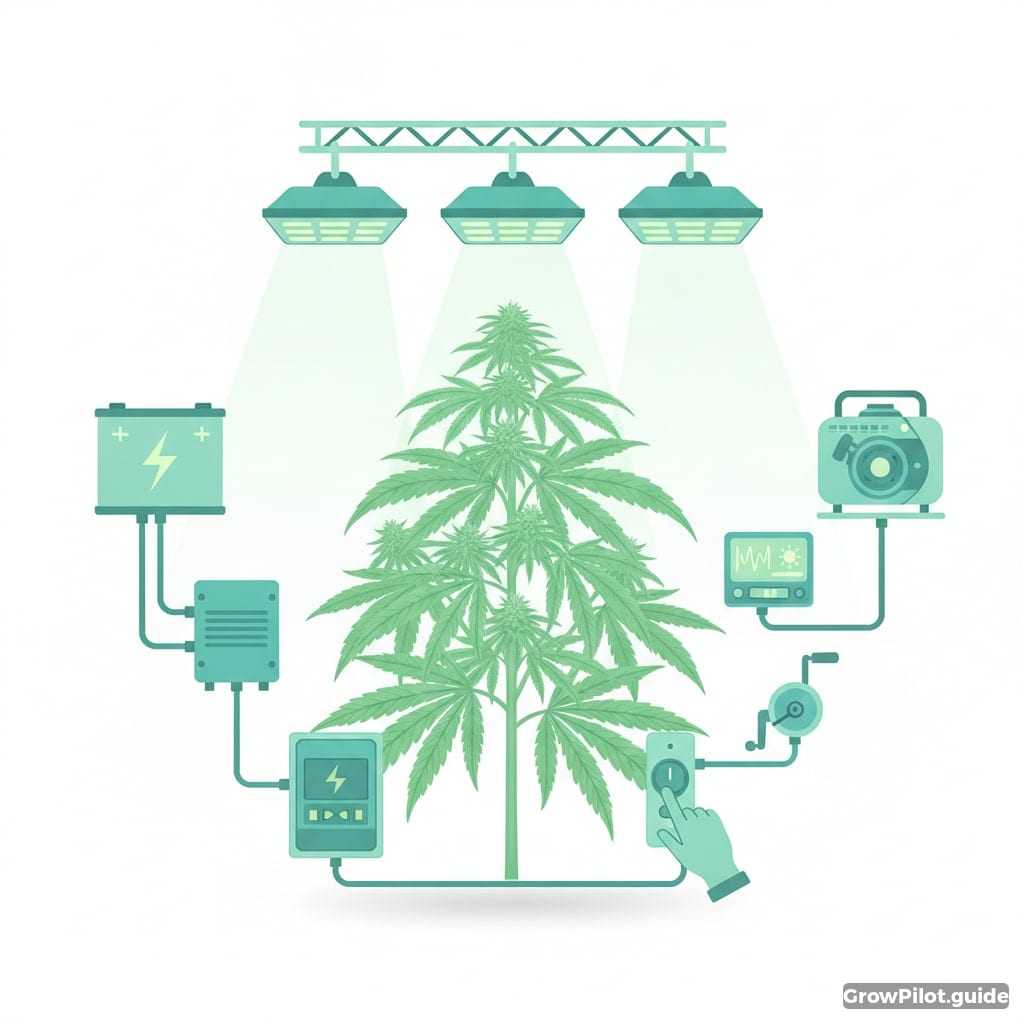
Here's how to respond correctly to power outages, timer resets, or unexpected interruptions in lighting without unnecessarily disrupting the light cycle of photoperiodic plants.
Introduction
Unplanned power outages, blown fuses, faulty timers, or a reset of digital timers are among the most common disruptions in indoor growing. The problem isn’t just that the lights are off for a while. What matters is which phase the plants are in and whether the light-dark cycle is interrupted or disrupted as a result.
This guide focuses exclusively on the lighting-related response to power outages and timer issues. It does not address climate, irrigation, or nutrients.
Why Power Outages Are Critical in Terms of Lighting
Cannabis reacts to the duration and regularity of lighting. Photoperiodic plants, in particular, rely on a stable dark phase.
Two situations are particularly critical:
- Light fails during the planned light phase
- Light accidentally turns on during the planned dark phase
Not every interruption immediately leads to problems. Individual short outages are usually less critical than repeated disruptions or a shifted circadian rhythm.
Vegetative phase: how to respond correctly
During the vegetative phase of photoperiodic plants, systems such as 18/6 or 20/4 are common. This phase is generally more resilient to short interruptions than the flowering phase.
In case of a brief outage during the light phase
If the light goes out for a short time:
- Do not completely reset the lighting schedule
- Once power is restored, let the original schedule continue
- Do not make up for the lost lighting time in the middle of the dark phase
Example:
- Scheduled: Light on from 6:00 AM to 12:00 AM
- Outage: 10:00 AM to 11:30 AM
- Correct: Light back on at 11:30 AM, but still off at 12:00 AM
In case of a timer reset
Digital timers often lose their time and programming after a power outage. Check immediately:
- Is the current time correct?
- Is the on/off window correct?
- Is the timer set to Auto instead of Always On or Always Off?
If it is unclear how long the light was operating incorrectly, reset the timer to the planned standard cycle instead of hastily entering new special times.
Flowering of photoperiodic plants: stability is the top priority
During flowering, the classic 12/12 cycle is only reliable if the dark phase remains uninterrupted. Errors here are significantly more critical than during the vegetative phase.
Power Outage During the Light Phase
If the lights go out during the day, the general rule is:
- Turn the lights back on once power is restored
- Do not delay the end of the light phase
- Continue the 12/12 rhythm normally the following day
The goal is not to compensate for every single minute of lost light, but to keep the cycle stable.
Power Outage During the Dark Phase
A genuine power outage is usually less critical here than accidental additional light, because the darkness is maintained. It only becomes problematic if, after the reset:
- lights turn on too early
- the timer is programmed incorrectly
- you manually “quick-test” and interrupt the dark phase in the process
During the planned dark phase, therefore:
- Do not manually turn on the main light
- Check the timer with minimal intervention
- If possible, completely reprogram it outside the dark phase
Properly Classifying Autoflowers
Autoflower varieties do not require a 12/12 flip because they flower on a time-controlled schedule. A power outage therefore does not affect the initiation of flowering, as it does with photoperiodic plants.Nevertheless, autoflowers also benefit from a consistent light schedule, such as 18/6 or 20/4. After an outage, the following also applies here:
- Return to the original rhythm
- Do not introduce unnecessary special cycles
- Do not use 12/12 mode as a “rescue measure”
Sound decision-making logic after an outage
1. Determine the nature of the disruption
- Just a power outage?
- Timer reset?
- Delayed lamp start?
- Light accidentally activated during the dark phase?
2. Correctly separate the phases
- Vegetative photoperiod
- Flowering photoperiod
- Autoflower
3. Prioritize the rhythm
The most important rule is:
- Maintain a stable daily rhythm or restore it quickly
- Do not obsessively try to make up for every lost amount of light
Prevention: Better protection against power outages
The following measures make sense from a purely lighting technology perspective:
- Use digital timers with a power reserve or battery backup
- Actively check the programming after every power outage
- Operate lamps and timers on separately fused, reliable circuits, if possible
- Always perform a complete light test over one cycle after maintenance or a circuit breaker trip
- Use a simple indicator light to verify that the lamp is actually running at the correct time
Conclusion
During power outages, sound lighting logic is crucial, not panic. In the vegetative stage, brief outages are often manageable. During photoperiodic flowering, the stable 12-hour dark phase is the top priority. Autoflowers do not require a 12/12 cycle and should simply return to their normal light schedule after an outage. Consistently checking the timer, time, and switching window prevents most subsequent errors.
Pro Tips
- Don't blindly try to make up for lost time
- Always check the time after a reset
- Never turn on the lights during the 12/12 dark phase, even on a trial basis
- Do not switch autoflowers to a 12/12 cycle
- A timer with a backup prevents many subsequent errors
Frequently Asked Questions
What should I do if the power goes out during the flowering stage?
Try not to interrupt the dark phase by leaving the plants in the dark until the power comes back on. Avoid manually changing the light cycle.
How can I reset my light timer after a power outage?
Make sure to reset the timer to its original settings as soon as power is restored so as not to disrupt the light cycle.
Does a brief power outage have a negative effect on plants?
A brief power outage usually has no long-term negative effects, as long as the light cycle is not significantly disrupted. Make sure the plants do not remain in the dark or in the light for too long.