Safely detect septoria on cannabis
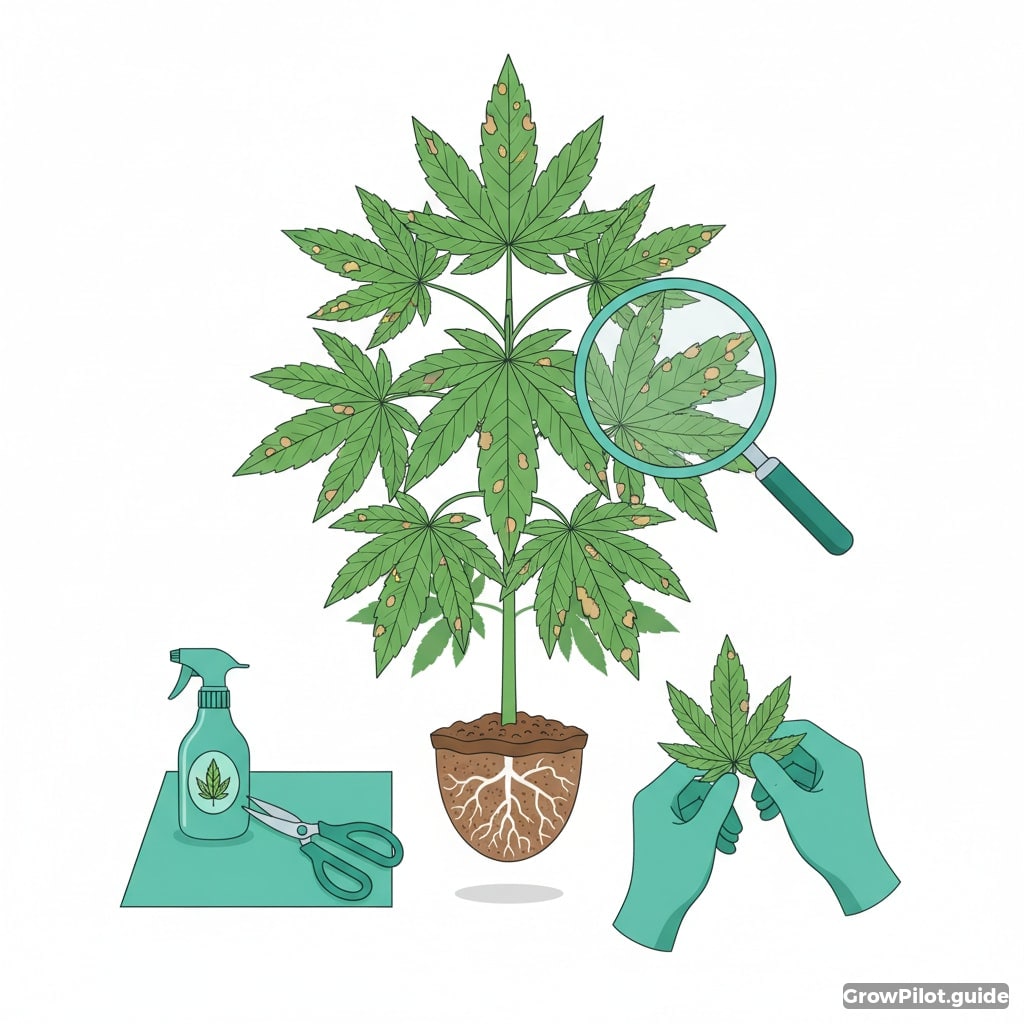
Septoria causes yellow-brown leaf spots and can spread rapidly in the crop. This guide shows you how to recognize, contain and prevent the disease.
Introduction
Septoria is a fungal leaf disease that mainly affects older fan leaves on cannabis. Typical symptoms are small yellowish to brown spots, which enlarge and lead to the death of leaf tissue as the infection progresses. Unlike Botrytis, Septoria is primarily found on the foliage and not inside dense flowers. The loss of yield is mainly indirect: the damaged leaf area reduces photosynthesis, the plant is weakened and the crop is more susceptible to further problems.
This guide deals exclusively with detection, containment and prevention of Septoria.
Recognize septoria safely
Typical symptoms
Look out for the following features:
- small round to irregular spots on leaves
- often yellowish at first, later brown to dark brown
- Often a yellow halo around the spots
- Spots often start on older, lower leaves
- heavily infested leaves turn completely yellow and die off
In high humidity, tiny dark fruiting bodies can develop on dead tissue, but these are often difficult to see without magnification.
Where the infestation usually starts
Septoria often starts where the microclimate is unfavorable:
- in the lower part of the plant
- in dense foliage with weak air movement
- after splash water on the leaves
- with prolonged high leaf wetness
Differentiation from similar problems
A clear diagnosis is important because spots do not automatically mean septoria.
Rather for Septoria speaks
- Many smaller individual spots instead of extensive burns
- Start on older foliage in the lower area
- Spread after damp phases or poor air circulation
- several leaves with similar spots
Rather not typical for Septoria
- white, powdery coating: more indicative of powdery mildew
- gray, rotten tissue in flowers**: rather speaks for Botrytis
- purely uniform yellowing without spots: more likely to indicate leaf spot fungi
- sharply defined damage directly after spraying or strong lighting: more likely a phytotoxic cause
If unsure, look at several leaves and the course of infestation over a few days. Septoria typically spreads from leaf to leaf if humidity and hygiene remain unfavorable.
Immediate measures in case of infestation
1. remove infested foliage
Remove clearly infested leaves carefully and completely. Important:
- Only touch dry plant material, if possible not when the crop is wet
- Disinfect pruning tools before and after use
- Remove leaves immediately from the grow room in a bag
- Do not leave infested material in the grow room
2. worsen propagation conditions
The fungus benefits from moisture and prolonged leaf wetness. Therefore:
- reduce humidity, especially in dense crops
- Ensure even air movement without permanently blowing strongly on plants
- Avoid stagnant, moist air pockets in the undergrowth
- Do not wet leaves unnecessarily
3. check the crop closely
Check in the following days:
- lower and inner leaves
- neighboring plants
- new spots on previously healthy leaves
Mark affected plants so that you can objectively assess the progression.
Treatment options
Biological and contact-active options
In the case of early infestation, approved contact-active, fungistatic or biological preparations can help in ornamental and crop plant cultivation. The decisive factor is always
- only use products approved for the crop and the intended use
- Strictly observe label and waiting times
- Do not mix different products indiscriminately
- Test sensitive plants on a few leaves first, if the label allows this
What is realistic
Leaf tissue that is already badly damaged will not recover. The main aim of treatment is therefore to
- to slow down new infections
- to stop the spread in the crop
- to protect healthy foliage
Prevention
Septoria is best prevented through cultivation hygiene and climate control:
- Do not place plants too close together
- Keep the lower, heavily shaded area clean
- Remove fallen or diseased leaves immediately
- Clean tools and hands after contact with infested material
- Do not create unnecessary leaf wetness
- Observe new plants before introducing them and keep them separate
Prevention is particularly important after a previous infestation, as plant debris and carried-over spores can serve as a starting point for new infections.
Conclusion
Septoria is not a spectacular, but a serious leaf disease. If you recognize the typical yellow-brown spots early, consistently remove infected foliage and improve humidity and air circulation, you can usually contain the disease significantly. The key is not blind spraying, but a clean diagnosis plus consistent hygiene.
Pro Tips
- First check the lower fan leaves for small yellow-brown spots.
- Remove infested leaves from the grow room immediately, do not leave them on the floor.
- Avoid leaf wetness and standing moisture in the dense plant interior.
- Do not confuse septoria with mildew or botrytis; the damage is different.
- Only treat with approved plant protection products and always observe the label.
More Growing Knowledge & Smart Grow Help
GrowPilot.guide is the cannabis grow tracker and weed cultivation app with smart plant analysis, indoor cannabis growing guide, grow diary, community, cups and autoflower grow tracker for growers worldwide.
Open GrowPilot.guide App →