Z Cube 4 Autoflower: Genetics, Growth, and Flowering
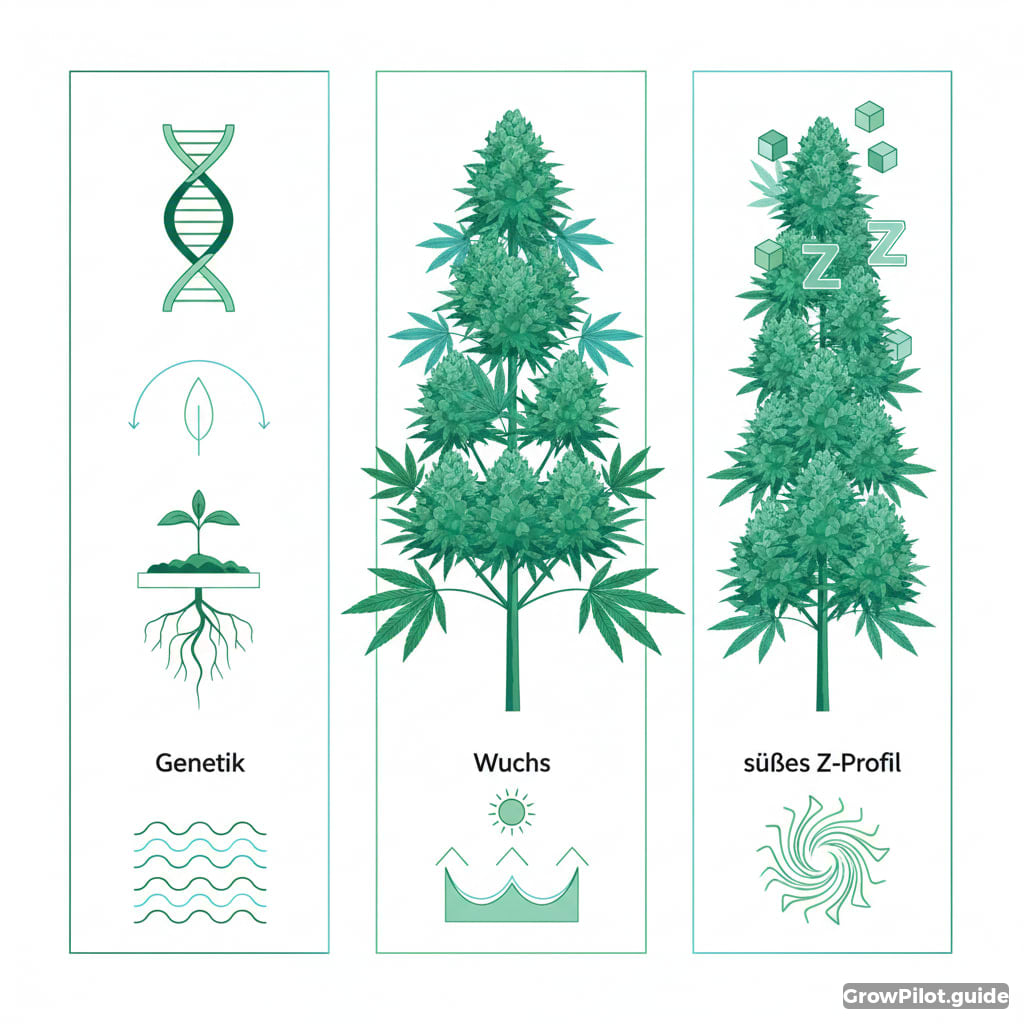
Z Cube 4 Autoflower provides a concise and source-verified overview of Z genetics, autoflower growth, flowering time, aroma, and growing tips
Z Cube 4 Autoflower: Genetics, Growth, and Sweet Z Profile
Z Cube 4 Autoflower is a modern strain from the fruity-sweet Z lineage, whose profile is particularly interesting due to its autoflowering traits, compact to medium growth, and a candy-forward aroma profile. At the same time, as with many newer hybrid lines, the strain name alone does not guarantee globally consistent genetics. Depending on the breeder, conservation efforts, and selection, the structure, maturation time, and intensity of the aroma can vary noticeably. For growers, therefore, it is not the name that matters, but the reliable core characteristics that can be derived from breeder specifications, strain archives, and practical experience reports.
At its core, Z Cube 4 Autoflower is usually described as an autoflowering hybrid with clear ties to modern Zkittlez-inspired fruit and candy lines. This suggests plants that have been bred more for aroma, resin, and an attractive flower profile than for extreme height or maximum vegetative mass. Those who grow this strain should therefore not expect a massive, long-flowering Sativa, but rather a relatively fast-growing crop with a limited window for adjustments.
What is known about the genetics and origin of Z Cube 4 Autoflower?
First, the most important clarification: Z Cube 4 Autoflower is not a classic strain with a long history of documentation like Northern Lights, Skunk 1, or White Widow. The available data is significantly more limited and is more heavily influenced by current breeder descriptions. In such cases, it is scientifically and journalistically sound to name only the core information that is consistently repeated across multiple entries and reports.
This core information points to a modern Z-line with Ruderalis heritage—that is, a cross in which a fruity-sweet elite profile was transferred to an autoflowering strain. The name component “Z Cube” generally refers to the Zkittlez-related breeding lineage, while “4” is usually more of a selection or line designation than a distinct botanical category. It’s also typical for autoflowering versions that breeders use multiple backcrosses or selections to stabilize two goals simultaneously:
- reliable autoflowering
- as much of the aroma and resin profile of the parent line as possible
This is precisely where the practical challenge lies with many autoflower hybrids. The more selection is focused on terpenes, resin, and bag appeal, the more important stable environmental conditions become, because modern dessert and candy strains often react more sensitively to stress than older, more robust standard hybrids.
How does Z Cube 4 Autoflower typically grow?
According to available descriptions, Z Cube 4 Autoflower usually exhibits compact to medium-sized hybrid growth. Typical characteristics include:
- relatively rapid early growth after successful establishment
- short to medium internode spacing
- good lateral branching with sufficient light
- limited but clearly noticeable stretching at the start of flowering
Compared to autoflowers with strong sativa characteristics, this strain generally remains more manageable in height. Indoors, this is an advantage for smaller setups, low-ceilinged tents, or dense planting. Outdoors and in greenhouses, it benefits from the fact that automatic flowering does not depend on day length. In these settings, however, the quality of the early growth phase is more critical than the calendar. As is well known, autoflowers are more sensitive to early-stage problems because they cannot simply compensate for them by extending the vegetative phase.
Typical Height Range
Depending on pot volume, light intensity, climate, and phenotype, Z Cube 4 Autoflower typically ranges from about 60 to 110 centimeters. Under very good conditions, individual plants may exceed this range, especially if root space, light, and temperature are optimal in the early phase. In smaller pots or if growth is stunted early on, it remains significantly more compact.
Structure During the Flowering Stage
Many reports indicate a bushy to semi-open structure with several productive side shoots. This is beneficial for light distribution but can also lead to reduced airflow inside the plant in densely foliated phenotypes. Experienced growers therefore often carefully thin out large fan leaves, though without unnecessarily stressing the plant during the short autoflowering period.
How Long Is the Flowering Period, Really?
For autoflowers, it makes sense to specify the growing period from germination, not from the change in the light cycle. For Z Cube 4 Autoflower, breeders and growers typically cite a range of about 9 to 11 weeks from germination, although individual phenotypes may mature slightly faster or slower.
It’s important to distinguish between manufacturer specifications and real-world conditions:
- Under ideal conditions, faster growth cycles are possible
- In real-world setups, cooler temperatures, lack of light, or initial stress often extend the maturation period by a few days
- Highly resinous, dense buds sometimes appear visually ready earlier than the trichomes are actually mature
Therefore, the decision to harvest is based not only on calendar dates but, above all, on trichome development, bud swelling, and the fading of fresh white stigmas.
What yields are realistic?
Especially with modern autoflowers, manufacturers’ figures sometimes vary more widely than actual results. For Z Cube 4 Autoflower, a realistic assessment makes more sense than promotional claims. In a well-managed indoor grow, about 350 to 500 g/m² seems like a solid range. Depending on pot size, lighting, and the duration of uninhibited early growth, individual plants often yield about 50 to 120 grams per plant.
This range is wide but plausible. Autoflowers respond particularly strongly to three factors:
- a smooth start during the first 2 to 3 weeks
- high and consistent light levels
- proper watering without alternating between drought stress and waterlogging
If you slow the plant down too early, you’ll usually lose potential permanently. If, on the other hand, you keep it stable from the start, you’ll often achieve surprisingly efficient use of space.
What does Z Cube 4 Autoflower smell and taste like?
The aroma profile is usually described as sweet, fruity, and candy-like, often with notes of tropical fruits, berries, and candy, and occasionally with slightly creamy or gassy undertones. This profile fits well with modern Z strains, where the focus isn’t on sharpness or diesel notes, but rather on a lighter, juicier aroma profile.
Probable Terpene Profile
Without batch-specific lab data, one should not present exact lists of dominant terpenes as established facts. However, based on the described aroma profile, it can be inferred that many phenotypes may contain terpenes such as limonene, caryophyllene, linalool, or humulene may be present in many phenotypes. Studies on cannabis chemotyping show that fruity-sweet profiles often result from the interaction of multiple terpenes rather than from a single dominant terpene alone.
Furthermore, especially with Z-line strains, it is well known that the sensory profile depends heavily on drying and curing. Drying that is too warm or too fast often results in the loss of precisely those volatile, light fruit notes that make such genetics so appealing.
How are the effects described?
User reports generally describe Z Cube 4 Autoflower as a balanced to somewhat relaxing hybrid, often with an initial lighter, mood-lifting effect followed by a more pronounced sense of physical calm. Such descriptions are subjective and depend, among other things, on dosage, individual tolerance, method of consumption, and actual chemotype. They should therefore not be understood as guaranteed effects.
Compared to heavy Kush strains, the profile is often described as less heavy, but compared to clear Haze types, it is described as less stimulating. For many growers and users, the appeal lies precisely in this middle ground: aromatically modern, but structurally not as sprawling as some photoperiod dessert hybrids.
Who is Z Cube 4 Autoflower suitable for?
The difficulty level is generally easy to moderate, with one important caveat: The strain isn’t particularly complicated, but like many autoflowers, it is less forgiving in the early stages. Beginners can grow it if they follow a few basic rules. Advanced growers will get significantly more out of it, especially when it comes to lighting, watering, and climate control.
It’s particularly well-suited for growers who:
- are looking for a relatively fast grow from germination
- enjoy fruity-sweet Z aromas
- don’t want extremely tall plants
- work in small indoor setups or short outdoor growing windows
It’s less suitable for growers who plan to use very aggressive training methods or long correction phases. The autoflowering window is usually too short for that.
What growing tips are particularly important for Z Cube 4 Autoflower?
1. Maintain stability in the early phase
The first two to three weeks determine a large portion of the final yield. Consistent temperatures in the moderately warm range, sufficient light, and loose, well-aerated growing medium help root development. Repotting stress is often avoided with autoflowers by starting them directly in their final pot.
2. Use training sparingly
Gentle low-stress training can be beneficial if the plant is growing vigorously. Heavy topping or repeated high-stress pruning costs many autoflowers time they cannot recover. Whether topping works depends heavily on phenotype, timing, and cultivation practices; there is no universal standard here.
3. Keep an eye on humidity and flower density
When Z Cube 4 Autoflower produces dense, resinous buds, excessive humidity increases the risk of internal bud problems. Good air circulation, careful and judicious defoliation, and controlled humidity levels are more important than maximum leaf mass.
4. Don’t overfeed
According to reports, modern fruit-oriented hybrids can sometimes be sensitive to excessive salt buildup. A moderate nutrient regimen with close monitoring of leaf color, bud tips, and substrate behavior is usually more sensible than aggressive, high-dose fertilization.
Conclusion
Z Cube 4 Autoflower is particularly appealing to growers seeking modern Z-aromas in a fast, autoflowering format. Its robust core traits suggest compact to medium-sized growth, a growth cycle of about 9 to 11 weeks from germination, fruity-sweet candy notes, and solid to good yields with a clean start. Its biggest advantage is the combination of aroma profile and manageable grow time. Its biggest weakness is the limited tolerance for mistakes in the early stages, which is typical for autoflowers. If you take great care during this phase, you’ll most likely end up with a strain that impresses less with its size and more with its terpenes, resin, and efficiency.
Frequently asked questions about Z Cube 4 Autoflower
What is known about the genetics of Z Cube 4 Autoflower?
Z Cube 4 Autoflower is generally described as an autoflowering hybrid with clear ties to modern Zkittlez-derived fruit and candy strains. However, the article also emphasizes that the strain name does not guarantee consistent genetics worldwide and that characteristics may vary depending on the breeder and selection process.
How tall does the Z Cube 4 Autoflower typically grow?
According to available descriptions, Z Cube 4 Autoflower typically grows to a compact to medium size and, compared to autoflowers with strong sativa traits, often remains more manageable in height. It usually reaches about 60 to 110 centimeters, but can exceed that under very good conditions.
How long does it take for Z Cube 4 Autoflower to go from germination to harvest?
For this autoflowering strain, it makes sense to specify the growing period starting from germination. Breeders and growers typically cite a period of about 9 to 11 weeks from germination, although individual phenotypes may mature slightly faster or slower.
What does Z Cube 4 Autoflower smell and taste like?
The flavor profile is usually described as sweet, fruity, and candy-like. Notes of tropical fruits, berries, and candy are frequently mentioned, sometimes with slightly creamy or gassy undertones.
Who is Z Cube 4 Autoflower particularly suitable for?
It’s particularly well-suited for growers looking for a relatively fast grow cycle from germination, fruity-sweet Z-aromas, and plants that aren’t extremely tall. According to the article, it’s also well-suited for small indoor setups or short outdoor growing seasons, while aggressive training methods aren’t really a good fit.
Matching seeds from our partner

PARTNER OFFER
Z Cube 4 - Autoflower Cannabis-Samen - Zexy Seedz
Available from 10 % Vorteil bei CANA TRAVA – exklusiv für GrowPilot.guide Nutzer
Grapes, berries, grapefruit. Auto; 50% Indica / 50% Sativa. 8–9 weeks flowering. Indoor yield: 400–500 g/m².
Product details and prices supplied by the partner.