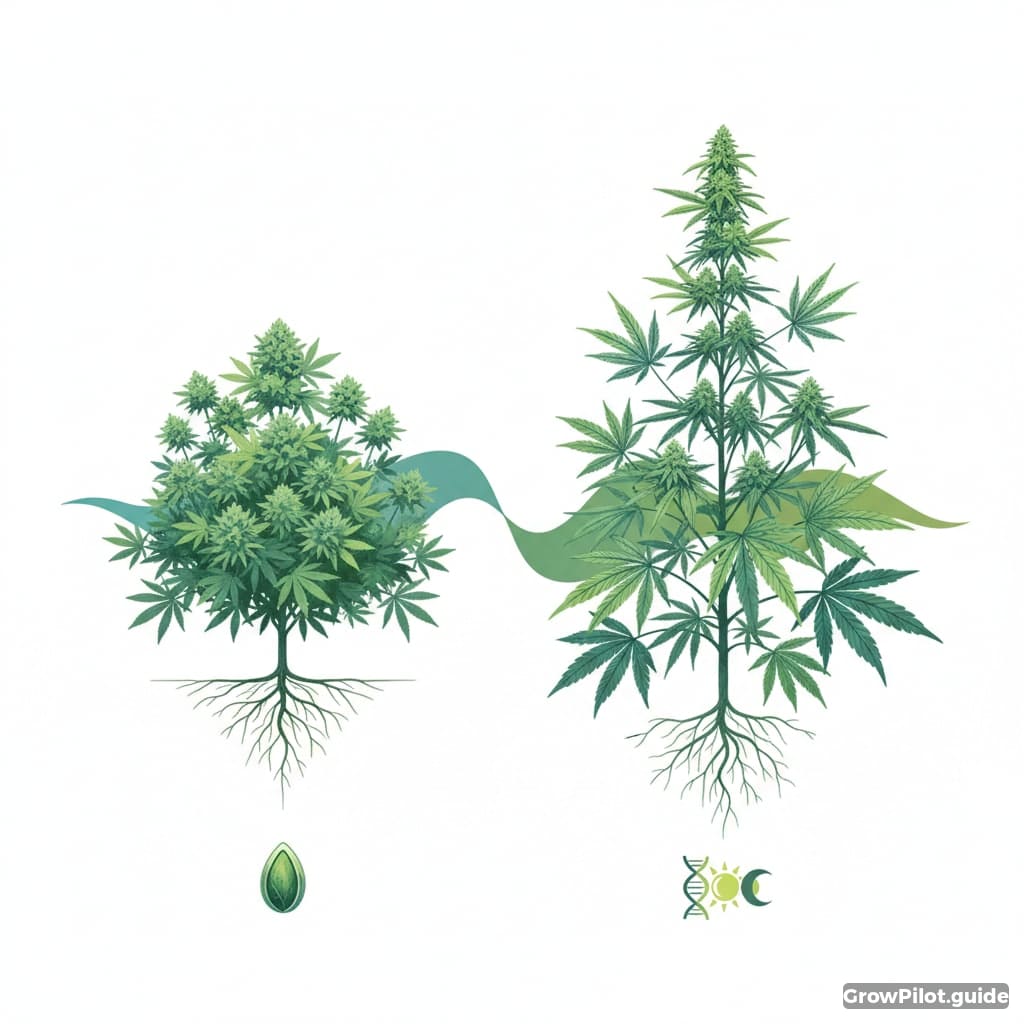
Caramelicious: Genetics, compact growth, and a sweet flavor profile

Caramelicious is an Indica-dominant hybrid strain with a sweet, spicy aroma and typically compact growth habit. This article explains its origin, flowering, yield, terpenes, and practical growing tips.
# Caramelicious: Genetics, Compact Growth, and a Sweet Profile
Caramelicious is one of those strains that didn’t become famous because of a particularly loud hype, but rather because of a relatively clear practical profile: a sweet aroma, a fairly compact structure, solid resin production, and a flowering cycle that’s usually easy to control. This is precisely why the strain is appealing to growers seeking classic, not overly eccentric hybrid genetics. At the same time, it’s important to note that slightly different phenotypes can occur under the same name, depending on the breeder, conservation efforts, and seed batch.
In international strain archives, seed bank listings, and grow reports, Caramelicious is usually described as an indica-dominant hybrid. It is often cited as being derived from Caramella and Northern Lights x Skunk. This classification appears in several catalog descriptions and also aligns with the characteristics consistently described by many growers: compact growth, relatively short internodes, rapid flowering, and a sweet-spicy aroma profile with caramel notes. As with many older commercial strains, however, such pedigrees should be understood as well-documented breeder claims rather than independently verified genomic analyses.
What is known about the genetics and origin of Caramelicious?
The name Caramelicious is primarily associated with European indoor breeding efforts of the 2000s. The strain has been described in several archives as a line selected for yield, sweetness, and a manageable plant structure. At its core, it is neither a landrace nor a modern “candy hype” clone, but rather a more classic hybrid concept: robust base genetics, a short to medium flowering time, and a profile suitable for both indoor and sheltered outdoor locations.
Typical genetic characteristics that recur in descriptions:
- Indica-dominant profile
- Frequently cited parents: Caramella and Northern Lights x Skunk
- Selected for sweet aroma, compact growth, and dense buds
- a more classic hybrid structure rather than extreme Haze or Kush stretch
How Does Caramelicious Grow in Everyday Cultivation?
In practical cultivation, Caramelicious is usually described as a small to medium-sized plant. Indoors, many phenotypes remain compact if the vegetative phase isn’t extended too long. A typical bushy structure with a strong main stem and several sturdy side shoots is common. According to many reports, the stretch after switching to flowering is moderate. This distinguishes the strain from Haze or Diesel lines that stretch much more.
Typical Growth Profile
- Indoors, often about 80 to 130 cm with normal care
- Outdoors, frequently 120 to 180 cm depending on pot size, season, and climate
- Moderate stretch during the first weeks of flowering
- Rather compact internode spacing
- Well-suited for SOG, controlled LST, and light pruning
What flowering time and yields are realistic?
For photoperiod Caramelicious strains, breeders and grow reports typically cite a flowering time of about 8 to 9 weeks. Some phenotypes appear to mature earlier, but for a fuller flavor and a fully developed resin structure, many growers prefer to let the plants run until the end of this window. Outdoors, in temperate climates, maturity is often described as occurring in early to mid-fall, though location, weather, and phenotype play a major role.
When it comes to yield, it’s best to keep expectations realistic. Manufacturer estimates are traditionally more optimistic than real-world reports. Under good indoor conditions, realistic yields often range from:
- 350 to 500 g/m² in a clean environment with uniform foliage
- Outdoors, roughly 350 to 700 g per plant, depending on the length of the growing season, root space, and sunlight exposure
How does Caramelicious smell and taste?
Its aroma profile is the very reason the strain bears its name. Reviews often mention caramel, toffee, sweet earth, a hint of spice, and, in some cases, fruity undertones. Depending on the phenotype, skunky or woody nuances may also be present. Such variations are normal for hybrids with a broader genetic base.
Presumed Terpene Profile
Without batch-specific laboratory analysis, an exact terpene profile cannot be guaranteed. However, descriptions from seed banks and user reports often point to the following dominant or contributing terpenes:
- Myrcene for earthy, sweet, and sometimes heavy notes
- Caryophyllene for spicy, slightly peppery accents
- Limonene for bright, sweet-citrusy highlights
- sometimes Humulene or Linalool in smaller amounts
What effects do growers and users describe?
Caramelicious is usually described in strain archives and user reviews as physically relaxing, calming, and at the same time not necessarily overwhelming. Many classify the effect as pleasantly balanced with an Indica-dominant profile: relaxing, but not strongly sedating with every phenotype. Some reports also mention a slight mental uplift or a warm, calm physical sensation.
Such descriptions of effects should always be taken with a grain of salt. They depend not only on genetics but also on:
- Harvest time
- Individual endocannabinoid system
- Method of consumption and dosage
- Drying, storage, and actual chemical profile
Who is Caramelicious particularly suited for?
Caramelicious is often classified as beginner-friendly to slightly advanced. The main reason is its generally well-controllable growth pattern. It requires less management than highly stretchy, late-maturing, or phenotypically variable strains. Nevertheless, it is not a strain that completely forgives major mistakes.
It’s often particularly well-suited for growers who:
- prefer more compact plants
- are looking for a sweet and spicy profile rather than a pure Fuel or Haze profile
- aim for a flowering time under 10 weeks
- Grow indoors with limited headroom
- Enjoy dense, resinous buds with a classic hybrid structure
What growing tips are really useful for Caramelicious?
The strain’s greatest strength can also be its main weakness: dense bud structure. When buds mature in a compact form, high humidity increases the risk of mold and stunted maturation.
Climate and Environment
- During the vegetative phase, temperatures of around 22 to 28 °C often work well
- During flowering, aim for stable temperatures without extreme heat spikes
- Significantly lower humidity in late flowering to ensure the compact buds mature properly
- Ensure good airflow in the lower and middle canopy
Training and Plant Shape
- LST usually works well because side shoots grow readily
- Light pruning can be helpful if large fan-shaped leaves shade bud sites
- For very bushy phenotypes, early thinning of weak inner shoots is recommended
- Extreme high-stress training is usually unnecessary if the goal is an even canopy
Common Mistakes
- Too much nitrogen in early flowering, which promotes foliage growth at the expense of flower development
- Too high humidity with a dense canopy
- Training too late, causing the plant to grow unevenly
- Harvesting too early, before the sweet-spicy flavor profile is fully developed
Conclusion: Why does Caramelicious remain appealing to many growers?
Caramelicious isn’t a strain that relies primarily on hype. Its appeal lies more in a solid overall package: compact to medium growth, usually moderate flowering time, decent yields, and an aroma profile that combines sweet, caramel-like, and spicy notes. It’s precisely this blend that makes it attractive to many homegrowers looking for classic, easy-to-manage hybrid genetics.
Anyone growing Caramelicious should pay particular attention to phenotypic variation, humidity, and canopy management. When these factors are managed properly, the strain consistently delivers the characteristics it’s known for: manageable plants, dense buds, and a pleasantly sweet, old-school flavor profile that stands in clear contrast to modern “fuel” and “candy” extremes.