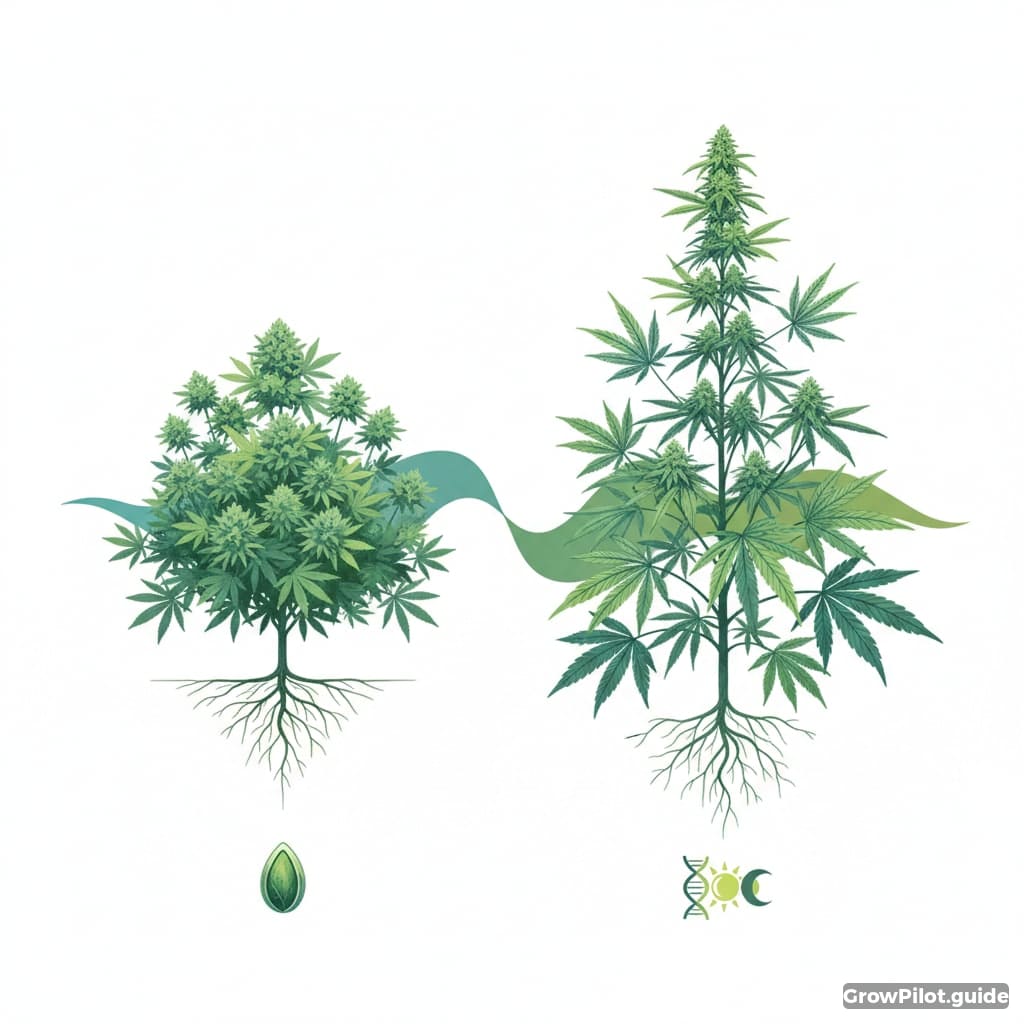
Candy Kush: Genetics, compact growth, and sweet-spicy terpenes

Candy Kush combines OG Kush influences with a sweet flavor profile and a typically compact hybrid growth habit. This article provides an objective overview of its genetics, flowering, yield, terpenes, effects, and growing practices.
# Candy Kush: Genetics, Compact Growth, and Sweet-Spicy Terpenes
Candy Kush is one of those strain names that isn’t always used consistently on the international market. This is precisely the most important starting point for growers. Depending on the breeder, conservation efforts, and seed line, the name may refer to a slightly different cross or, at the very least, a different phenotypic focus. Nevertheless, seed bank descriptions, strain archives, and many grow reports reveal a relatively consistent core: Candy Kush is usually described as an indica-dominant to balanced hybrid that combines sweet, caramel, or candy-like notes with earthy, spicy, and sometimes kush-like undertones.
In practice, the strain is particularly interesting because it is often classified as medium-sized, easy to manage, and relatively indoor-friendly. Unlike Haze or Diesel lines that stretch significantly, Candy Kush tends, according to many reports, to have a more compact structure with solid lateral branching. At the same time, it is not a completely low-maintenance “autopilot strain”: Dense buds, a Kush-typical structure, and occasionally heavy nutrient uptake require careful climate control and a watchful eye during late flowering.
What is known about Candy Kush’s genetics and origin?
The name Candy Kush is frequently associated in international catalogs with a cross between OG Kush and a sweet, dessert-like counterpart. Lines combining OG Kush with Trainwreck appear particularly often; while other versions place greater emphasis on a generally sweet Kush background. This raises an important point: When discussing Candy Kush, one should always distinguish between the strain name and the specific breeding line.
Historically, this is not an unusual occurrence. Many well-known strain names have been bred further, backcrossed, or reinterpreted under similar names over the years. With Candy Kush, the common denominator seems to be less about exactly identical genetics and more about a profile characterized by Kush structure, sweet aromatics, and moderate hybrid growth.
Typical Genetic Characteristics
Across various sources, Candy Kush strains are often described as having the following characteristics:
- Kush influence in flower density, internode spacing, and aroma profile
- Sweet to candy-like terpene character instead of a purely earthy Kush profile
- Medium flowering time instead of extremely short or very long maturation
- Compact to medium-sized growth with less stretching than many Sativa-dominant hybrids
How does Candy Kush grow in practice?
In grow forums, seed bank descriptions, and user reviews, Candy Kush is usually described as a bushy hybrid with solid lateral branching. Indoors, many plants remain within a manageable range, often around 80 to 140 cm, provided the vegetative period, pot size, and training are moderate. Outdoors or in a greenhouse, it can grow significantly larger during a long growing season, often reaching about 150 to 220 cm, depending on climate and phenotype.
The stretch during early flowering is usually described as moderate. Many growers report a 1.5- to 2-fold increase in height after switching to a 12/12 cycle for photoperiodic strains. This is enough to fill the space well, but is usually not as aggressive as with heavily Haze-influenced strains.
Structure and Suitability
Typical characteristics include:
- Compact main stems with relatively dense bud formation
- Wider leaf structure in Kush-like phenotypes
- Good response to LST, topping, and SCROG
- solid indoor suitability due to controllable height
- outdoor suitability, especially during drier late-flowering phases or in well-ventilated locations
What flowering time and yields are realistic?
For most photoperiodic Candy Kush strains, the flowering time is typically 8 to 10 weeks, according to breeder specifications and grow reports. A common range in practice is 56 to 63 days, while some phenotypes tend to remain in the flowering stage until days 65 to 70 to achieve greater density or more complete maturation.
When it comes to yield, it’s wise to have realistic expectations. Under good indoor conditions, 350 to 500 g/m² is often cited as a realistic range. Highly optimized setups may exceed this, but that’s not the norm. Outdoors, many reports place yields roughly in the range of 400 to 700 g per plant, with pot volume, hours of sunlight, vegetative growth period, and pest pressure being the deciding factors.
What accounts for these differences?
The range is primarily explained by:
- Phenotypic differences between more compact and more heavily branched plants
- Light intensity and even illumination of the canopy
- Air movement during late flowering
- Nutrient management, particularly reducing nitrogen at the right time
- Harvest window, because harvesting too early often compromises density and aroma
How does Candy Kush smell and taste?
The aroma profile is the reason this strain bears its name. Many descriptions mention sweet, sugary, caramel, or candy-like notes, combined with earthy, spicy, piney, and a typical Kush undertone. Some phenotypes also exhibit citrus, vanilla, or slightly floral accents.
When it comes to terpenes, depending on the strain, manufacturers and lab profiles often list caryophyllene, limonene, and myrcene as dominant or co-dominant components. This aligns well with the recurring aroma notes:
- Caryophyllene is often associated with spicy, peppery notes
- Limonene with lighter, sweet-citrusy impressions
- Myrcene with earthy, warm, and sometimes heavier base notes
What effects do growers and users describe?
Reports on Candy Kush typically describe the effect as physically relaxing, mentally calming, and overall balanced to evening-oriented. Kush-like phenotypes are more often experienced as heavier and more physically oriented, while slightly more hybrid varieties may still offer a mild mental clarity or social openness.
It’s important to keep this in perspective: Such descriptions of effects come primarily from user reports and strain archives, not from standardized clinical studies on a uniform Candy Kush line. Perception and intensity depend, among other factors, on dose, individual tolerance, method of consumption, and specific chemotype.
Who is Candy Kush suitable for when growing?
Candy Kush is often classified as easy to moderately challenging. It is therefore often feasible for beginners with a clean, basic setup, but really shines for growers who actively control the climate and canopy.
Best suited for
- Growers with limited headroom in their tent
- Fans of sweet and spicy Kush profiles
- SCROG or LST setups with an even surface area
- Indoor grows with good dehumidification during late flowering
Less ideal for
- Very humid late-flowering conditions without strong air movement
- Growers looking for extremely airy, long-internode Sativa structures
- Setups where dense buds are difficult to manage
What growing tips are particularly important for Candy Kush?
The most important practical consideration is climate management during flowering. Due to their often dense bud structure, Candy Kush plants benefit from constant air movement, thorough pruning, and a gradual decrease in humidity. Many growers maintain moderately higher levels early in flowering and lower them significantly in the late phase to prevent pockets of moisture.
Specific Guidelines
- Temperature: often around 24 to 28 °C during the day, slightly lower at night; excessive heat can lead to terpene loss and loose buds
- Humidity: moderate during the vegetative stage, significantly lower in late flowering
- Training: LST, topping, and SCROG usually work well because the strain often branches evenly
- Defoliation: Use sparingly but selectively; it’s important to allow air to reach the flower clusters without unnecessarily stressing the plant
- Nutrients: Kush-dominant hybrids can sometimes be sensitive to over-fertilization; it’s better to increase nutrients gradually rather than fertilize aggressively
- Harvest time: Observe the trichomes and the plant’s overall appearance, not just the calendar date
Common Mistakes
- Plants grown too densely without air channels
- Vegetative phase too long in small grow tents
- Excessive nitrogen application late into flowering
- Harvesting too early, before the aroma has fully matured
Conclusion: Why Does Candy Kush Remain Interesting?
Candy Kush isn’t a strain defined solely by extreme individual traits. Its appeal lies more in the combination of manageable hybrid growth, dense Kush structure, and sweet-spicy aromatics. This is precisely what makes it attractive to many growers who aren’t looking for an overly capricious exotic strain but still want a distinct terpene profile and solid flower quality.
The key caveat remains the ambiguity of the name. Anyone growing Candy Kush should not rely on the strain name alone, but should pay attention to the breeder’s background, parentage, flowering window, and real-world grow reports. This allows for a much more precise assessment of the strain than relying solely on marketing terms.