MAC (Miracle Alien Cookies): Genetics, Structure, and Delicate Phenotypes

MAC is one of the most distinctive modern U.S. hybrids. This article explains its origins, growth, flowering, terpenes, effects, phenotypes, and what growers should keep in mind regarding climate and training.
# MAC (Miracle Alien Cookies): Genetics, Structure, and Subtle Phenotypes
MAC, short for Miracle Alien Cookies, is one of the modern U.S. strains known among growers primarily for its striking resin production, its often creamy and spicy aroma, and its distinctive flower structure. At the same time, MAC is a good example of how strongly a strain name can be associated with a specific elite line—and how significantly later seed versions may differ from it. Anyone growing MAC should therefore pay attention not only to the name, but also to the actual lineage, the breeder’s background, and the expected phenotypic variation.
Essentially, MAC is usually described in international strain archives, breeder records, and grow reports as a cross between Alien Cookies and a male hybrid of Colombian and Starfighter. Historically, the line is closely associated with the U.S. breeder Capulator. The MAC 1 selection became particularly well-known; it was long regarded in the scene as an elite clone with limited availability. This raises an important practical point: Not every plant currently offered as MAC matches the profile of the well-known MAC-1 selection.
What is certain about MAC’s genetics?
The most commonly cited genetic core is:
- Alien Cookies as the maternal line
- Colombian x Starfighter as the paternal line
- Breeding-wise, it is usually linked to Capulator
This is crucial for growers. A true elite selection often exhibits more consistent traits in terms of resin, structure, and aroma, whereas seed versions can vary more widely. This variation is not a flaw, but rather a consequence of the fact that modern hybrids are not automatically completely homogeneous, even when their parents are known.
How does MAC typically grow?
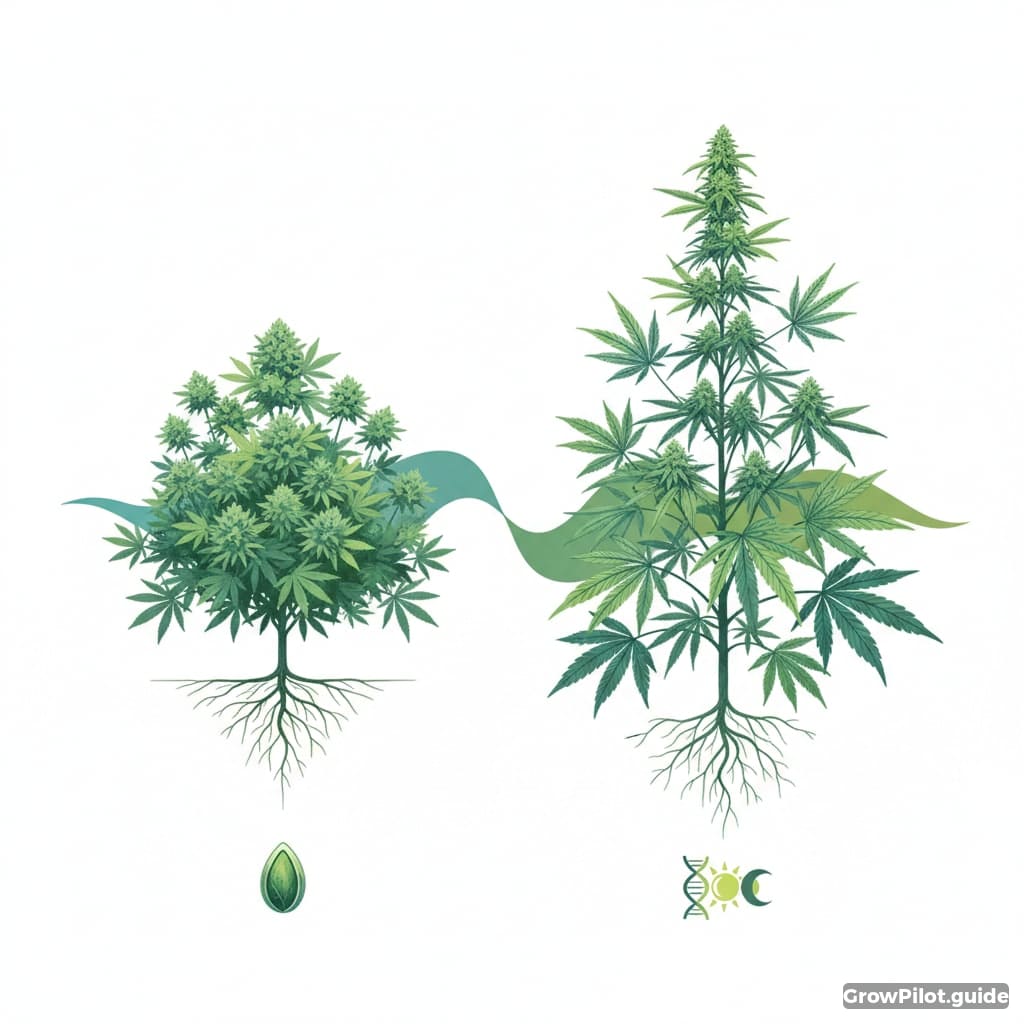
MAC is described in many reports as a medium-sized to robust hybrid with solid lateral branching. The plants often do not appear as extremely lanky as some Haze lines, but they are also not as compact as classic Afghani hybrids. A typical characteristic is a structure that opens up well with training and can develop dense, resinous buds under strong light.
Frequently mentioned traits include:
- moderate stretch during early flowering
- sturdy side branches, though their vigor varies depending on the phenotype
- rather bushier to balanced hybrid growth
- well-suited for indoor, greenhouse, and warm, dry outdoor locations
What flowering time and yields are realistic?
For photoperiodic MAC strains, many breeders and user reports cite a flowering time of about 9 to 10 weeks. Some faster phenotypes may appear to mature slightly earlier, while resinous and more compact varieties occasionally need a few extra days to fully mature.
As a rough guide, the following applies:
- Indoor flowering: usually 9–10 weeks
- Outdoor harvest: typically in mid- to late fall, depending on climate and hemisphere
- Indoor yield: often about 350–500 g/m² under good conditions
- Outdoor yield: frequently 400–700 g per plant, highly dependent on pot size, growing season length, and climate
Why do so many growers talk about MAC phenotypes?
Because phenotypic variation is a key issue with MAC in practice. Even within closely related lines, plants can react differently in terms of:
- Leaf width
- Internode spacing
- Resin quantity
- Flower density
- Color variation
- Intensity of creamy, gassy, citrus, or spicy notes
How does MAC smell and taste?
MAC’s aroma profile is often described in international reports as creamy, sweet, spicy, earthy, and slightly gassy. Depending on the line, citrusy, herbal-tart, or kush-like undertones may also be present. Unlike strains with a very one-dimensional fruit profile, MAC often features a multi-layered aroma profile.
Terpenes frequently cited in lab profiles of similar strains and in breeder descriptions as likely contributors include:
- Limonene for bright, citrusy top notes
- Caryophyllene for spicy, peppery depth
- Myrcene for earthy, warm base notes
- sometimes linalool or humulene in smaller proportions
What effects are attributed to MAC?
User descriptions generally classify MAC as a balanced to somewhat potent hybrid. Frequently cited impressions include:
- mentally clear to euphoric in the initial phase
- often physically relaxing afterward
- sometimes described as creative, focused, or socially open
- perceived as significantly heavier at higher intensities
Is MAC a strain for beginners?
Only to a limited extent. MAC isn’t an extremely difficult strain to grow, but it’s generally less forgiving of major mistakes than very robust classics. For many growers, the difficulty level falls in the intermediate to advanced range.
There are several reasons for this:
- Dense buds can become problematic in high humidity
- Some phenotypes are sensitive to over-fertilization
- Quality depends heavily on light and precise climate control
- Selection plays a greater role than with very uniform lines
What growing tips are particularly important for MAC?
Keep the environment clean
During flowering, MAC usually performs best with controlled humidity and good air circulation. Due to its often compact flowering structure, humidity should be managed with caution during late flowering. Overly dense plants without defoliation increase the risk of moisture pockets.Don’t over-fertilize
Many growers report that MAC can be sensitive to heavy nitrogen applications or “aggressive” feeding in general. Dark green, overloaded leaves and stunted flower development are typical warning signs. A more balanced, moderate feeding regimen is often the better strategy.Use training methods strategically
The following are particularly suitable:- Topping during the vegetative phase
- LST to open up the canopy
- SCROG, if an even canopy is desired
- moderate defoliation to allow light and air to reach the bud sites
Take Light Quality Seriously
Many reports suggest that MAC truly shines under high light intensity and a clean spectrum. Under low light, flower density, resin yield, and aromatic depth often fall short of their potential.Conclusion: Who Is MAC Best Suited For?
MAC is particularly appealing to growers seeking resin quality, complex aromas, and distinctive phenotypes who are willing to invest a bit more attention in climate control and plant management. The strain is less of a pure yield machine and more of a genetics line with a strong focus on flower quality and expression. However, anyone who hears the name MAC should always distinguish between the famous elite selection and the modern seed line. In the end, it’s precisely this distinction that often determines whether the plant turns out to be solid, very good, or truly exceptional.