Neon Runtz: Genetics, Phenotypes, and a Sweet, Gassy Grow Profile

Neon Runtz is known for its modern Candy genetics with Runtz lineage, dense resin production, and, in some cases, a delicate structure. This article covers its origin, growth, flowering, and cultivation practices.
# Neon Runtz: Genetics, Phenotypes, and a Sweet, Gassy Grow Profile
Neon Runtz is one of the newer strain names emerging from the world of modern Candy, Dessert, and Runtz-inspired hybrid strains. That’s exactly what makes classification challenging. Unlike historically well-documented classics, the data here is often incomplete: strain archives, breeder specifications, and grower reports describe a recognizable core set of traits, but not always a fully standardized line worldwide. For growers, this isn’t a minor detail—it’s the starting point for any realistic expectations regarding growth, flowering, and the final product.
At its core, Neon Runtz is usually described as a fruity-sweet to candy-forward hybrid with gassy undertones, dense resin production, and moderate to vigorous stretch. Depending on the breeder, the listed parent strains may vary slightly. What is consistent, however, is its proximity to the Runtz family—that is, to genetics that are themselves often linked to Zkittlez and Gelato lineages. This places Neon Runtz within a breeding lineage that has been heavily selected for aroma, resin production, and visual appeal, but not always for maximum tolerance to genetic defects.
What is truly certain about Neon Runtz’s genetics?
First things first: Neon Runtz is not a name with completely consistent historical documentation. The strain appears repeatedly in international strain databases and on seed bank websites, but its specific lineage is not described identically in every source. This is common among many newer, U.S.-influenced hybrids.
Across all sources, the most plausible explanation is that Neon Runtz originates from the Runtz lineage and is thus genetically linked to strains known for the following characteristics:
- high terpene intensity
- dense, often very resinous buds
- sweet-fruity to creamy aroma
- sometimes increased phenotypic variation
How does Neon Runtz typically grow?
In grower reports, Neon Runtz is usually described as a medium-sized to medium-vigorous hybrid. Many plants exhibit good lateral branching, relatively short internodes during the vegetative phase, and then a noticeable but usually still manageable stretch after switching to flowering.
Typical Structural Characteristics
Frequently mentioned are:
- bushy to semi-open structure
- vigorous side shoots with good light exposure
- moderate leaf mass
- more compact bud clusters with a tendency toward dense maturation
Indoor, Outdoor, and Greenhouse
- Indoor: Neon Runtz thrives in controlled environments because climate, light intensity, and airflow are crucial for dense flowering.
- Outdoors, it performs best in locations where its late flowering period does not consistently coincide with high humidity.
- In a greenhouse, it benefits from protection against continuous rain but requires consistent dehumidification and air circulation.
What flowering times and yields are realistic?
For most Neon Runtz strains, the flowering time for photoperiod plants ranges from 8 to 10 weeks, according to breeder specifications and grow reports. Some phenotypes may finish slightly faster, while those with a stronger “dessert” or “gelato” profile occasionally take a bit longer.
It’s wise to be cautious when it comes to yield. Modern Runtz-derived strains are often heavily hyped in marketing, but grower reports usually paint a more down-to-earth picture. Under good conditions, the following yields are often realistic:
- Indoor: about 350 to 500 g/m²
- Outdoor: often 400 to 700 g per plant, depending on the vegetative period, climate, pot or root space, and phenotype
Why is the terpene profile of Neon Runtz so distinctive?
In user and grower descriptions, Neon Runtz is usually associated with a sweet, fruity, candy-like base profile accompanied by gassy, creamy, or slightly chemical undertones. Such descriptions fit well within the familiar spectrum of many Runtz-derived hybrids.
Frequently Cited Aroma Notes
- Candy and fruit gum
- Tropical fruit
- Berries or light stone fruit
- Creamy sweetness
- Gas, solvent, or fuel undertones
Which Terpenes Are Often Suspected?
Without batch-specific lab data, terpenes cannot be determined with certainty. However, descriptions of similar strains often mention limonene, caryophyllene, and linalool, and sometimes myrcene or humulene as well. This classification is plausible, but without concrete analysis, it remains an approximation. For growers, this means: The actual aroma profile depends heavily on the phenotype and harvest time.
How do growers and users describe the effects?
The same applies to the effects: they depend not only on the strain, but also on the chemotype, terpene profile, degree of ripeness, and individual sensitivity. In user reports, Neon Runtz is often described as typically hybrid—balanced to distinctly intense.
Recurring descriptions include:
- mood-lifting at the start
- later physically relaxing
- sometimes creative or sociable at moderate doses
- at higher doses, more heavy and sedating
Is Neon Runtz suitable for beginners?
Only to a limited extent. According to many reports, Neon Runtz isn’t extremely difficult to grow, but it’s also not as forgiving as robust classics from the Skunk or Northern Lights families. The level of difficulty generally falls within the range of beginners with a solid basic routine to advanced growers.
This strain is particularly challenging due to:
- dense flower structure
- sometimes sensitive reaction to over-fertilization
- varying phenotypes within a single seed batch
- the need for precise environmental control during late flowering
What growing tips are particularly important for Neon Runtz?
Climate and Temperature
For the vegetative phase, moderately warm temperatures and moderate humidity are often recommended in practice. During flowering, air movement around the canopy is particularly important. Dense, resinous buds are more sensitive to stagnant moisture than looser Sativa structures.
Practical considerations include:
- Even air circulation above and below the canopy
- Controlled reduction of humidity in late flowering
- No excessive temperature stress in the final phase
Training and Canopy Management
Neon Runtz often responds well to topping, LST, or a moderate SCROG. The goal is not so much aggressive shaping as it is even light distribution and relieving density in side shoot zones.
The following are often recommended:
- Early topping on vigorous young plants
- Gently tying down the plant to create a flatter canopy
- Selective defoliation only where airflow and light are clearly blocked
Nutrition and Common Mistakes
Many modern Candy hybrids do not show exceptionally high nutrient tolerance in reports. Therefore, with Neon Runtz, it’s usually best to:
- Increase nutrients gradually rather than using high doses early on
- Watch for leaf tips and dark green foliage as warning signs
- Avoid keeping nitrogen levels high for too long during late flowering
Conclusion: Who Should Grow Neon Runtz?
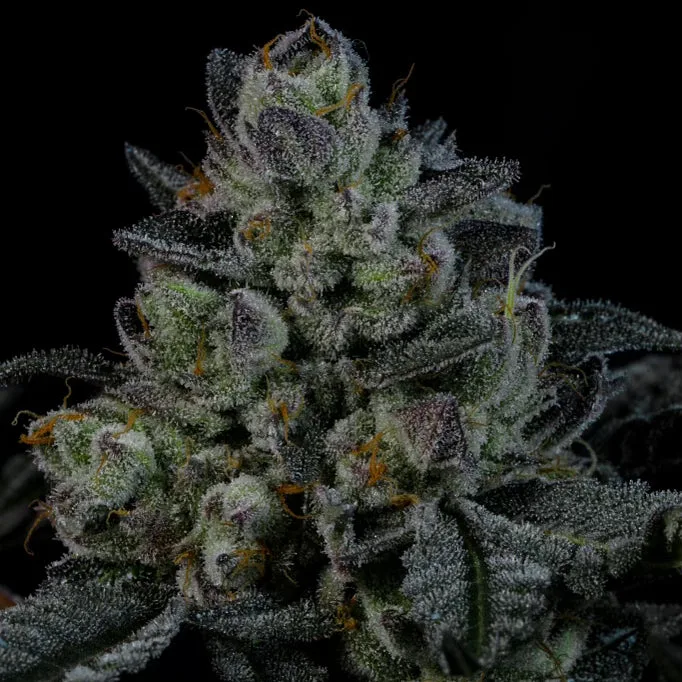
Neon Runtz is particularly appealing to growers seeking modern Runtz-like aromatics, heavy resin production, and a visually appealing flower structure. Its profile lies less in maximum hardiness or record yields than in the combination of candy-like sweetness, a gassy undertone, and high-quality flower appearance.
This strain is best suited for growers who:
- enjoy comparing phenotypes
- prioritize aroma and resin over sheer mass
- can precisely control climate and airflow
- want to build an even canopy with moderate training
Frequently asked questions about Neon Runtz
What is known for certain about the genetics of Neon Runtz?
There is no completely consistent documentation regarding Neon Runtz. According to the sources cited, the most plausible explanation is that it originated from the Runtz lineage, although the parent lines cited may vary slightly depending on the breeder. For practical purposes, therefore, the specific breeder line is more important than the name alone.
How does Neon Runtz typically grow?
Neon Runtz is usually described as a medium-sized to medium-vigorous hybrid. Commonly noted characteristics include good lateral branching, relatively short internodes during the vegetative phase, and a noticeable but generally manageable stretch after the transition to flowering. Compared to very slender Haze hybrids, it generally remains more compact.
How long does Neon Runtz usually bloom?
According to breeder specifications and grow reports, the flowering period for most photoperiodic Neon Runtz strains is typically 8 to 10 weeks. Some phenotypes may be ready slightly sooner, while those with more pronounced dessert or gelato characteristics may occasionally take a little longer.
Is Neon Runtz suitable for beginners?
Rated as moderately challenging. Many reports do not consider this variety to be extremely difficult, but neither is it as forgiving as hardy classics; the difficulty level generally falls between that of a beginner with solid basic skills and an advanced grower. The main challenges are the dense flower structure, the sometimes sensitive reaction to over-fertilization, and the need for careful climate management during late bloom.
What are the most important growing tips for Neon Runtz?
It’s important to ensure good airflow around the canopy and to gradually reduce humidity during late flowering, because dense, resinous buds are more sensitive to stagnant moisture. When it comes to training, Neon Runtz often responds well to topping, LST, or moderate Scrog. For fertilization, a gradual approach is usually best rather than high doses early on.
Matching seeds from our partner
PARTNER OFFER
NEON RUNTZ - Feminisierte Cannabis-Samen
Available from 10 % Vorteil bei CANA TRAVA – exklusiv für GrowPilot.guide Nutzer
Fruity, sweet, candy-like, and gassy. Feminized, hybrid, 9-week flowering period, high yield, and compact to medium-sized plants.
Product details and prices supplied by the partner.


