Effectively control outdoor spider mites in open fields
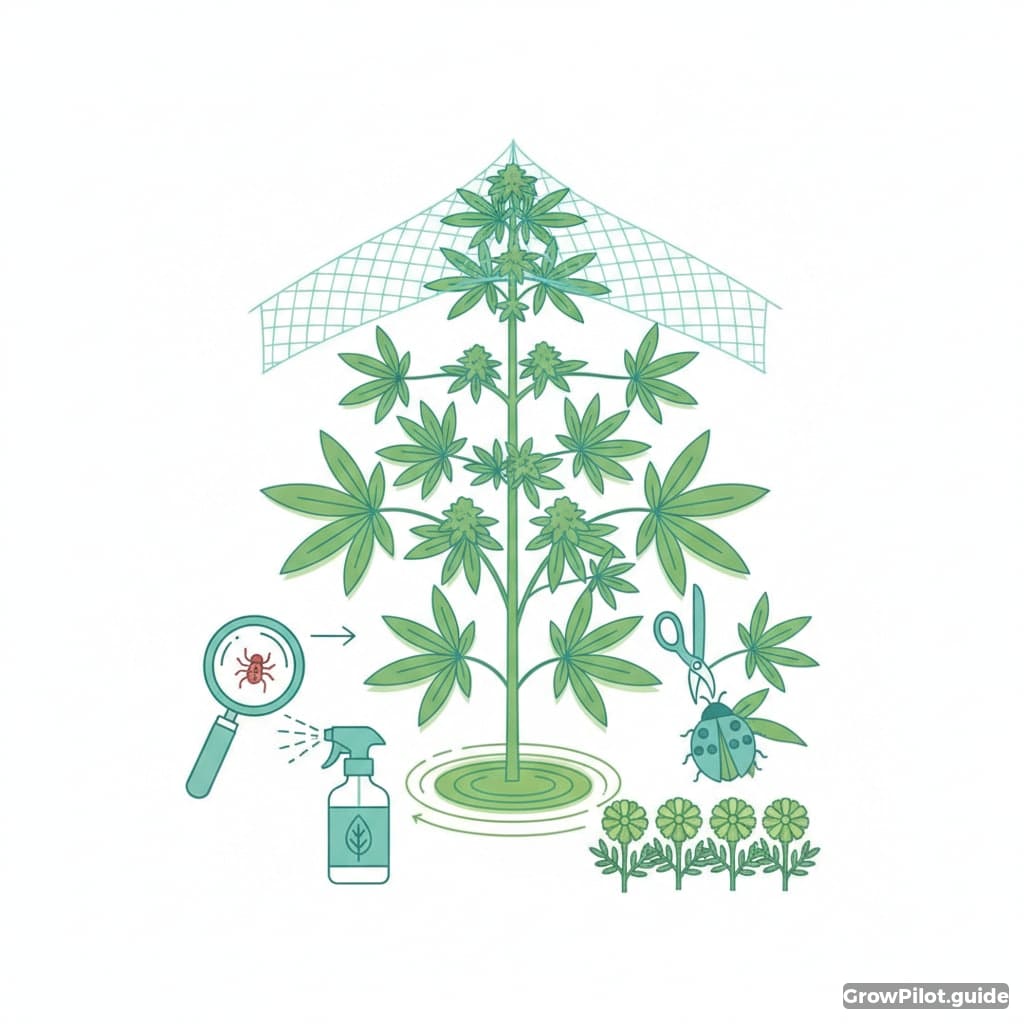
Spider mites are most common outdoors during hot, dry periods in the summer. This guide explains how to identify them reliably, control them effectively, and prevent infestations outdoors.
Introduction
Spider mites are a particular problem in outdoor cannabis cultivation, especially during hot, dry, and sheltered summer periods. Unlike indoor growing, outdoor conditions cannot be fully controlled. An infestation can build up quickly, especially during prolonged periods of high pressure, low rainfall, and in dusty locations. Plants are particularly affected when located against house walls, in courtyards, on dry south-facing slopes, or in pots, as heat and drought stress are more severe in these areas.
This guide focuses exclusively on identifying, controlling, and preventing spider mites in outdoor cultivation.
Reliably Identifying Spider Mites in Outdoor Cultivation
Spider mites prefer to settle on the underside of leaves and are often difficult to see with the naked eye. Typical signs include:
- fine, light speckles on the leaves
- later yellowish to bronze discoloration
- in cases of severe infestation, fine webs on the undersides of leaves, leaf stalks, or shoot tips
- overall dull, stressed appearance of the leaves
Reliable Practical Test
Hold a white sheet of paper under a suspicious leaf and tap it lightly. If tiny light-colored, yellowish, greenish, or reddish dots move onto the paper, this is a strong indication of mites.
Typical Outdoor Risk Factors
Outdoors, the risk increases particularly under the following conditions:
- prolonged drought
- high daytime temperatures above about 28–30°C
- dusty environments, e.g., paths or dry soil
- sheltered corners with little air movement
- stressed container plants with irregular watering
Properly Assessing the Infestation
Not every discovery requires immediate drastic measures. The key factor is how far the infestation has spread.
Mild infestation
- only a few leaves affected
- hardly any webs
- damage limited to specific areas
In this case, mechanical and biological measures are often sufficient.
Moderate infestation
- Several parts of the plant affected
- Visible leaf damage increasing
- First webs present
Now is the time to take decisive action before the population explodes in summer weather.
Severe infestation
- Distinct webs
- Many damaged leaves
- Visible spread to neighboring plants
At this stage, complete control in outdoor cultivation is significantly more difficult. Infected plant parts must then be removed, and treatments must be repeated frequently.
Immediate Control in Outdoor Cultivation
1. Remove heavily infested leaves
Remove heavily damaged leaves or small, densely infested shoot sections cleanly and carefully so that mites are not spread further. Do not leave clippings on the bed; dispose of them immediately.
2. Thoroughly treat the undersides of leaves
Since spider mites are primarily found on the undersides of leaves, treatments must completely wet the undersides of the leaves. Options suitable for outdoor use include:
- Potassium soap/insecticidal soap against mobile stages
- Rapeseed oil or paraffin oil preparations, provided they are approved for the crop
- Preparations containing azadirachtin depending on local approval and application window
Important:
- Never spray in the blazing midday sun
- It is better to apply early in the morning or in the evening
- Repeat applications as directed on the label, because eggs are often not completely eliminated
3. Targeted use of beneficial insects
In open fields, beneficial insects only work well when weather and pest pressure are favorable. The following are primarily used against spider mites:
- Phytoseiulus persimilis for active infestations and warm conditions
- Neoseiulus californicus is better suited for preventive or early application and more variable conditions
Outdoors, success is best achieved in mild weather, with no strong winds, and when infestation begins early. In very dry, hot weather or with severe webbing infestations, effectiveness drops significantly.
Prevention in Outdoor Conditions
Prevention is often more effective than late intervention for outdoor spider mites.
Improve location and microclimate
- Do not place plants in dusty, windless heat traps
- During extreme heat, position containers so they receive good air circulation
- Control weeds and heavily dusty peripheral areas, as they can serve as reservoirs
Avoid water stress
Spider mites thrive on weakened plants. Therefore, the following is important in outdoor settings:
- Ensure consistent water supply
- Check pots especially on hot days
- Avoid waterlogging, but also prevent prolonged drying out
- Mulch can help reduce soil temperature fluctuations in the garden bed
Regular monitoring
During warm summer periods, check at least twice a week:
- The undersides of leaves in the lower and middle parts of the plant
- The edges of plants facing south or west
- Check potted plants near walls or on terraces especially thoroughly
After prolonged dry spells, during periods of high GDD values, and during sustained heat waves, inspections should be even more frequent, as mites can multiply very quickly under these conditions.
Common Mistakes
- Treating only the upper side of the leaves
- Reacting too late to the first spots
- Spraying oil-based products in full sun during extreme heat
- Releasing beneficial insects in unsuitable weather
- Viewing drought stress as merely a watering problem and overlooking the mite infestation
Conclusion
Outdoor spider mites are primarily a summer and drought stress problem. Those who monitor early, consistently check the undersides of leaves, and react at the first signs can usually significantly curb the infestation. In the field, success depends primarily on the combination of accurate diagnosis, prompt treatment, and low-stress cultivation practices.
Pro Tips
- Check the undersides of the leaves first after periods of high heat.
- Dusty locations significantly increase the risk of infestation.
- Potted plants are particularly vulnerable in the summer.
- Never spray when the midday sun is strong.
- Early intervention is more important outdoors than late toughening.
Frequently Asked Questions
How can I tell if my plants have spider mites?
Spider mites cause yellow or brown spots on the leaves and fine, spiderweb-like structures. It is important to examine the undersides of the leaves closely, as the mites hide there.
What natural remedies are effective against spider mites in the garden?
Natural remedies such as neem oil or insecticidal soaps can be used effectively against spider mites. These should be applied regularly to control the population.
How can I prevent spider mites in the garden?
Effective prevention includes encouraging beneficial organisms such as predatory mites, watering regularly, and avoiding over-fertilization, as this increases stress on the plants and makes them more susceptible to pests.