IPM for intake air and pressure conditions
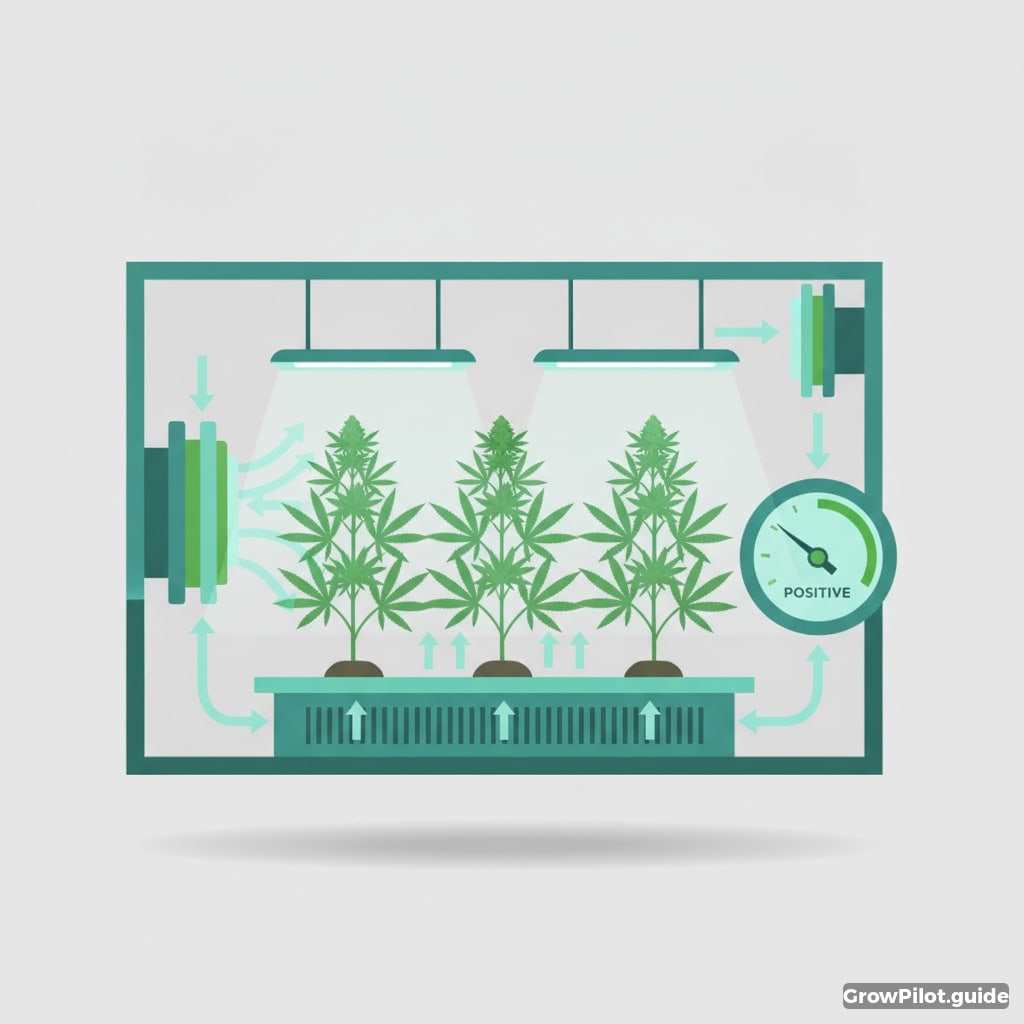
This guide explains how to plan for supply air, exhaust air, filtration, and pressure conditions in your grow room as a standalone IPM component to proactively reduce pest infestations.
Introduction
An often underestimated aspect of Integrated Pest Management is inlet air control. Many pests and biological contaminants enter the grow room not only via plants, tools, or people, but also through intake vents, leaks, passive intake points, and unfiltered airflows. A good IPM strategy therefore considers not only the room itself but also the path through which air enters the grow area.
This guide specifically addresses the IPM strategy for intake air, exhaust air, filtration, and pressure conditions. It is not about diagnosing individual pests or general room hygiene in the broader sense, but rather the question: How do you design the air exchange so that external contaminants are systematically prevented from entering?
Why Airflow Is an IPM Issue
Air is a constant transport route. It can carry dust, plant debris, spores, small insects, and other biological contaminants into the growing area. Particularly risky are:
- open or unprotected supply air openings
- passive air intake from contaminated adjacent rooms
- leaky hoses, flanges, or zippers
- intake points near windows, doors, compost, garden areas, or storage zones
- fluctuating pressure conditions that draw in uncontrolled outside air
The IPM goal here is not sterile perfection, but controlled, reproducible airflow paths with the lowest possible risk of contamination.
Think of the supply air as a risk chain first
Before installing filters, analyze the entire air path:
- Where does the air come from? Interior, hallway, basement, attic, or directly from outside.
- How clean is this source? Dusty, damp, occupied, or subject to significant seasonal fluctuations.
- How does the air enter the grow room? Actively via a supply air fan or passively through negative pressure.
- What are the weak points along the way? Open connections, loose clamps, unfiltered secondary inlets.
For IPM, it is usually not the rated capacity that matters, but whether the air enters the room directly through a defined entry point. Any unplanned bypass reduces control.
Setting up filtration effectively
For supply air in IPM, the focus is primarily on mechanical pre-filtration. The goal is to capture larger particles and some biological contaminants before they enter the crop.
Proven Principles
- Use pre-filters or insect screens at defined supply air points.
- Choose filters that are cleanable or replaceable.
- Ensure that the filter area is large enough so that airflow is not unnecessarily restricted.
- Check filters regularly for dust buildup, moisture, and damage.
A filter is only an IPM tool if it is maintained. Dirty filters not only reduce airflow but can themselves become a problem if moisture and organic material accumulate.
Using Negative Pressure as a Barrier
In most indoor grows, slight negative pressure is beneficial. This means that the exhaust air draws slightly more air out of the room than is actively introduced. As a result, air flows preferentially inward rather than outward or uncontrollably sideways through leaks.
IPM Benefits of Slight Negative Pressure
- Air enters in a controlled manner through defined intake points
- Unfiltered air exchange routes are reduced
- Leaks are detected more quickly
- Odor and airflow control become more stable
Important: Excessive negative pressure is also undesirable. It can deform tents, reduce airflow performance, and draw outside air through even the smallest leaks. In IPM, therefore, stable, slight negative pressure is better than extreme suction.
Position the intake point correctly
Even the best filter is of little help if the intake point is poorly chosen. Avoid intake air from areas with increased biological pressure, for example:
- directly next to frequently opened doors
- near areas where pets are kept
- from damp basement corners
- near garden waste, soil, or compost
- from storage rooms with cardboard boxes, textiles, or dust accumulations
Better options are quiet, dry, clean air sources with low dust and foot traffic. If outdoor air is used, seasonal fluctuations must be taken into account more carefully.
Systematically check for leaks and bypass air
An IPM air management system often fails not because of the main technology, but due to small weak points. Check regularly:
- Hose connections and clamps
- Zippers and seams on tents
- Cable bushings
- Unused openings
- Temporary adapters or connectors
Any point where air enters unexpectedly bypasses your defined filtration path. This is exactly what IPM is designed to prevent.
Daily Maintenance Routine
Establish a fixed routine:
- Weekly: Visual inspection of filters, openings, and air pathways
- Regularly: Remove dust from intake points
- with every modification: Re-check the airflow for leaks
- seasonally: Re-evaluate outdoor air sources, especially during pollen season, heat, or high humidity
This transforms airflow management from a one-time setup into a long-term preventive measure within IPM.
Conclusion
A robust IPM doesn’t stop at the plant surface. Careful planning of supply air, filtration, intake points, and pressure conditions significantly reduces the risk of external contaminants. The basic idea is simple: Air should be controlled, filtered, and directed into the grow area via clearly defined pathways. It is precisely this control that makes ventilation a distinct and effective aspect of IPM.
Pro Tips
- Use only one clearly defined air intake path whenever possible.
- Clean the pre-filter regularly, not just when it's heavily clogged.
- Avoid drawing air in from dusty adjacent rooms.
- It's better to keep the grow tent at a slight negative pressure rather than a strong one.
- After each modification, check all openings for air leaks.
More Growing Knowledge & Smart Grow Help
GrowPilot.guide is the cannabis grow tracker and weed cultivation app with smart plant analysis, indoor cannabis growing guide, grow diary, community, cups and autoflower grow tracker for growers worldwide.
Open GrowPilot.guide App →