Root Zone Temperature and Nutrient Uptake
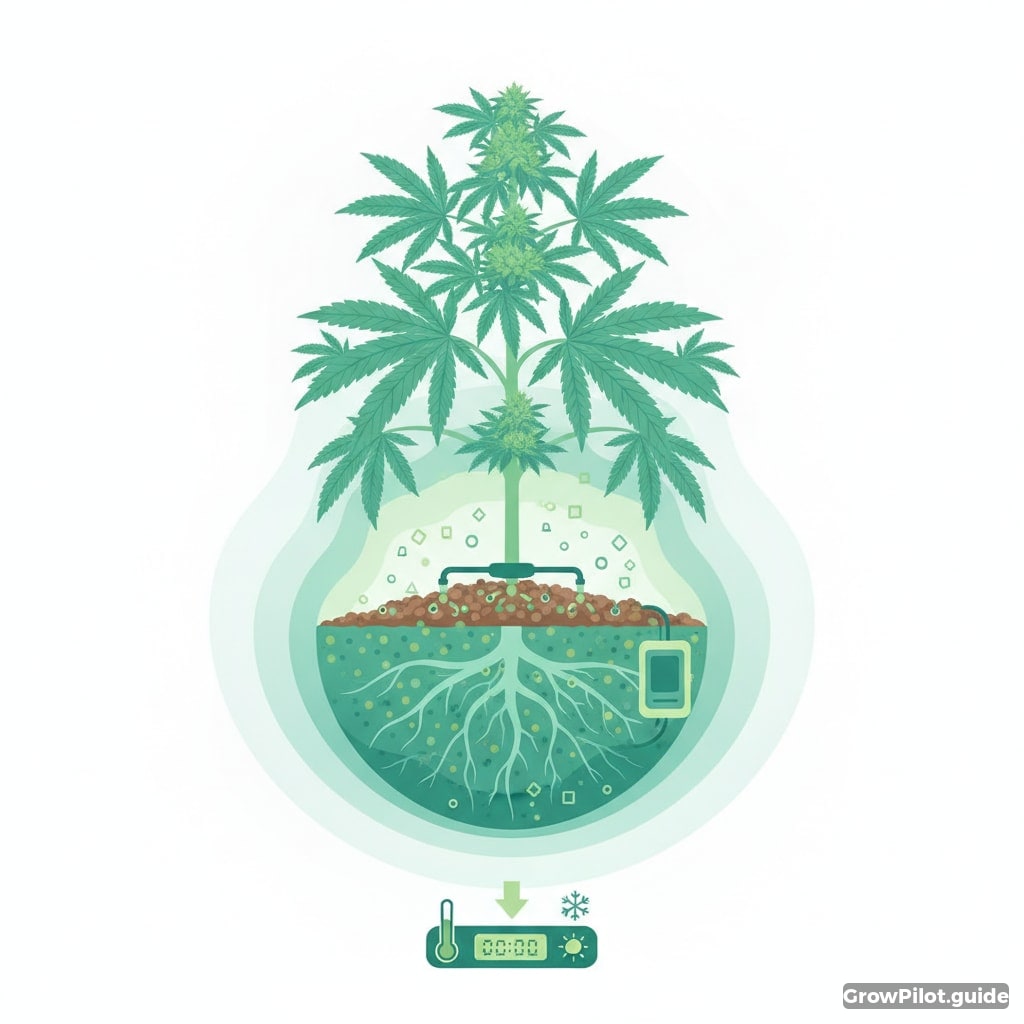
How the temperature in the root zone affects nutrient uptake, which methods work well in practice, and how you can adjust your fertilization accordingly.
Introduction
The temperature in the root zone is often underestimated in nutrient management. Yet it directly influences how quickly roots absorb water and ions, how actively enzymes function, and how stable the supply of nitrogen, phosphorus, potassium, calcium, and magnesium remains. This guide therefore does not address climate in general, but focuses exclusively on the relationship between root zone temperature and nutrient supply.
Important: The goal is not to compensate for every temperature fluctuation with more fertilizer. Often, the opposite is true. If the root zone is too cold or too warm, uptake efficiency decreases. Unchanged or even increased fertilization can then quickly lead to salt accumulation and misinterpretations.
Why Root Temperature Is Important for Nutrients
The root does not passively absorb nutrients like a sponge. Uptake, transport, and utilization are metabolism-dependent processes. Temperature influences several aspects of this:
- Membrane activity of root cells
- Enzyme activity in root metabolism
- Water uptake and transpiration
- Mobility of dissolved nutrients in the root zone
- Ratio of uptake to consumption in the plant
If the root zone is too cold, uptake slows down significantly. If it is too warm, metabolism initially increases, but at the same time stress in the root zone rises and nutrient supply becomes more unstable.
Practical Temperature Ranges
For most indoor systems, a suitable range for the root zone is approximately 18 to 22°C. This range is not a strict rule, but it reliably ensures stable nutrient uptake in practice.
Below 18°C
In a cooler root zone, the following effects occur more frequently:
- slower uptake of phosphorus
- slower calcium and magnesium supply
- lower overall water consumption
- nutrient solution remains in the medium longer, making high EC values more problematic
This can easily lead to the misconception that the plant needs more fertilizer, even though the uptake rate is actually reduced.
18 to 22°C
In this range, roots generally function efficiently and predictably:
- Good balance between water and nutrient uptake
- More stable EC response
- Lower risk of apparent deficiencies due to temperature stress
- Better predictability in the fertilization process
Above 22°C
As root temperature rises, nutrient uptake can become more erratic:
- Water consumption often increases faster than nutrient uptake
- Individual ion ratios in the growing medium may shift
- High EC values become problematic more quickly
- Calcium supply may appear uneven despite sufficient input
For nutrient management, this means: do not respond to a warm root zone with aggressive fertilization.
Adjust fertilization to root temperature
During the seedling and young plant phase
When the root system is still small, the plant is particularly sensitive to cold or excessively warm substrates. Keep the nutrient concentration rather moderate at this stage. If the root zone is cool, the solution should not be unnecessarily strong, because uptake remains low.
During the vegetative phase
During the vegetative phase, the demand for nitrogen and secondary nutrients increases, but this is only beneficial if the root zone is actively working. At temperatures below the ideal range, it is usually better to
- to keep the EC slightly more conservative,
- to observe the plant’s response over several days,
- and to increase the dosage only when there is a clear need.
During the flowering phase
Root temperature remains important during flowering as well. Higher PK doses or generally stronger flowering fertilization only work effectively if the root zone is stable. In cool growing media, a normal flowering dose can already seem relatively high because uptake is slower and salts accumulate more easily.
Common Misinterpretations
A frequent mistake is confusing temperature-related uptake problems with actual nutrient deficiency. This leads to additional fertilization even though the nutrients are already present in the root zone.
Therefore, pay attention to the correlation between:
- unchanged fertilizer dosage
- decreasing water consumption
- sluggish plant response
- simultaneously increasing risk of salt accumulation in the medium
If these factors occur together, a deficiency is not automatically the cause. Often, the root environment is not suited to the fertilizer concentration.
How to monitor effectively
In practice, a simple, consistent monitoring routine is sufficient:
- Regularly measure the temperature of the root zone or the nutrient solution
- Do not rely solely on air temperature
- Always consider changes in conjunction with EC, watering patterns, and plant response
- Make adjustments gradually, not abruptly
The trend over several days is particularly important. Individual measurements are less meaningful than a recurring pattern.
Conclusion
Root zone temperature is a silent but crucial factor in nutrient management. It helps determine whether fertilization is efficiently absorbed or merely accumulates in the growing medium. The practical target range of 18 to 22°C usually ensures the most stable nutrient supply. If the temperature deviates significantly from this range, you should first consider the uptake capacity before increasing the fertilizer dose. This helps you avoid over-fertilization, misinterpretations, and unnecessary salt buildup.
Pro Tips
- Measure the root zone, not just the air in the room.
- Cooler root zones often require lower EC levels.
- Using more fertilizer won't solve the problem of rising temperatures.
- Evaluate water consumption and EC together.
- Adjust the fertilizer strength only in small increments.
More Growing Knowledge & Smart Grow Help
GrowPilot.guide is the cannabis grow tracker and weed cultivation app with smart plant analysis, indoor cannabis growing guide, grow diary, community, cups and autoflower grow tracker for growers worldwide.
Open GrowPilot.guide App →