Plan cannabis cultivation by season
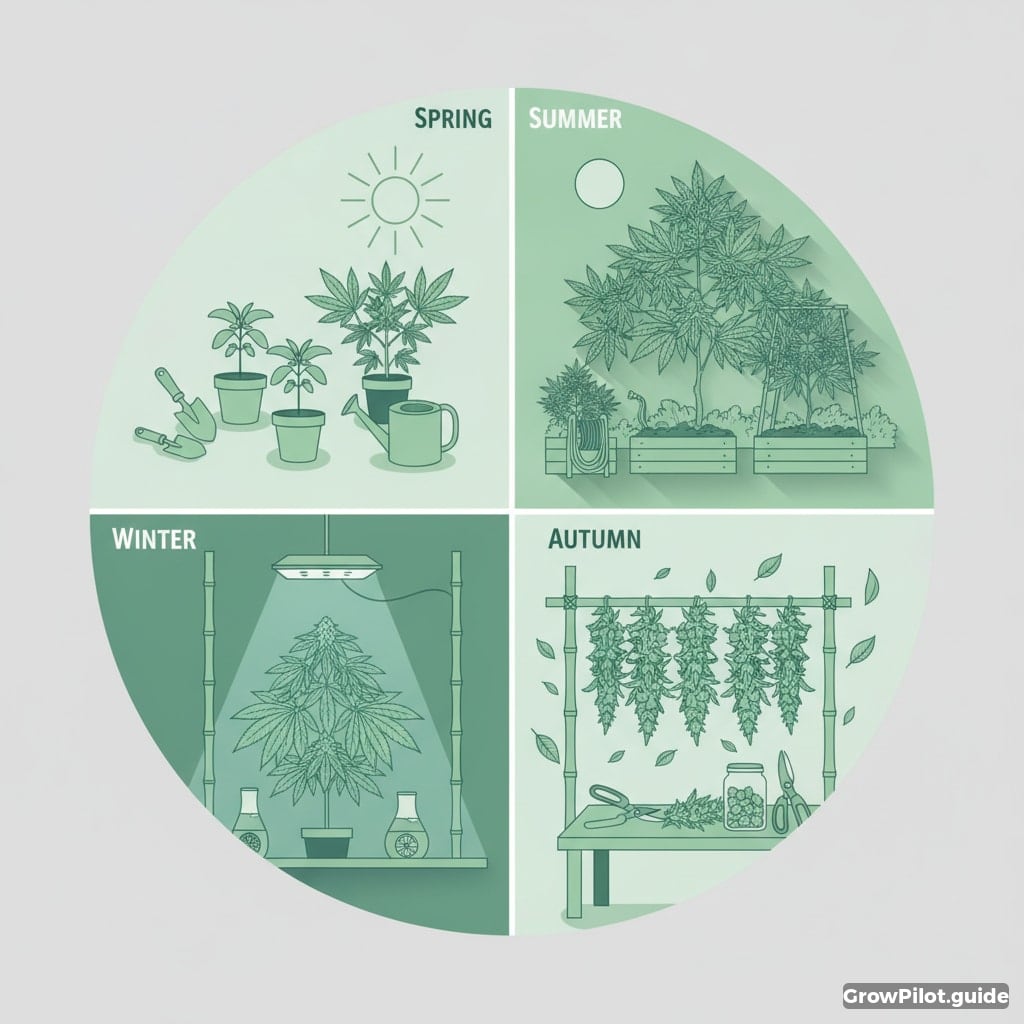
This guide shows you how to plan a cannabis grow: according to the season, growing location and genetics, so that the start, growth and conversion fit together logically.
Introduction
Successful cannabis growing doesn't start with seeds, cuttings or pot selection, but with clean timing. Many problems arise because plants are started at the wrong time: too early for outdoors, too late for long photoperiod strains, or without regard to available height and season length. This guide deals exclusively with the growing aspect of timing. It is therefore about the time of year, starting time, development time, genetics and differences between indoor and outdoor.
Why the time of year is important
Cannabis does not develop in a vacuum. Even with indoor grows, seasons influence cultivation indirectly, for example through:
- higher summer temperatures in the grow room
- cooler winter conditions for intake or supply air
- different electricity and ventilation loads
- seasonally fluctuating outdoor conditions
In outdoor cultivation, the time of year is even more decisive. Here, day length, frost windows and autumn weather determine whether a plant can even reach its potential.
Define the cultivation goal first
Before you plan a calendar, you should answer four questions:
- Indoor or outdoor?
- **Autoflower or photoperiodic?
- **Compact or large plants?
- **Single pass or several per year?
Only then can a sensible starting time be determined. A fast autoflower can be scheduled quite differently from a late-maturing photoperiod Sativa.
Timing in indoor cultivation
Indoor cultivation is more flexible in terms of timing, but not completely independent of the season. Although the light and environment can be controlled, the room conditions change throughout the year.
Indoor summer planning
In summer, heat and high night-time temperatures are particularly relevant. This influences the planning of:
- Start dates in loft or small tents
- Lamp output and available height
- Choice of variety with moderate stretch
- Total duration of the run
For warm rooms, more compact and faster finishing genetics are often easier to manage than very long, high stretching varieties.
Winter planning indoors
In winter, many growers benefit from cooler intake air and more stable technology. At the same time, cold locations can be problematic if night setbacks become too severe. It therefore makes sense:
- check the location for minimum temperatures before starting
- adapt the plant size to the actual usable room height
- plan longer runs in climatically well-controlled rooms
Timing in outdoor cultivation
Outdoor must be subordinate to the natural season. The decisive factor here is not when you want to start, but when your climate allows a safe start and a timely end to the season.
Spring start
Starting too early often leads to problems:
- Cold
- slow growth
- wind stress
- too little light intensity in the early season
Young plants should only be placed outside permanently when no more relevant frost nights are to be expected and the conditions during the day are stable enough.
Summer development
In midsummer, the length of the day determines how long photoperiod plants grow vegetatively. If you start very early, you can expect significantly larger plants. If you start later, the final size will be limited more naturally.
Autoflowers can be used more flexibly seasonally because they do not depend on the 12/12 light cycle. Nevertheless, they also need sufficient warm, bright weeks to reach their full potential.
Autumn window
For outdoor planning, the end of the season is just as important as the start. In regions with an early, wet or cool fall are:
- earlier varieties are safer
- more compact plants are often more practical
- very long flowering periods are riskier
The genetics must therefore suit the local fall, not just the summer.
Couple genetics and time window correctly
Not every variety fits into every calendar window. The following applies to planning:
- Short total duration: good for tight seasonal windows or several indoor runs
- Long total duration: only useful if there is sufficient space, time and a stable environment
- Strong stretch: consider early in the planning, especially indoors
- Autoflower**: good for flexible start windows and short outdoor seasons
- Photoperiodic**: good if size and development period are to be deliberately controlled
Create realistic grow calendars
A good grow calendar is not a rigid date system, but a plan with a buffer. Take into account:
- Preparation time for setup and material
- Reserve for slower development
- Available absence times in everyday life or vacation
- Space requirements if plants are left longer than expected
Plan conservatively rather than too optimistically. Beginners in particular often underestimate how strongly genetics and environment affect the actual duration.
Common planning mistakes
Typical mistakes in annual planning are
- Starting outdoors before stable weather conditions
- Choosing long-flowering outdoor genetics too late
- Starting indoors without considering the summer heat
- Plants too large for the available room height
- Lack of time buffer in the calendar
Conclusion
Those who plan cannabis according to the season work in a much more controlled way. The right start time is determined by location, genetics, season length and realistic plant size. Good growing planning prevents many problems even before the actual cultivation begins.
Pro Tips
- Always plan backwards from the end of the season.
- Consider local frost dates outdoors.
- Choose long varieties only with enough buffer.
- Check indoor summer and winter temperatures in advance.
- Autoflowers are flexible in terms of time, but not independent of the weather.
More Growing Knowledge & Smart Grow Help
GrowPilot.guide is the cannabis grow tracker and weed cultivation app with smart plant analysis, indoor cannabis growing guide, grow diary, community, cups and autoflower grow tracker for growers worldwide.
Open GrowPilot.guide App →