Effectively repelling snails on outdoor cannabis
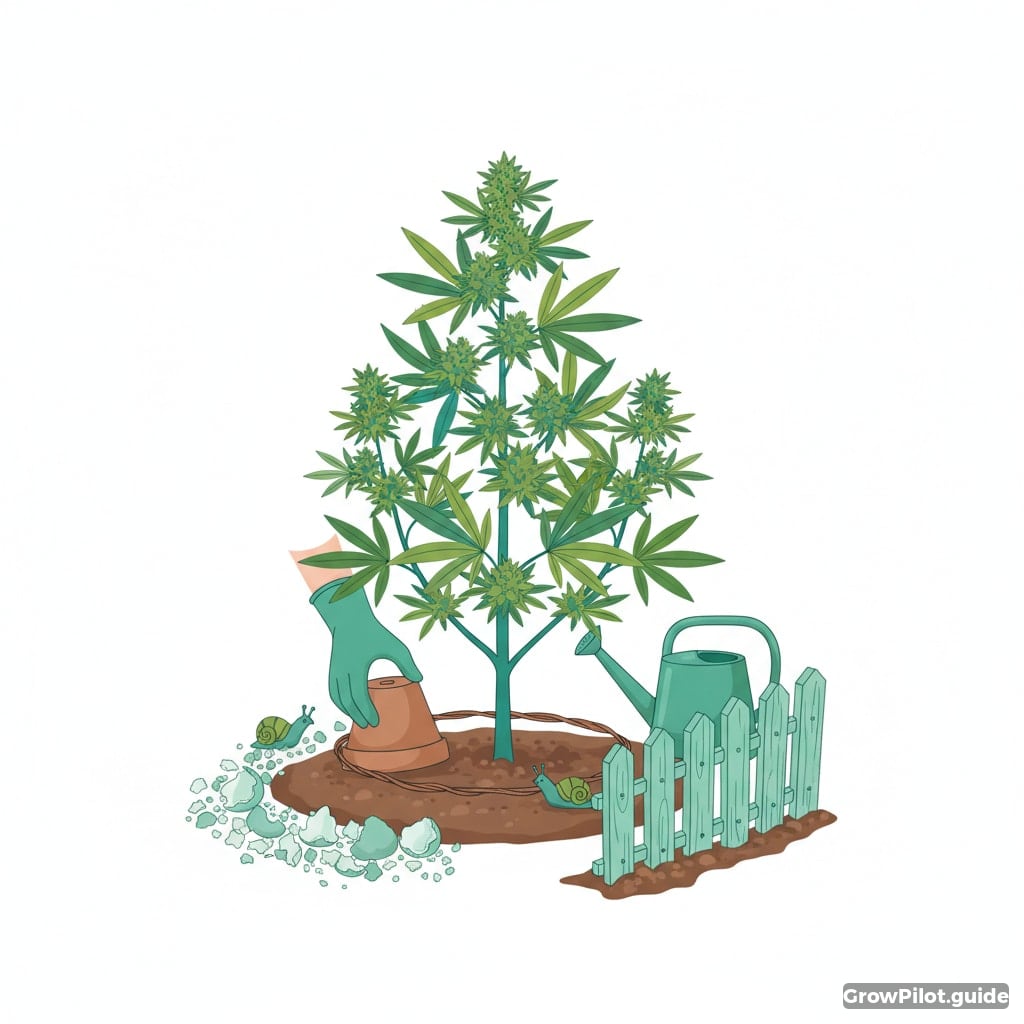
Snails can severely damage young cannabis plants in outdoor cultivation in just a few nights. This guide shows safe detection, targeted defense and effective prevention.
Introduction
Slugs are one of the most important spring and early summer pests in outdoor cannabis cultivation. Particularly at risk are seedlings, freshly planted young plants and soft new growth. Unlike sucking insects, snails leave behind a very typical feeding pattern: they eat away tissue directly and can severely weaken or completely destroy small plants in a short time.
This guide deals exclusively with detection, control and prevention of slug infestation in outdoor growing.
Recognize slug infestation safely
Typical symptoms
Look out for the following signs:
- irregular feeding holes in leaves
- chewed leaf margins
- partially or completely eaten cotyledons and young shoots
- shiny, silvery traces of slime** on leaves, pots, boards or soil surfaces
- Damage that increases significantly overnight
Particularly vulnerable situations
Snails are particularly prevalent when several factors come together:
- damp weather
- dense vegetation around the planting site
- Mulch or plant debris directly on the trunk
- Shady, cool areas with lots of hiding places
- Freshly planted young plants with delicate tissue
When snails are most active
Snails are most active when:
- high soil moisture
- periods of rain
- Dew in the evening and morning hours
- mild temperatures
- little wind
The strongest feeding activity usually takes place in the evening, at night and in the early morning hours. Checks at these times are much more meaningful than during the day.
Diagnosis: Distinguish slugs from other pests
A proper diagnosis prevents unnecessary incorrect measures.
You can recognize slug damage by:
- coarsely eroded leaf parts instead of fine dotting
- visible traces of slime
- sudden loss of whole leaf pieces
- silvery stripes with black droppings as with thrips
- fine sucking damage as with spider mites
- Honeydew and colonies like aphids
If there are no traces of mucus, it is worth checking at night with a flashlight.
Acute control
1. manual collection
The most direct method is picking at dusk or at night.
Procedure:
- Check the planting area with a flashlight
- Check the undersides of leaves, pot edges, stones and boards
- Remove snails consistently
- Repeat checks several evenings in a row after rain
This method is particularly effective for small crops.
2. reduce hiding places
Snails need moist hiding places during the day. Therefore, remove them:
- boards, stones and dense ground cover directly on the plant
- Dead plant material
- heavy weeds in the immediate root area
Important: A tidy area around the trunk significantly reduces the length of stay.
3. physical barriers
Barriers are often the most reliable preventative measure in outdoor cultivation.
Suitable are:
- snail fences with an outwardly curved edge
- Smooth protective collars around young plants
- Raised pots or planting areas with a dry, open environment
Barriers only work well if:
- no leaves touch the ground or neighboring plants
- there are no bridges of grass, mulch or wood
- the protective ring is completely closed
4. use slug pellets selectively and sparingly
If there is heavy pressure, iron-III-phosphate can be useful. This active ingredient is considered the preferred option in home and horticulture compared to more problematic older active ingredients.
Application:
- Only apply according to the manufacturer's instructions
- evenly, but do not heap
- Spread outside the immediate vicinity of the trunk
- Check effect after heavy rainfall
Widespread, unnecessary application is not advisable. The aim is targeted reduction, not indiscriminate spreading.
Prevention in outdoor growing
Site management
A place with few snails:
- good air movement
- no permanent ground shading
- few hiding places close to the ground
- a clean area around the plant
Watering management in the outdoor area
Helpful for slug prevention:
- Water in the morning instead of in the evening** so that surfaces can dry out by night
- Do not create permanent wetness in the direct vicinity of the trunk
- Avoid coasters or mulch nests containing water when snail pressure is high
Protect young plants in particular
The most critical phase is shortly after planting out. During this time it makes sense to
- protective collars
- Daily visual inspection
- Night checks after rain
- Immediate intervention at the first signs of feeding
Common mistakes
- Misinterpreting feeding damage as an insect problem
- Only check during the day
- Leaving mulch or plant debris directly on the trunk
- Set up barriers, but overlook bridges made of foliage
- Use slug pellets in an untargeted or overdosed manner
Conclusion
Slugs are particularly dangerous for young plants in outdoor cannabis cultivation. Those who correctly interpret feeding patterns, slime trails and activity times can act quickly. The best results are achieved through a combination of night checks, collection, reduction of hiding places, physical barriers and targeted prevention. Particularly in wet periods, early intervention can decide whether small feeding spots turn into total failure.
Pro Tips
- Always check after rain at dusk.
- Traces of mucus are a strong diagnostic indicator.
- Young plants need the most consistent protection.
- Watering in the morning reduces surface moisture at night.
- Ferric phosphate is the preferred bait option.
Frequently Asked Questions
How can I tell if snails have infested my cannabis plants?
Snails leave slimy trails and may be active at night. Look for damaged leaves with irregular holes and for the snails themselves, which hide during the day.
What natural methods are there to keep snails away from my cannabis plants?
Use barriers such as copper tape or scatter crushed eggshells around the plants. Planting snail-repelling herbs like thyme or rosemary can also help.
How can I prevent snail damage in my outdoor garden?
Keep the garden area clean and free of weeds, which can serve as hiding places. You should also check the plants regularly for damage and set out snail traps if necessary.