White Rhino: Genetics, compact growth, and resinous buds

White Rhino is considered a heavy, resin-rich classic strain with White Widow lineage. This article covers its origin, growth, flowering, terpenes, effects, and growing practices.
# White Rhino: Genetics, compact growth, and resinous buds
White Rhino is one of those strain names that has appeared in seed bank archives, strain databases, and grow reports for many years, but is now in the spotlight somewhat less frequently than newer Dessert, Candy, or Fuel lines. That’s precisely why it’s worth taking a closer look. For growers, White Rhino is particularly interesting as a compact to medium-sized, typically robust hybrid strain with a dense flower structure and heavy resin production. At the same time, research across various sources shows that while the name has relatively strong historical roots, not every modern strain bearing this label is completely identical.
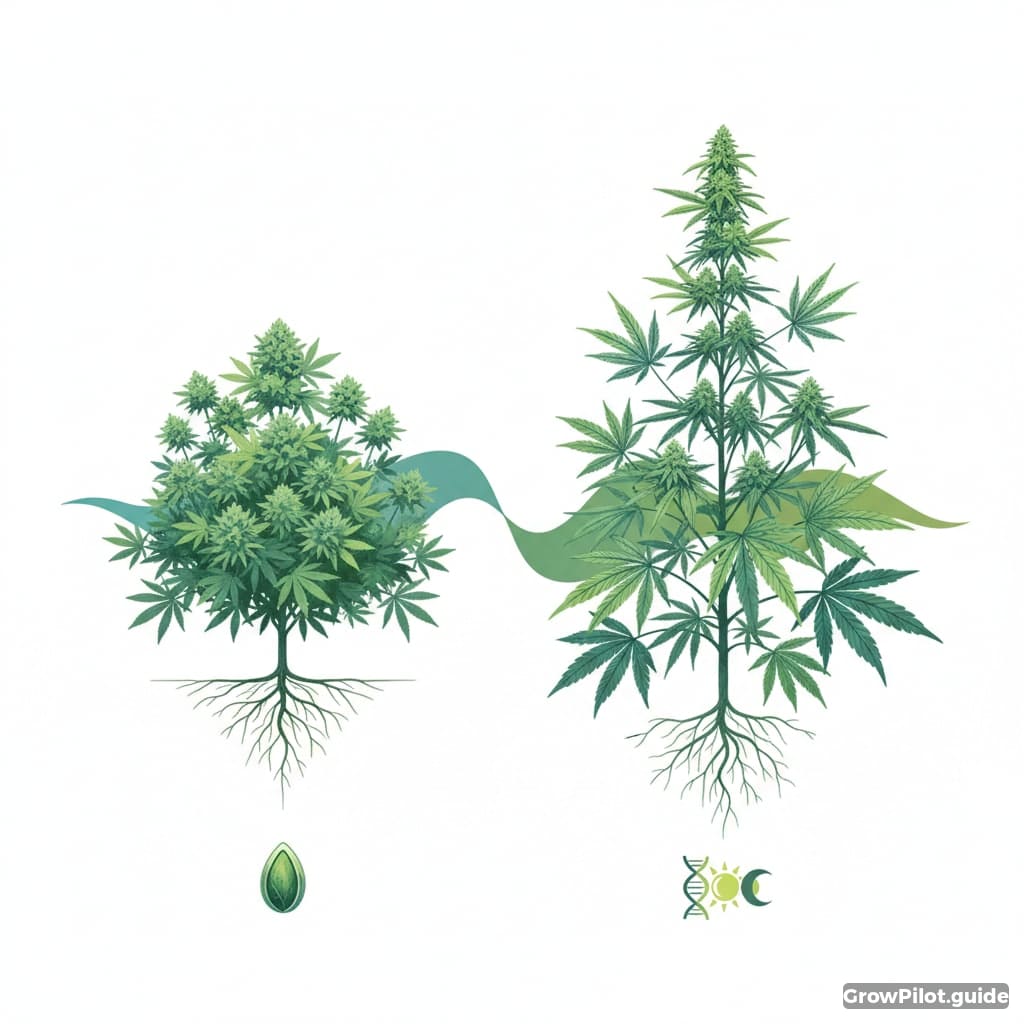
At its core, White Rhino is usually described as a White Widow-related, heavily Indica-dominant hybrid. Many sources also cite Afghani as the second major parent strain. This results in a profile that appears strikingly consistent across grow reports: short to medium height, limited stretching, vigorous lateral branching, dense buds, and an aroma ranging from earthy and woody to spicy with a hint of sweetness. For cultivation, this is a strain that often seems more manageable than strongly Sativa-dominant hybrids, but at the same time requires careful climate control due to its dense flowering.
What is known for certain about White Rhino’s genetics and origin?
The most commonly cited lineage is White Widow x Afghani or a very closely related combination of a White Widow line with Afghan Indica genetics. Historically, White Rhino is linked in many archives to breeding efforts associated with Dutch seed banks in the 1990s and early 2000s. As with many older strains, however, it is important to distinguish between:
- the historical core of the strain
- later seed versions from various suppliers
- possible phenotypic variations resulting from selection and conservation efforts
- wider leaf structure
- denser bud formation
- a rather calm, stocky plant structure
How does White Rhino grow in practice?
White Rhino is usually described in reports as compact to medium-sized. Indoors, it often stays within a range that can be easily controlled with training. Typical plants develop a solid main structure with strong side shoots without immediately veering toward excessive height growth. The stretch during early flowering is often moderate, usually about 1.2 to 1.8 times its original height, depending on phenotype, pot volume, light intensity, and vegetative growth period.
Typical Growth Characteristics
- Indoor height: often about 80 to 130 cm without extreme training
- Outdoor height: frequently 140 to 220 cm, and even higher in long growing seasons
- Structure: bushy to semi-bushy, with sturdy side shoots
- Internode spacing: rather short to medium
- Stretch: moderate, usually easier to control than with Haze hybrids
What flowering time and yield do growers report?
For photoperiodic White Rhino strains, seed banks and archival data typically cite a flowering time of about 8 to 10 weeks. Many grow reports fall within the range of 56 to 67 days, though individual phenotypes may be slightly faster or slower. Particularly compact, Afghan-dominant plants sometimes mature a bit earlier, while specimens with stronger White Widow traits may take slightly longer.
When it comes to yield, it’s best to keep expectations realistic. White Rhino isn’t a strain that stands out in reports for extreme record yields, but it’s often considered to be a solid to good producer when climate, light, and nutrient management are right.
Realistic Yield Ranges
- Indoor: often around 350 to 500 g/m²
- Outdoor: often around 400 to 700 g per plant under good conditions
- Greenhouse: usually between these two ranges, heavily dependent on pot size and vegetative period
What does White Rhino smell and taste like?
Aromatically, White Rhino is not usually described as a loud candy or citrus strain, but rather as earthy, spicy, woody, and slightly sweet. Some reports mention additional hash-like, musky, or slightly peppery notes. The profile often comes across as classic and heavy, not playful.
Frequently Cited Terpene Profiles
- Myrcene: often associated with earthy, heavy, slightly herbal notes
- Caryophyllene: typical of spicy, peppery accents
- Pinene: can contribute woody or piney freshness
- Humulene: is associated with earthy-spicy profiles in some analyses
How do users describe the effect?
Descriptions from strain archives and user reports generally classify White Rhino as a distinctly physical, calm, and heavy hybrid. Terms such as relaxing, powerful, calming, or suitable for the evening are frequently mentioned. Some reports also mention an initial mental clarity or mild euphoria before the physical effects come more to the fore.
It’s important to note: Such descriptions of effects are based on subjective experiences and are not medical statements. How intensely a strain is perceived depends, among other things, on the chemotype, dose, method of consumption, individual tolerance, and environment.
Who is White Rhino suitable for when growing?
White Rhino is generally classified as beginner-friendly to moderate difficulty. It is often more robust and predictable than Sativa hybrids that stretch excessively, but it is not completely forgiving of mistakes. The main challenge lies less in the vegetative stage than in the late flowering phase.
Best suited for
- Growers with limited headroom in their setup
- Fans of compact, resinous buds
- Growers who enjoy classic earthy-spicy flavor profiles
- Setups where climate and airflow can be well controlled
Less suitable for
- Very humid rooms without strong air circulation
- Growers who prefer extremely open, airy buds
- Setups where over-fertilization is a frequent problem
What growing tips are particularly important for White Rhino?
1. Take humidity seriously early on
The dense bud structure is one of the strain’s biggest strengths, but it increases the risk of botrytis and other moisture-related issues. During late flowering, relative humidity should be kept on the conservative side. Good air circulation both under and above the canopy is more important than with loosely flowering strains.2. Don’t vegetate for too long
Because White Rhino can become bushy, an overly long vegetative phase in small tents often causes more problems than it solves. Many growers are better off inducing flowering early and then shaping the canopy.3. Train selectively, but not aggressively
The following methods are usually suitable:- Topping early in the vegetative stage
- LST to open up the side shoots
- Light pruning to allow for air and light
- SCROG, if an even canopy is desired
4. Limit nitrogen during flowering
According to many reports, White Rhino responds better to a clean, non-overloaded nutrient regimen. Too much nitrogen can delay maturation, make the foliage unnecessarily dense, and increase the risk of damping-off.5. Maintain a stable temperature
For healthy growth, plants generally tolerate temperatures of about 22 to 28 °C during the day and slightly cooler nights well. Extreme heat can compromise the compact bud quality, while nights that are too cold and damp during the final flowering stage can become problematic.Conclusion: Why Does White Rhino Remain Appealing?
White Rhino isn’t a strain that relies primarily on hype these days. Its appeal lies more in a classic, clearly defined cultivation profile: compact to medium growth, moderate stretching, dense, resinous buds, earthy-spicy aromas, and an overall rather heavy effect. That’s exactly what keeps it relevant for many growers.
Anyone who wants to successfully cultivate White Rhino should master three key points above all: canopy control, moderate nutrient management, and consistent humidity management during flowering. When these are in place, the strain often displays the very traits for which it has been prized for years: solid yields, heavy resin production, and a robust, classic hybrid structure without any unnecessary quirks.