Granddaddy Purple: Genetics, Color, and Compact Kush Growth Habit
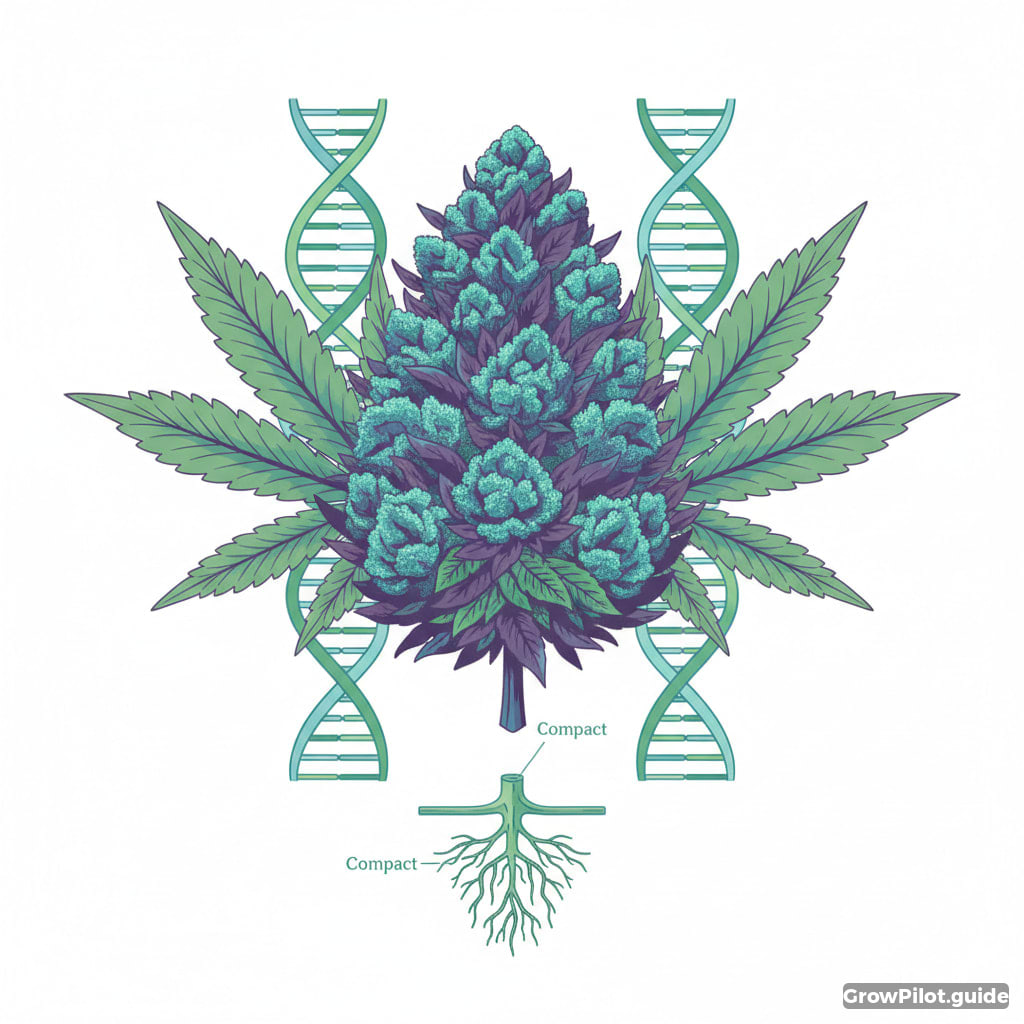
Granddaddy Purple is one of the best-known Purple Kush hybrids. This article explains its origins, growth, flowering, terpenes, effects, and what growers should keep in mind regarding color and climate.
# Granddaddy Purple: Genetics, Color, and Compact Kush Growth
Granddaddy Purple, often abbreviated as GDP, is one of the best-known purple-colored cannabis strains from the U.S. West Coast. Its reputation is based primarily on three characteristics that appear time and again in breeder descriptions, strain archives, and many grow reports: a compact to medium-sized growth habit, a sweet, fruity, Kush-like aroma profile, and often a distinct purple coloration in the leaves and flowers. It is precisely this combination that has made Granddaddy Purple a benchmark when it comes to modern purple hybrids.
As with many popular strain names, however, a realistic assessment is important here as well. Not every plant marketed as Granddaddy Purple corresponds to an identical lineage. Differences in growth habit, flowering duration, and color intensity may exist between clone-only strains, later seed versions, and breeder-specific reconstructions. Nevertheless, a relatively stable core set of characteristics can be identified across multiple sources.
Where does Granddaddy Purple come from?
Historically, Granddaddy Purple is most often associated with Californian breeding efforts from the early 2000s. In strain archives and breeder descriptions, the line is predominantly listed as a cross between Purple Urkle and Big Bud. This combination explains a large part of its performance profile:
- Purple Urkle is often associated with dark coloring, dense bud structure, and heavy, sweet-spicy aromas.
- Big Bud is noted in many archives for its robust bud mass, solid lateral branching, and a growth pattern geared toward high yields.
How does Granddaddy Purple grow?
In everyday cultivation, Granddaddy Purple is usually described as short to medium-sized. Many plants develop a wide, bushy structure with relatively short internodes, especially when the Purple Urkle influence is strong. Under strong lighting and proper environmental control, the plant structure often remains compact, making it well-suited for smaller indoor spaces.
Typical characteristics include:
- moderate stretching at the start of flowering
- vigorous lateral branching with sufficient vegetative growth time
- wide leaves and a look more typical of Kush strains
- dense, heavy buds that can swell significantly toward the end
Why does Granddaddy Purple turn purple so often?
The striking coloration is one of the strain’s most recognizable traits, but it is often misunderstood. Violet or purple hues aren’t simply caused by cold nights, but primarily by the genetic ability to accumulate anthocyanins. These plant pigments are also found in many other crops.
Cool temperatures can enhance the visibility of such pigments, but they are not the actual cause. If a strain has little genetic predisposition toward purple coloring, cold temperatures will not reliably produce a “purple strain.” Conversely, Granddaddy Purple phenotypes can develop distinct color even without a significant drop in temperature.
Important for growers:
- Excessive nighttime temperature drops can cause stress.
- Color is not a direct indicator of quality.
- Deeply purple plants can have excellent aroma, but this isn’t automatically the case.
- Phenotypes without extreme coloration aren’t necessarily “wrong.”
How long does Granddaddy Purple flower?
For photoperiodic versions, the flowering time is usually around 8 to 10 weeks. Many reports place the strain in the middle range: faster than long-flowering Haze lines, but not always as short as particularly early Afghani selections.
Actual maturity depends, among other things, on:
- Phenotype
- Light intensity
- Temperature profile
- Pot volume and root space
- Nutrient management during late flowering
Yield: What’s Realistic?
Granddaddy Purple is rarely described as a high-yielding strain. A solid to good yield is more realistic when the growing conditions and climate are right. Under indoor conditions, many reports cite average yields per unit area, often in the range of about 350 to 500 g/m² as a practical benchmark. Outdoors, figures vary more widely; with healthy, well-developed plants, average to good yields per plant are possible, though GDP isn’t typically considered a record-breaking strain.
The key point is: This strain is often grown more for flower quality, resin, and aroma than for maximum biomass per square meter.
How does Granddaddy Purple smell and taste?
The aroma profile is described quite consistently across many sources. Typical notes include:
- grapes
- berries
- sweet fruit
- earthy Kush notes
- sometimes spicy or slightly herbal undertones
What effects do users and growers describe?
User reports often describe Granddaddy Purple as deeply relaxing, body-focused, and more suited for the evening. In addition, calm, heavy, and mood-lifting effects are regularly mentioned. Such descriptions are subjective and not identical for every person. However, they align with the strain’s reputation as a Kush-like Purple hybrid line.
From a scientific perspective, it’s important to note that the experience doesn’t depend solely on a single cannabinoid. Dosage, individual sensitivity, method of consumption, and the interaction between cannabinoids and terpenes significantly influence the effect.
Who is Granddaddy Purple suitable for when growing?
Granddaddy Purple is generally considered more suitable for beginners with basic knowledge through to advanced growers. According to many reports, it is not extremely difficult to grow, but it requires more attention regarding flower density and climate than very airy Sativa strains.
It’s a particularly good fit for growers who:
- prefer more compact plants
- are looking for a fruity, Kush-like profile
- want to avoid excessive stretching
- value color and resin appearance
What growing tips are particularly important for Granddaddy Purple?
Climate and Humidity
Dense GDP buds benefit from consistent airflow and rather conservative humidity control during late flowering. Excessive humidity increases the risk of botrytis and other moisture-related issues inside the buds.Training
Because the plant typically stretches only moderately, topping, LST, and a flat canopy often work well. Aggressive, late-flowering training is usually less effective than early, gentle structural guidance.Nutrient Management
Many Kush-like hybrids are more sensitive to over-fertilization than to a slightly conservative feeding regimen. Too much nitrogen in the late phase can impair ripening, aroma, and leaf health.Temperature
Slightly cooler nights can enhance color development, but quality should never be forced through temperature stress. Stable conditions and a clean maturation process are more important than purple effects.Harvest Window
With Granddaddy Purple, it’s worth looking beyond just the external color. The key factors are trichome maturity, bud firmness, and the plant’s overall appearance. Dark hues alone say little about the optimal harvest time.Conclusion: What keeps Granddaddy Purple relevant to this day?
Granddaddy Purple remains interesting primarily because the strain offers a clearly recognizable overall profile: compact Kush growth, sweet, dark fruit aromas, dense buds, and often intense purple coloring. It’s not some magical, exceptional genetics, nor is it a guarantee of perfect color in every grow. But as a purple classic with a reliable practical profile, GDP has earned its place in modern cannabis history.
For growers, the most important thing is to take a sober look at the reality of this strain: Color is genetically influenced, climate remains a decisive factor, and the dense buds require careful cultivation. Those who take exactly this into account will often find that Granddaddy Purple produces a strain that can be visually striking and aromatically distinctive.
Frequently asked questions about Granddaddy Purple
According to standard sources, where does Granddaddy Purple come from?
Granddaddy Purple is historically most often associated with California breeding efforts from the early 2000s. In strain archives and breeder descriptions, it is generally listed as a cross between Purple Urkle and Big Bud.
How does Granddaddy Purple typically grow when grown indoors?
In everyday growing, Granddaddy Purple is usually described as short to medium in height with a broad, bushy structure. Under strong lighting and with proper environmental control, it often remains compact and is well-suited for smaller indoor spaces.
Why does Granddaddy Purple turn purple so often?
The purple coloration is primarily related to the genetic ability to accumulate anthocyanins. Cool temperatures can enhance its visibility, but they are not the actual cause and do not turn a genetically unsuitable line into a reliable purple variety.
How long does Granddaddy Purple usually bloom?
For photoperiod varieties, the flowering period is usually about 8 to 10 weeks. Actual maturity can vary depending on the phenotype, light intensity, temperature profile, root space, and nutrient management.
What should growers pay special attention to when growing Granddaddy Purple?
Because of the dense blooms, good air circulation and careful humidity control are especially important during the late flowering stage. Excessively high humidity increases the risk of Botrytis and other moisture-related problems inside the flowers.


