IPM in the hydro reservoir and root zone
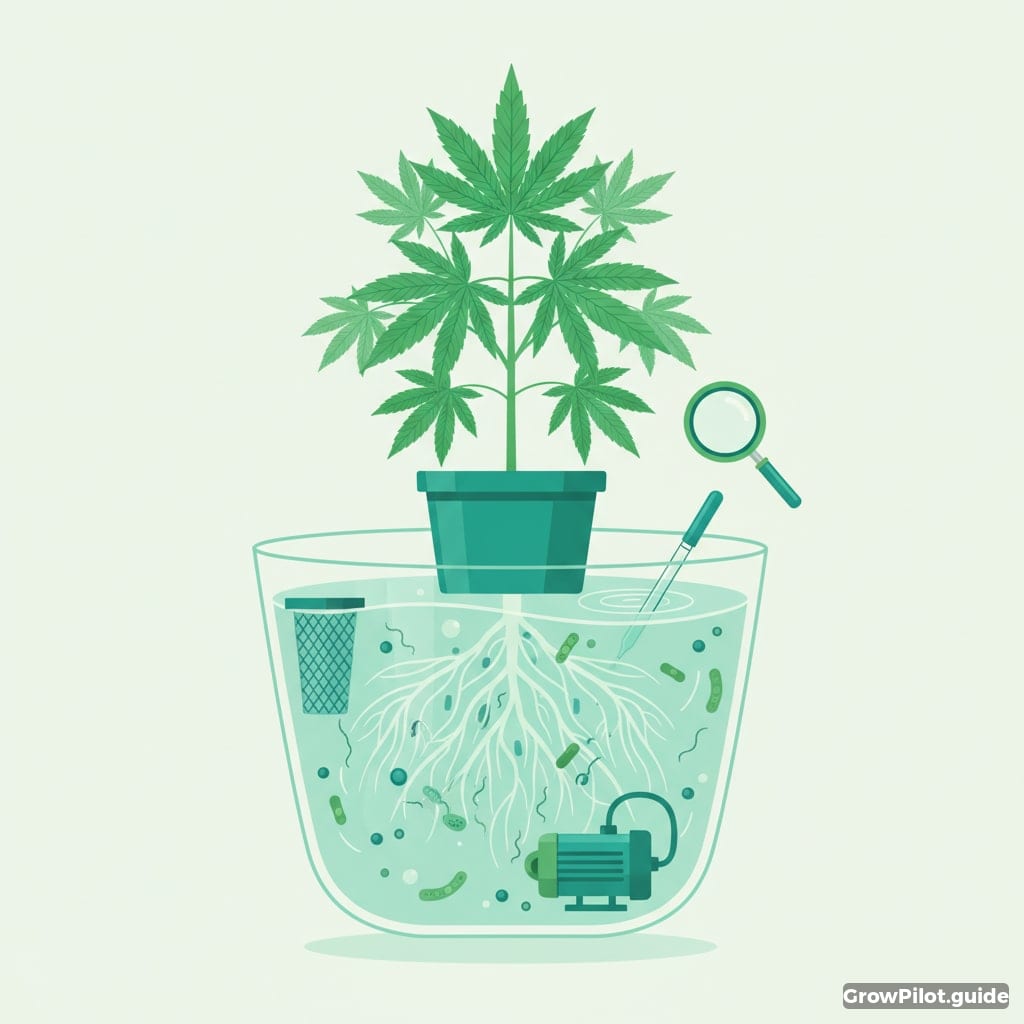
This Hydro-IPM guide shows you how to preventively keep the reservoir, pipes and root zone stable against biological stress and contain problems early, specifically and gradually.
## Introduction
In hydroponic growing, an often underestimated part of **Integrated Pest Management (IPM)** is not on the leaves, but in the **reservoir, pipes, drippers and on the root surface**. Unlike in soil, there is **no buffer** here: Changes in oxygen, temperature, pH or organic load have a rapid effect on root health. A good hydro IPM therefore aims to keep **microbial and biological pressure in the root zone low** without waiting for visible damage.
This guide deliberately **does not deal with the diagnosis of individual pests**, but with the IPM strategy for the hydro-typical risk zone below the substrate surface.
## Why the root zone is particularly critical in hydro IPM
In the hydro system, nutrient solution circulates directly on sensitive tissue. This means that problems can quickly spread throughout the system:
- **nutrient solution that is too warm** lowers the oxygen content
- Biofilm in pipes** protects unwanted microorganisms
- Stagnant zones** in tanks or hoses promote contamination
- **organic inputs** from plant residues or dirty tools increase the risk
- **unstable pH** outside of **5.5-6.0** further stresses the roots
IPM in the root zone therefore means above all **prevention, close monitoring and clean escalation stages**.
## Prevention: The first line of defense in the hydro system
### Reservoir and line hygiene
A clean system significantly reduces the starting pressure. Important basic rules:
- Keep the reservoir light-tight to prevent algae formation
- Keep the tank lid closed as far as possible
- Thoroughly clean pipes, pumps, airstones and drippers between cultures
- Remove dead plant material from the system immediately
- Do not place dirty measuring devices directly in the reservoir
Reservoir hygiene** is particularly important because contamination can spread throughout the system.
### Water parameters as an IPM tool
In Hydro, environmental control can be measured in the root zone. Critical target values:
- **pH: 5.5-6.0**
- Water temperature: 18-22°C**
- **EC precise and stable management**
- Strong aeration for high oxygen availability
A well-oxygenated, temperature-stable nutrient solution makes it more difficult for problematic biological loads to become established. The risk increases significantly as the water temperature rises.
### Minimize organic load
The more usable material ends up in the system, the easier it is for biofilms to form. Therefore:
- Do not leave any leaf residue in the tank or drain
- Check and clean the filter regularly
- Clean tools and hands before working on the reservoir
- Prepare clean and reproducible refill water
## Monitoring in the root zone
Hydro-IPM requires **frequent, short checks** instead of infrequent major inspections. A fixed check schedule makes sense.
### Daily inspection
- Check water temperature
- Check pH progression
- Check EC for unexpected jumps
- Check aeration and water movement
- Assess the odor of the reservoir
### Several times a week
- Visually check roots in easily accessible places
- Check drippers, return lines or pipes for slime or deposits
- Check the inside walls of the tank for biofilm
### What you look out for
In the IPM context, **trends** are particularly important:
- Recurring pH drift without a recognizable cause
- Declining system performance despite correct EC
- Increasing turbidity or scaling
- decreasing oxygen input due to dirty airstones
Not every single finding requires immediate, tough measures. The decisive factor is whether the load **remains stable, increases or becomes systemic**.
## Intervention stages in the Hydro-IPM
### Stage 1: Immediate correction of stress factors
When the first warning signs appear, the favorable factors are removed first:
- Bring the water temperature back into the **18-22°C** range
- Adjust the pH back to **5.5-6.0
- Improve the oxygen supply
- Clean dirty pre-filters, airstones or drippers
- Remove visible organic deposits
As Hydro does not have a buffer, such corrections should be made **immediately**.
### Stage 2: Mechanical and hygienic containment
If biofilm or contamination continues:
- Partial or complete change of the nutrient solution depending on the extent
- Clean the inside surfaces of the reservoir and accessible components
- Flush heavily contaminated pipe sections
- Separate work processes: clean tools only for tank and root chamber
### Stage 3: Systematic stabilization
If problems recur, they must not only be treated, but the cause must be sought in the system design:
- Reduce dead zones in the reservoir
- Improve circulation
- Correct oversizing or undersizing of the aeration system
- Shorten cleaning intervals
- Eliminate entries due to open tanks or unclean refilling routines
## Phase-related priorities
### Vegetation phase
In the vegetation phase, a particularly consistent root zone IPM is worthwhile, because errors will later affect the entire crop. The aim is a **clean, stable start** with close control of the water values.
### Flowering phase
During flowering, the root zone should above all remain **stable**. Major system interventions should only be made if the load is actually increasing. Unnecessary changes in management increase stress.
## Conclusion
Hydro-IPM in the reservoir and root zone is above all **risk management**. If you closely control temperature, oxygen, pH, EC and hygiene, you can prevent many problems before they become visible. The key is not a single measure, but a **clean system with clear intervention levels**: first eliminate stress factors, then contain them hygienically, then stabilize the system permanently.
## Pro Tips
- Keep the reservoir consistently light-tight.
- Check the water temperature daily, not just the room air.
- Clean Airstones and filters according to a fixed schedule.
- React immediately to pH and EC outliers in Hydro.
- Document biofilm, odor and turbidity as trends.
🌿 More Growing Knowledge & Smart Grow Help
GrowPilot.guide is the cannabis grow tracker and weed cultivation app with smart plant analysis, indoor cannabis growing guide, grow diary, community, cups and autoflower grow tracker for growers worldwide.
Open GrowPilot.guide App →