Precise watering in coco cultivation
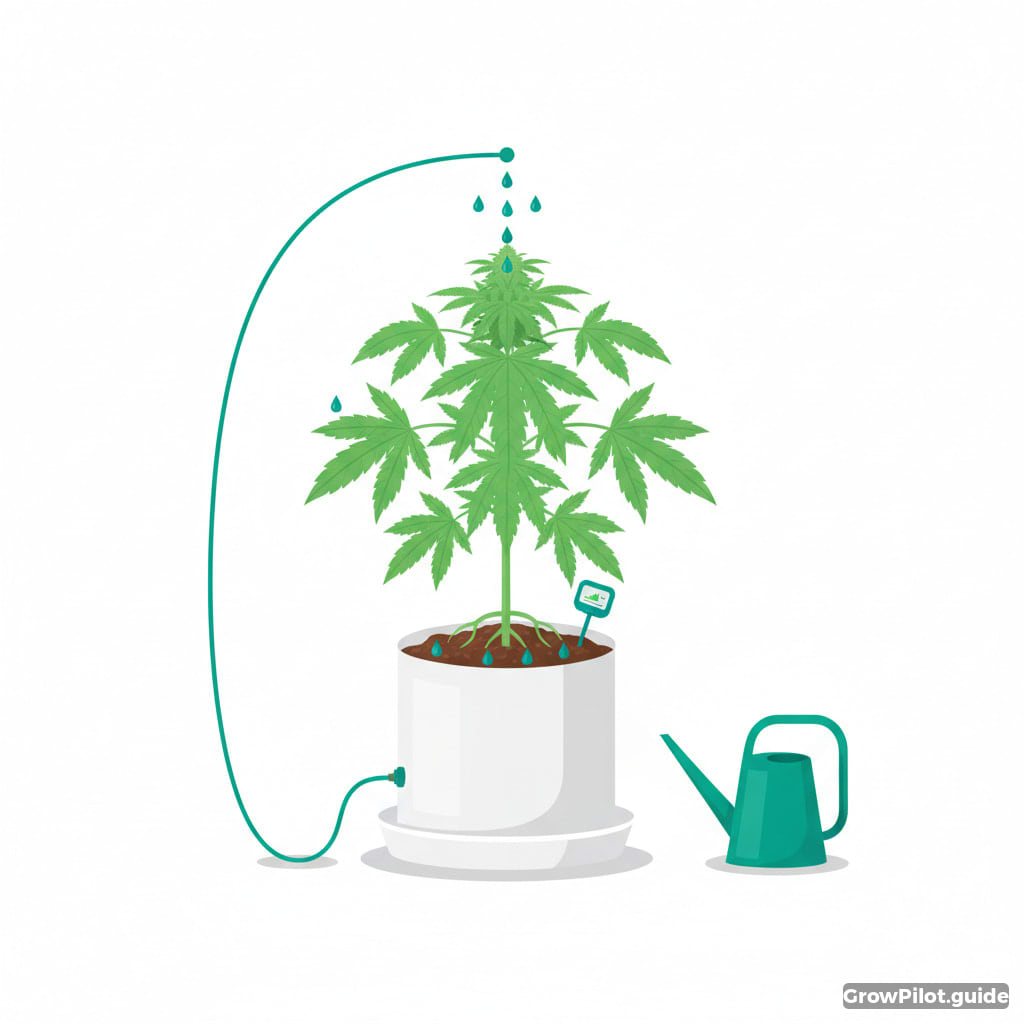
This guide shows you how to achieve the perfect watering rhythm and optimum water quantities in coco cultivation. It covers pH, flow, drainage and moisture control.
## Introduction
In coco cultivation, the right timing and precise dosing of water is crucial. Since coco as a substrate has hardly any buffering effect, plants in coco react very quickly to changes in the supply of nutrients and water. This guide focuses exclusively on the aspects of watering in the Coco medium - from preparing the irrigation water to setting the watering rhythm and checking the drainage. Emphasis is placed on the correct pH target value (5.8-6.0) and methods are presented to reliably detect over- and under-watering.
## Preparation of the irrigation water
The irrigation water is crucial for Coco, as it forms the basis for all nutrient additions and plant growth. This is important:
- **pH value**: Set the pH value of the irrigation water to 5.8-6.0. This ensures optimum absorption of nutrients. Use pH meters and appropriate pH regulators (pHPlus or pHMinus) and adjust the water before watering.
- EC value**: The EC value (electrical conductivity) also plays a key role. It should be adjusted to the respective growth phase, as coco has hardly any buffering effect. Increase the EC value gradually to avoid nutrient burns.
- Calcium-magnesium supplementation**: With Coco it is essential to supplement additional Ca/Mg. Always add these supplements to the irrigation water to avoid deficiency symptoms.
## Determining the watering rhythm and amount of water
In coco cultivation, watering is done frequently and in smaller quantities, as the medium dries out quickly. Determining the correct watering quantity is essential:
- **Regular watering**: Since coco as a substrate only stores a small amount of water, the plants should be watered daily - sometimes even several times a day. In the early growth phases, 300-500 ml per plant is sufficient, while higher quantities are required in the flowering phase.
- Water distribution**: Make sure that the water reaches the entire root zone evenly. If necessary, use a drip irrigation system, which is ideal for the rapid response in Coco.
- **Practical tests**: A tried and tested tip is to measure the weight of the substrate. If the plants lose 20-30% of their weight between waterings, the need for the correct dosage has been established. This helps to avoid overwatering and underwatering.
## Control mechanisms: drainage and substrate moisture measurement
Good drainage is essential in coco cultivation to prevent root rot and nutrient blockages. Here are some tips:
- **Drain control**: Regularly check the drainage of water from the pot. Sufficient flow indicates that excess water can drain away safely. Make sure that the drains are not blocked.
- Moisture measurement**: Use in-ground moisture sensors or take manual measurements with a moisture meter to determine the current condition of the coco. The measurements help to determine whether the watering rhythm needs to be maintained or adjusted.
- Surface monitoring**: A visual inspection of the substrate may indicate excessive drying or, on the other hand, overwatering. Make sure to emphasize the upper substrate layer in order to be able to react quickly.
## Adaptation to fast reaction times in the Coco
Coco reacts almost immediately to changes in the water supply. As a grower, you must therefore continuously pay attention to the needs of the plants:
- **Dynamic adaptation**: Adjust the watering rhythm and water quantities flexibly, depending on the development phase and climate. On hot days or when there is a lot of light, the water requirement increases so that watering must be done earlier or more often.
- Buffer imbalances**: Keep a close eye on the roots and the condition of the plant. At the first sign of stress - whether due to nutrient leaching or excessive salt accumulation - you should immediately reconsider the watering schedule and adjust the nutrient concentration if necessary.
## Summary and best practices
Precise irrigation in coco cultivation is based on the following main measures:
- Checking and adjusting the pH (5.8-6.0) and EC of the irrigation water
- Regular and dosed watering, adapted to the rapid reaction of the Coco medium
- Constant monitoring of drainage and moisture measurements to ensure an optimal root climate
- Flexibility in the watering schedule to be able to react adequately to changing environmental conditions
These measures ensure that the plants are always supplied with the optimum amount of water, without nutrient surpluses or deficiencies. The key is to continuously monitor and be ready to quickly adjust the watering rhythm so that the cannabis plants can develop their full potential in the coco medium. Use these techniques to eliminate common mistakes and maximize the benefits of a responsive coco system.
## Pro Tips
- Check the pH value of the irrigation water daily.
- Use a drip irrigation system for an even water supply.
- Use moisture sensors for precise substrate control.
- Weigh the plant pots as an additional indicator.
- Adapt the casting schedule flexibly to the ambient temperature.
🌿 More Growing Knowledge & AI Grow Help
GrowPilot.guide is the cannabis grow tracker and weed cultivation app with smart plant analysis, indoor cannabis growing guide, grow diary, community, cups and autoflower grow tracker for growers worldwide.
Open GrowPilot.guide App →