Sensor-based moisture monitoring in the irrigation system
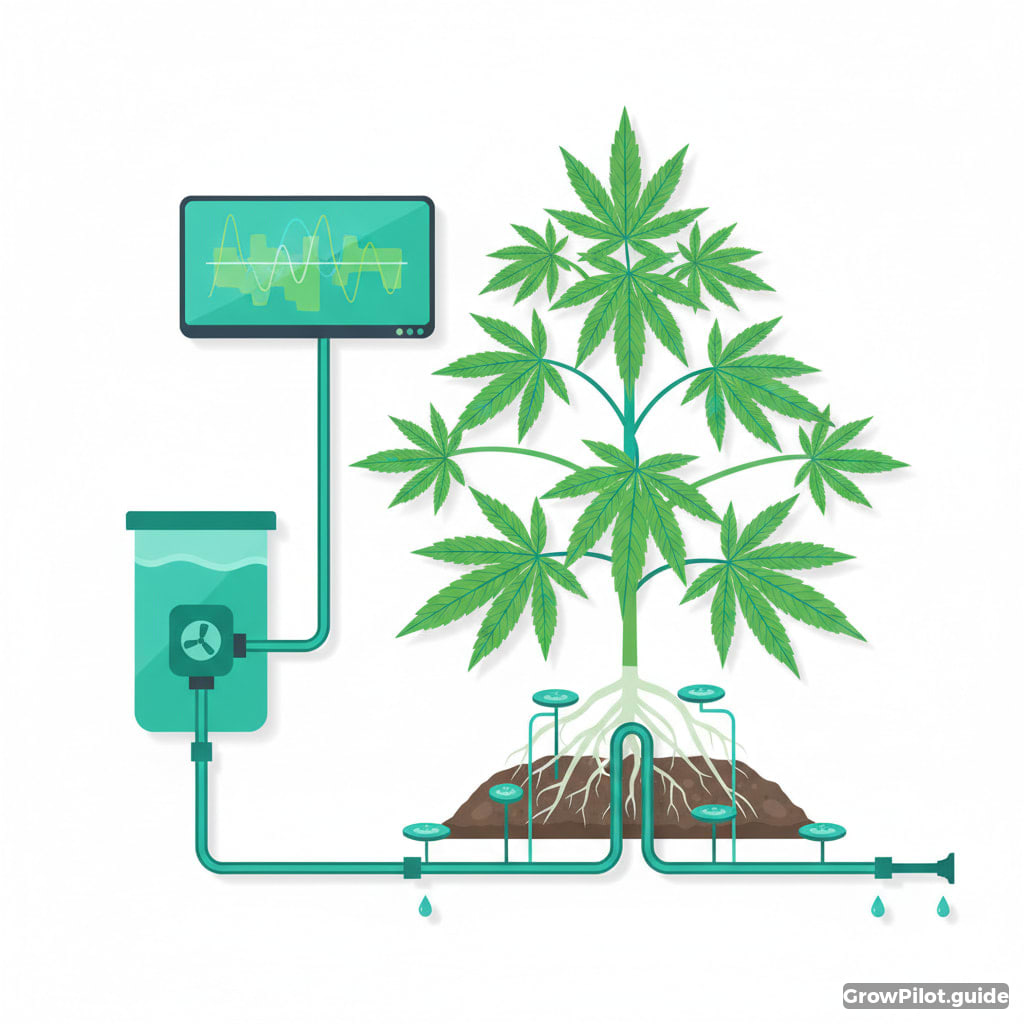
Learn how to use soil moisture sensors to precisely control the water supply to your cannabis plants and avoid unnecessary water consumption.
Introduction
Precise watering is a crucial factor for success in cannabis cultivation. By using moisture sensors, you can determine when your plants need water and when the substrate is sufficiently moist to promote root and nutrient development. This guide will show you how to integrate sensor-based systems into your irrigation system to optimize water usage and avoid over- or under-watering.
Importance of sensor-based irrigation monitoring
Continuous monitoring of substrate moisture offers the following advantages:
- Precise water quantity control: Avoids overwatering, which can lead to root rot, and underwatering, which inhibits plant growth.
- Automation:** Combined with automation, manual maintenance is significantly reduced.
- Resource efficiency:** Saves water and energy by watering exactly when needed.
Thanks to the real-time data from the sensors, you can dynamically adapt the watering behavior to the needs of your plants.
Selection of suitable moisture sensors
Not all sensors are equally suitable for cannabis cultivation. Pay attention to the following properties when selecting:
- Measuring range & accuracy: It should cover the typical moisture range of the chosen substrate. Measurement accuracy is crucial in order to be able to react quickly to changes.
- Resistance to substrate types:** Different media (soil, coco, hydroton) require robust sensors that reliably measure moisture-related fluctuations.
- Low maintenance:** Sensors that are easy to clean and maintain minimize downtime.
- Integration into automation systems:** Make sure the sensor is compatible with your control hardware (microcontroller, irrigation relay).
Installation and wiring
Correct installation of the sensors is crucial for reliable readings:
- Placement: Place the sensor in the root area of the plants. Distributed measuring points can be useful for large growing areas.
- depth positioning:** Make sure that the sensor is positioned at the depth at which the main roots are active. This will give you more meaningful readings of the actual water uptake.
3 Protect against moisture damage: Use waterproof connectors and, if necessary, housings to prevent damage to the electronics.
- cabling:** Ensure clean cable routing to avoid short circuits and signal interference. Cables should be well insulated and protected from mechanical damage.
Calibration of the sensors
After installation, calibration of the sensors is essential:
- Reference measurement: Compare the sensor values with manual measurements of the substrate moisture content to adjust the sensor.
- Setting the threshold values:** Define threshold values at which the irrigation system is activated or deactivated. Typically, the substrate should be between 30% and 70% relative humidity, depending on the substrate and plant species.
- Test run:** Carry out several test cycles to ensure that the system responds reliably and accurately. Note any deviations and adjust the parameters if necessary.
Integration into the automation system
The benefits of sensor-based systems are particularly evident in automation:
- Control software: Integrate the sensor data into control software or a microcontroller that regulates the irrigation based on the moisture values.
- Automated relays:** Connect the sensor to an irrigation relay to enable automatic activation of the pump or valves.
- Data logging:** Use a data storage system to identify long-term trends and make early adjustments if necessary.
- Alarm functions:** Implement alarm functions (e.g. SMS or e-mail) if the sensor values are outside the target ranges.
Maintenance and troubleshooting
Regular maintenance and structured fault analysis are important to ensure stable results in the long term:
- Regular cleaning: Dirt on the sensor can lead to incorrect readings. Clean the sensors at regular intervals in accordance with the manufacturer's instructions.
- Calibration check: Check the calibration periodically, especially after intensive irrigation cycles or substrate changes.
- Visual inspection:** Check cables and connections for damage that could impair data transmission.
- Replace defective components:** Replace faulty sensors or connections promptly to avoid failures in the irrigation system.
Conclusion
Integrating moisture sensors into your irrigation system is a pioneering step towards more precise, resource-efficient irrigation in cannabis cultivation. With the right selection, correct installation, careful calibration and ongoing maintenance, you can ensure that your plants are always optimally supplied. This not only leads to healthier plant growth, but also to a reduction in water consumption and minimizes the risk of overwatering damage.
Sensor-based monitoring is particularly interesting for hobby growers who want to automate their irrigation system and reduce manual effort at the same time. Experiment with different sensors and find the optimal solution for your system to sustainably optimize your cannabis cultivation.
Pro Tips
- Select sensors that are specifically suitable for the substrate type.
- Always carry out a test run on site to validate the sensor values.
- Use data logging to make long-term adjustments.
- Protect connections with waterproof housing.
- Schedule regular maintenance intervals to avoid incorrect measurements.
Frequently Asked Questions
How do soil moisture sensors work in cannabis cultivation?
Soil moisture sensors measure electrical conductivity or water content in the soil to determine the moisture level. This data helps to precisely control irrigation and prevent over-irrigation.
How often should I water my cannabis plants if I'm using a sensor?
The frequency of watering depends on the sensor readings; water only when the sensor indicates that the soil is dry. This may vary depending on the growth stage and environmental conditions.
Can I use the sensors with automatic irrigation systems?
Yes, many soil moisture sensors can be connected to automatic irrigation systems to automatically control watering based on the measured moisture levels.