Efficient exhaust air system for grow tents
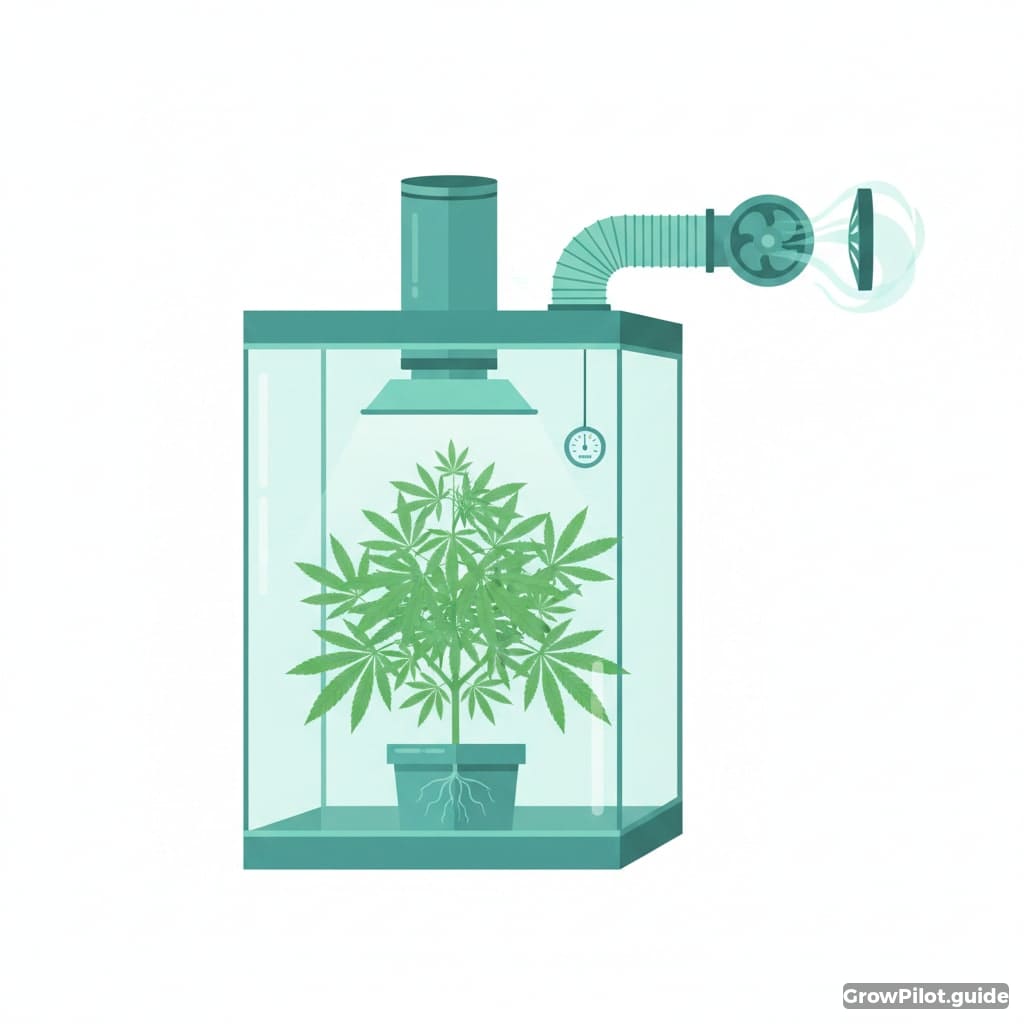
Professional use and selection of exhaust fans, activated carbon filters and air ducts - essential equipment for an optimum indoor climate in the grow tent.
## Introduction
An efficient exhaust air system is the heart of a healthy grow tent. It not only ensures the exchange of stale, humid air, but also prevents unpleasant odours and helps to stabilize the indoor climate. This guide describes in detail how to select and install the right equipment - exhaust fans, activated charcoal filters and air ducts - correctly.
## Selecting the exhaust air fan
**Exhaust fans** are responsible for removing stale air from the tent. The criteria for selecting a suitable fan are
- **Air flow rate (m³/h):** It must be powerful enough to exchange the entire volume of the tent in a reasonable time. Calculate the required air exchange based on the tent volume and take into account the additional resistance due to filters and ducts.
- Noise level:** Low-noise operation is particularly advantageous in urban living environments. Pay attention to the manufacturer's decibel specifications.
- Reliability:** Choose fans from established manufacturers with positive experience reports to avoid failures during installation.
## Integration of the activated carbon filter
The **activated charcoal filter** is indispensable for neutralizing odours. You should pay attention to the following aspects:
- **Suitable size:** The filter should be matched in relation to the air flow rate to the fan. A filter surface that is too small can obstruct the air flow, while a filter that is too large can be unnecessarily expensive.
- Carbon quality:** Look for high-quality activated carbon that effectively adsorbs odors. A filter with multiple chambers or layers usually offers better filtration performance.
- Connection options:** The filter should be mountable on both the supply air and exhaust air sides to ensure flexible installation options.
- Maintenance:** Regular replacement or cleaning of the carbon units is necessary to maintain a complete odor and particle filter.
## Planning the air duct installation
The air ducts connect the individual components of the exhaust air system. Important points during planning:
- **Choice of material:** Flexible ducts made of high-quality, heat-resistant material minimize energy loss and noise transmission. Avoid materials that wear out quickly or are not heat-resistant.
- Length and bend radii:** Shorter ducts with as few bends as possible are ideal as they cause less obstruction to the airflow. Any additional bends or unnecessarily long runs will reduce the effective airflow.
- Sealing:** Ensure a tight connection between the fan, filter and duct. Leaks can lead to a loss of performance and have a negative impact on the indoor air.
- Installation:** Plan the installation in such a way that access to the components is guaranteed despite the fixed installation. This facilitates subsequent maintenance work and possible repairs.
## Installation and adjustment
Always follow the manufacturer's instructions when installing the exhaust air system. **Important points**:
- **Mounting:** Use suitable brackets and suspension systems to mount the fan and filter securely. Insecure mounting can lead to vibrations that increase the noise level.
- Alignment:** Align the fan so that the air flow goes directly into the connected duct. Incorrect alignment can significantly reduce efficiency.
- Checking the performance:** After installation, the actual air flow rate should be checked using an anemometer and, if necessary, other measuring devices. In this way, bottlenecks can be identified and eliminated.
## Maintenance and inspection
No installation is maintenance-free. To achieve optimum performance in the long term, the following maintenance measures should be carried out regularly:
- **Cleaning the fan blades and filters:** Dust and dirt can reduce performance. Clean the components at regular intervals as recommended by the manufacturer.
- **Check the seals:** Check that all connections and seals are intact. Any leaks should be sealed immediately.
- Measurements of the air flow rate:** Use measuring devices to ensure that the air exchange is constantly within the optimum range. It is necessary to adjust the configuration if the ambient conditions change.
- Documentation:** Keep a maintenance log in which you record all measures carried out, spare parts and measured values. This helps to identify long-term trends and react to changes at an early stage.
## Summary
A well-planned and professionally installed exhaust air system is essential for any professional grow tent. The indoor climate can be efficiently controlled by carefully selecting exhaust fans, integrating high-quality activated carbon filters and optimizing air duct routing. Regular maintenance also ensures long-term success and minimizes risks such as unpleasant odours and inefficient air circulation. Look out for harmonious components that are perfectly matched to each other to ensure a trouble-free, high-performance system.
## Pro Tips
- Check the air flow rate regularly.
- Plan the cable routing and installation locations well.
- Use tight connections to avoid leaks.
- Clean the activated charcoal filter for optimum operation.
- Keep a maintenance log for all components.
🌿 More Growing Knowledge & AI Grow Help
GrowPilot.guide is the cannabis grow tracker and weed cultivation app with smart plant analysis, indoor cannabis growing guide, grow diary, community, cups and autoflower grow tracker for growers worldwide.
Open GrowPilot.guide App →