Targeted defoliation for optimum light incidence
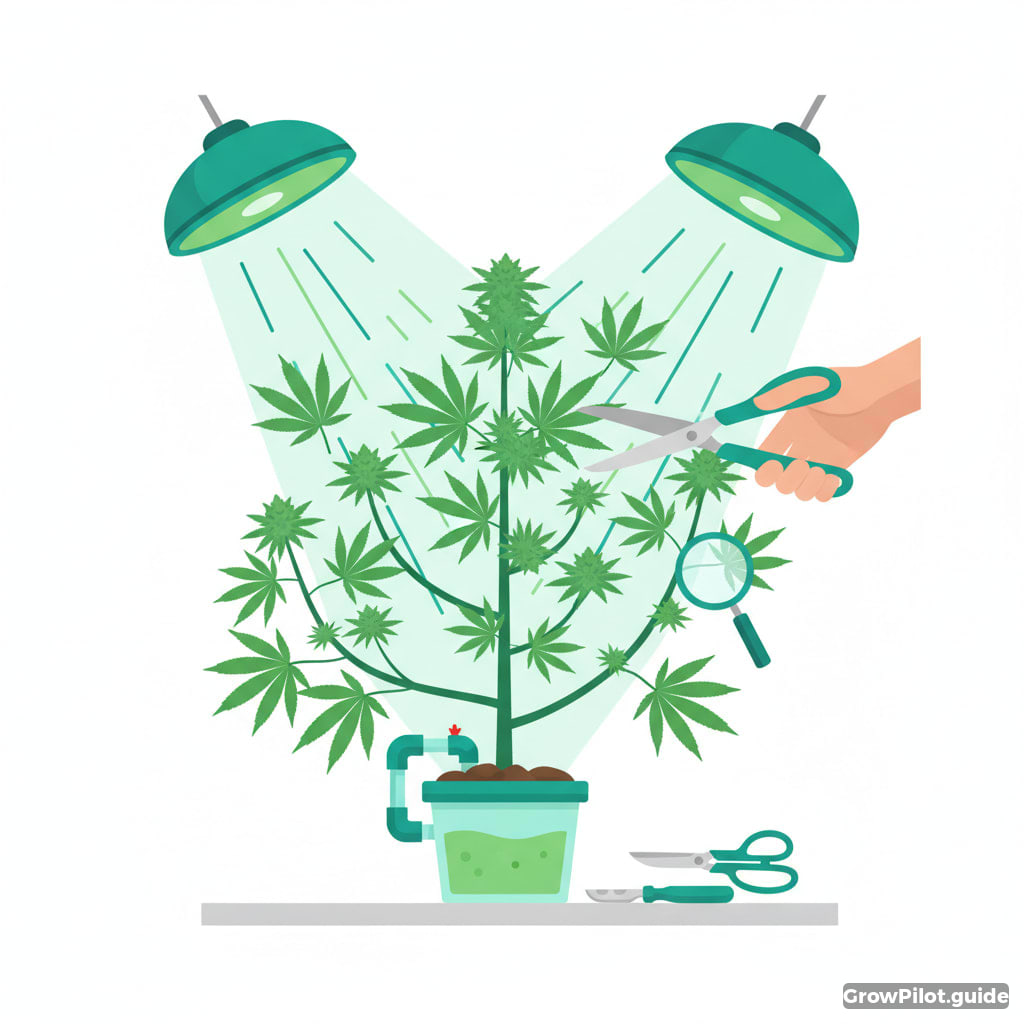
Learn how to optimize light incidence in the vegetative phase through targeted defoliation and thus increase yields - professionally and with minimal risk.
## Introduction
Targeted defoliation is a proven training method in the vegetation phase that ensures that your cannabis plants develop optimally. By removing excess or unfavorably positioned leaves, the incidence of light is improved and air circulation in the leaf canopy is increased. This can lead to a better distribution of nutrients and ultimately to higher yields. **Important:** This technique should only be used during the vegetation phase to avoid unnecessary stress.
## Why defoliation?
Defoliation is a targeted measure that offers several advantages:
- **Optimization of light incidence:** Removed leaves no longer block light to the inner and lower parts of the plant.
- Improved air circulation:** This reduces the risk of mold growth and creates a healthier plant climate.
- Promotion of lateral shoot formation:** Improved light distribution can help the plant to branch out more evenly.
## Preparation
Before you start defoliation, you should make some preparations:
- **Determining the target leaves:** Not every leaf should be removed. Choose specifically large, dark and shady fan leaves that block the light for the central shoots.
- Tool selection:** Clean and sharp tools (e.g. small secateurs or special pruners) help to achieve clean cuts and prevent infection.
- Health of the plant:** A healthy, vigorous plant will tolerate removal better. Make sure that there are no signs of stress or disease.
## Carrying out the defoliation
The actual defoliation should be carried out carefully and gradually:
### 1. selective removal
- **Identify the blockages:** Select the leaves that are obstructing the light in particular, without reducing the total leaf mass of the plant.
- Gradual removal:** Remove only a small part of the leaves at a time (no more than 20-30% of the total leaf mass in one pass) so as not to overwhelm the plant.
- Clean cuts:** Use sharp tools and disinfect them before and after use to avoid disease.
### 2. technique and timing
- Consider timing:** The best time for a first defoliation is in the middle to end of the early vegetative phase, when the plant has already developed some branches but is not yet too densely overgrown.
- Planning:** Think about which leaves should be removed. Avoid removing the leaves directly at the base or on the main shoots, as these are important for nutrient production.
- Subsequent adjustments:** A few days after the first defoliation, you should inspect the plant again and make further minor adjustments if the plant tolerates the removal well.
## Follow-up care and observation
After defoliation, observation is key:
- **Recognize signs of stress:** Watch for signs of stress in the days following the procedure, such as drooping leaves or slowed growth.
- **Encourage even growth:** If necessary, shape the remaining leaves and branches by gently supporting them with other training techniques (such as LST).
- Repeat:** A second, light defoliation can be done after a few days when the plant has developed new leaves and recovered.
## Avoid risks and mistakes
Even though defoliation offers many advantages, caution is advised:
- **Avoid over-defoliation:** Never remove too many leaves at once as this will weaken the plant.
- Do not remove the wrong leaves:** Concentrate on leaves that contribute little to photosynthesis. Do not remove the leaves that are actually needed for energy production.
- Consider climate conditions:** Preferably carry out defoliation on a day with cooler weather and low humidity to minimize the risk of transpiration shock.
- Observation and patience:** Each plant reacts individually. Continuous observation helps you to recognize whether the plant reacts positively to the measure or whether adjustments are necessary.
## Conclusion
Targeted defoliation is an effective training tool that optimizes light incidence and promotes plant growth. With careful planning, the right timing and gentle execution, you can increase the yield of your cannabis plants. Always be careful not to stress the plant and keep an eye on its reactions. This method, in combination with other training measures, can help you create a more even and open canopy - a key to higher yields and healthier plants.
## Pro Tips
- Remove only 20-30% of the leaves per pass.
- Choose only large, shady leaves.
- Disinfect your tools to avoid infections.
- Carry out the defoliation on cool, dry days.
- Allow the plant sufficient recovery time between interventions.
🌿 More Growing Knowledge & AI Grow Help
GrowPilot.guide is the cannabis grow tracker and weed cultivation app with smart plant analysis, indoor cannabis growing guide, grow diary, community, cups and autoflower grow tracker for growers worldwide.
Open GrowPilot.guide App →