Optimal ventilation in indoor cannabis cultivation
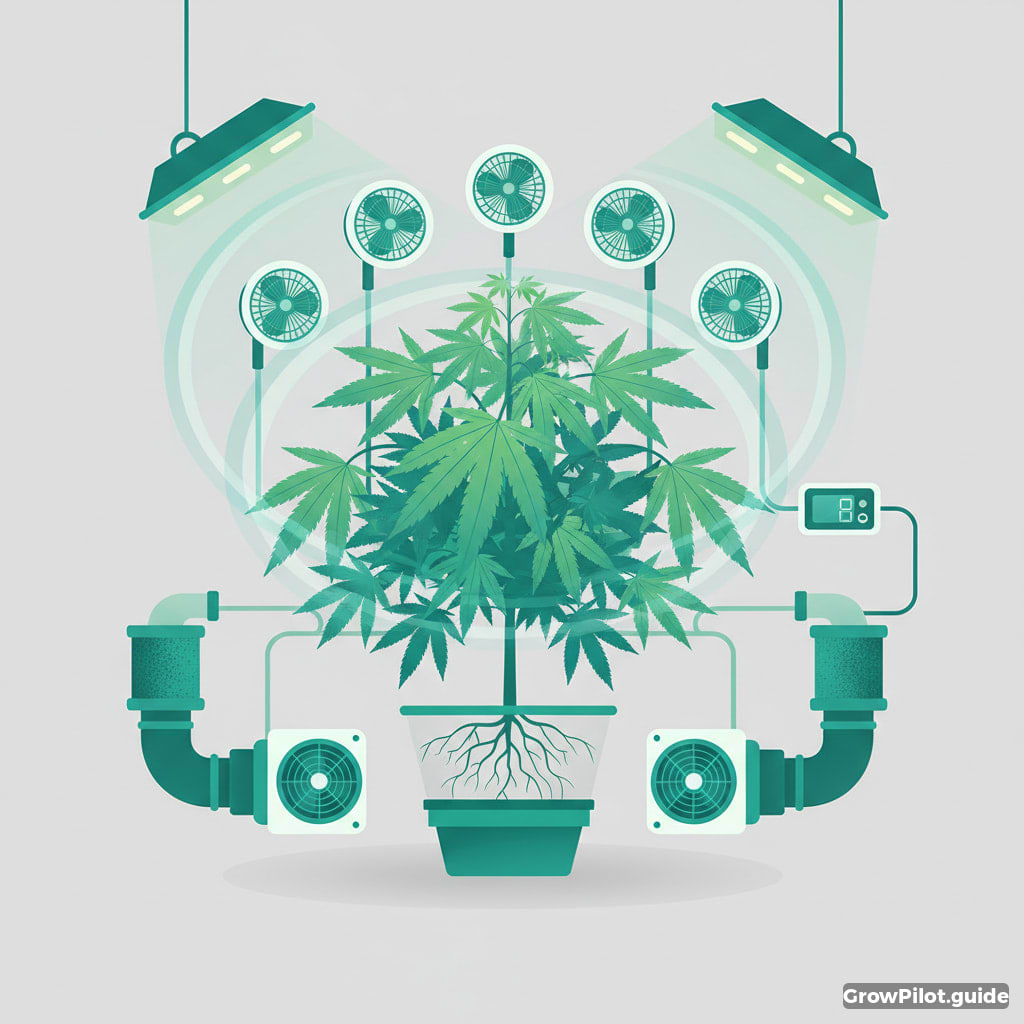
Find out how you can achieve optimum air circulation, control temperature and effectively prevent mold growth with a well thought-out ventilation strategy in indoor grow setups.
## Introduction
Well-planned ventilation is an essential factor in indoor cannabis cultivation. It not only ensures a constant exchange of air, but also helps to keep the temperature and humidity in the optimum range. This prevents mold growth and supports healthy plant growth. In this guide, you will learn how to select, install and continuously monitor the right ventilation methods and devices.
## Importance of ventilation
Indoor grow boxes and grow tents are usually very limited in volume. Without sufficient air circulation, heat and humid air can build up, which can lead to problems such as mold, heat stress and uneven CO₂ distribution. **Continuous renewal of the air** is therefore crucial:
- **temperature control**: Continuous exchange allows heat generated by lights and other appliances to dissipate.
- **Humidity management**: Good ventilation prevents excess moisture from accumulating, which encourages mold and pathogens.
- **CO₂ distribution**: A balanced CO₂ concentration is necessary for photosynthesis, which is also supported by a constant exchange of air.
## Planning the ventilation
### Room analysis and determination of requirements
Before investing in technical equipment, you should analyze the size of your grow room and its specific needs. Measure the volume of the room and assess how much equipment is generating heat inside. Questions you should ask yourself:
- How big is the room or grow tent?
- What light sources and other heat generators will be used?
- Are there already natural air inlets or outlets?
### Equipment selection
Various devices can be considered for efficient air exchange in indoor cultivation:
1. **Exhaust fan**: This extracts stale, warm air from the grow room. The size of the fan should be matched to the room volume.
2nd **circulation fan**: Supports the distribution of air within the room to avoid hotspots.
3. activated carbon filter**: In combination with the exhaust fan, it helps to neutralize odours and remove harmful particles.
4 **Air ducts and supply air openings**: For a controlled air inlet and outlet, these components ensure that fresh air always flows in.
## Installation of the ventilation system
### Structure of the exhaust air system
Start by installing the exhaust fan. If possible, place the fan in the upper region of the grow room, as warm air rises. A well-dimensioned activated carbon filter should be installed in front of the fan to bind unpleasant odors.
**Installation steps:**
- Attach the activated charcoal filter to the intended location.
- Connect the filter to the exhaust fan via suitable ducts or hoses.
- Ensure that the air is directed towards an outdoor area or a specifically installed exhaust air system.
### Recirculated air distribution within the room
One or two recirculation fans help to circulate the air evenly in the room. Position them so that they move air from the peripheral zones to the center and towards the plants. Even distribution prevents local temperature differences.
## Fine adjustment and monitoring
### Regular checks
The performance of the ventilation system must be checked regularly. Pay attention to:
- Constant temperature values in the room (ideally between 22-26°C during vegetation and slightly cooler during the flowering phase).
- Stable humidity, which should be adjusted depending on the phase to prevent mold growth.
### Control systems
Modern climate control systems can help to regulate fans automatically. The system can be fine-tuned using external sensors for temperature and humidity. This allows the devices to react automatically if there is a sudden rise in temperature or excessive humidity.
## Conclusion
Optimum ventilation in indoor cannabis cultivation is no coincidence, but the result of careful planning and regular monitoring. The interaction of exhaust air and recirculation fans, supplemented by activated carbon filters, creates an ideal microclimate that allows the plants to grow healthily and prevents yield losses due to mold and heat stress.
Through targeted analysis and the use of suitable technology, growers can perfectly adapt the indoor climate to the needs of the plants. This not only minimizes plant stress, but also provides advantages in controlling temperature and humidity throughout the entire growth phase. A well-ventilated room is therefore the basis for a successful and high-yielding grow.
## Pro Tips
- Calculate the room volume in order to select the correct fan power.
- Place exhaust air appliances as high as possible, as warm air rises.
- Use activated charcoal filters to neutralize odours.
- Monitor the temperature and humidity regularly.
- Automate your system with sensors for optimum control.
🌿 More Growing Knowledge & AI Grow Help
GrowPilot.guide is the cannabis grow tracker and weed cultivation app with smart plant analysis, indoor cannabis growing guide, grow diary, community, cups and autoflower grow tracker for growers worldwide.
Open GrowPilot.guide App →