Correctly Identifying Hermaphrodites or "Bananas" in Cannabis
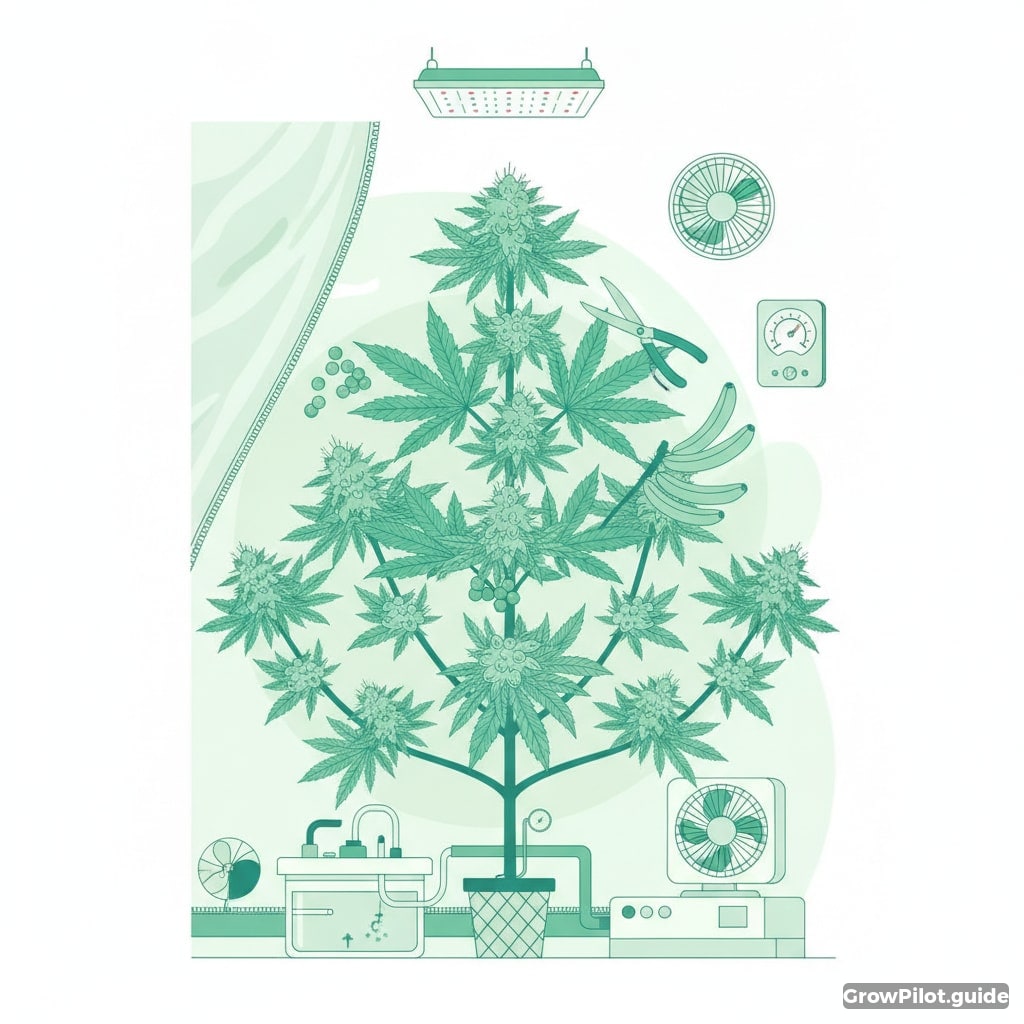
If male flowers or yellow “bananas” appear on cannabis plants, it’s important to act quickly and decisively. This guide shows you how to properly assess the situation, the risks, and the next steps.
Introduction
Hermaphroditic traits—or so-called bananas—on cannabis plants can significantly disrupt a grow because they can lead to unwanted pollination. This refers to male flower parts on an otherwise female plant. This can be genetically determined or occur as a reaction to stress. The key is not to panic, but to make a clear assessment of the situation and a decisive decision regarding the rest of the crop.
This guide addresses the topic exclusively as a growing issue involving identification, assessment, and decisions regarding the crop. It does not cover fertilization schedules, watering, or harvesting techniques.
What Is Meant by “Hermaphrodites” and “Bananas”
A hermaphroditic plant exhibits both female and male sexual characteristics simultaneously. In cultivation, two forms are particularly relevant:
- Male inflorescences: small, spherical pollen sacs on the nodes or in the flower clusters
- Bananas/Nanner: yellowish, narrow, banana-shaped stamen structures that can emerge directly from the flower
Important: Not every unusual flower shape is immediately a sign of hermaphroditism. Therefore, any such finding should always be examined up close and in good light.
How to Distinguish a Real Threat from Harmless Anomalies
Typical characteristics of male flowers
Look for:
- small, round to oval sacs
- clusters at nodes or in the spaces between flowers
- absence of white stigmatic filaments on these structures
Typical characteristics of bananas
Look for:
- yellow to light green, elongated structures
- often solitary or in small groups
- protruding directly from mature flowers
- no closed, spherical casing as seen in pollen sacs
Common Misidentifications
The following are often mistaken for one another:
- young calyxes
- swollen female flower parts
- dried-up plant debris
- unusually shaped foxtails
If you’re unsure, check several flower areas on the same plant. A genuine finding often appears not just in a single spot.
Why This Is a Problem
As soon as male flower parts become functional, the risk that female flowers will be pollinated increases. The plant then diverts some of its energy toward seed production. For a hobby grower, this usually means:
- lower flower quality
- seeds in the buds
- uneven crop
- risk to neighboring plants
The severity of the risk depends on:
- what structure was found
- how many spots are affected
- how far along the flowering process is
- whether there are other plants in the room
Immediate Actions After Detection
1. Stay calm and inspect the plant thoroughly
Examine the affected plant thoroughly:
- Main shoots
- Inner flowering zones
- Lower, shaded areas
- Transitions between nodes and flowers
A partial inspection is often insufficient. Hermaphroditic traits are frequently hidden in the inner areas at first.
2. Inspect the entire crop
Also check all neighboring plants. If one plant is hermaphroditic, it doesn’t necessarily mean that others are affected as well. Nevertheless, a crop inspection is mandatory so that you can realistically assess the extent of the problem.
3. Assess the risk
In practice, three situations can be distinguished:
- Single suspicious structure, unclear findings: continue monitoring and inspect closely
- A few clearly recognizable male parts on an otherwise healthy plant: high risk; daily monitoring required
- Multiple banana-shaped structures or pollen sacs in several locations: very high risk of pollination
How to Make the Decision
Keep or remove the plant?
The most important question isn’t whether the plant looks healthy otherwise, but whether it poses a threat to the rest of the grow.
Remove it without hesitation if:
- multiple pollen sacs are present
- bananas appear on different buds
- the issue keeps recurring
- multiple plants in the same room need to be protected
- the genetics are already known to be unstable
- the problem is very limited
- you can monitor the plant closely
- the rest of the crop is manageable
- you consciously accept the risk
For most hobby growers, making a clear decision about the crop is safer than prolonged hesitation.
Correctly Identifying Common Causes
Hybrids can result from:
- genetic instability
- light stress in photoperiodic plants during flowering
- severe environmental stressors such as heat or damage
- generally unstable flowering conditions
It’s important to distinguish between these factors:
- Genetics determine the underlying susceptibility
- Environment can trigger or exacerbate the trait
If a strain repeatedly produces hermaphrodites, this is primarily a matter of genetic evaluation for future grow cycles.
What You Can Learn from This for Future Grows
Document the finding in detail:
- Strain or cut
- Flowering week when it occurred
- Affected plant parts
- One-time or recurring occurrence
- Notable factors in the environment
This will help you determine later whether it was more of an isolated incident or a recurring problem. For future runs, it’s worth critically weeding out problematic genetics and checking the flowering environment for sources of interference.
Conclusion
Hermaphrodites or “bananas” aren’t just a cosmetic issue—they’re a matter of crop survival. It’s crucial to correctly identify the finding, inspect the entire plant and the rest of the grow, and objectively assess the pollination risk. The clearer and earlier you make your decision, the better you’ll protect the remaining plants.
Pro Tips
- Always inspect the entire plant, not just one bud.
- Check the neighboring plants on the same day as well.
- Eating multiple bananas means a significantly higher risk.
- Consistently document the variety, week, and location.
- Carefully evaluate unstable genetics for future grows.
More Growing Knowledge & Smart Grow Help
GrowPilot.guide is the cannabis grow tracker and weed cultivation app with smart plant analysis, indoor cannabis growing guide, grow diary, community, cups and autoflower grow tracker for growers worldwide.
Open GrowPilot.guide App →