How to Interpret Yellow Leaves During Late Bloom
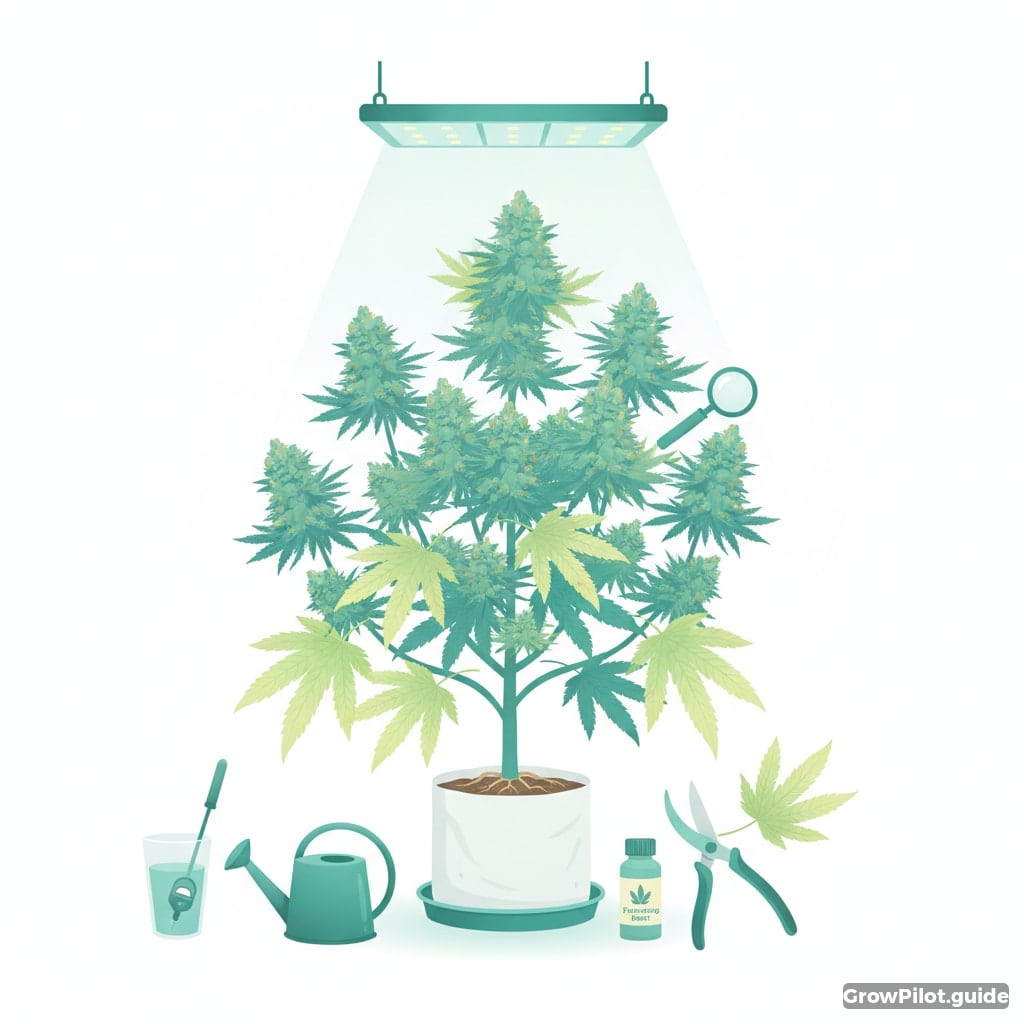
Here's how to tell the difference between normal fall coloration and actual problems during late bloom. This guide shows typical patterns, the limitations of assessment, and useful checks without confusing different stages.
Introduction
Yellow leaves during late flowering can be a cause for concern among many hobby growers. However, not all yellowing is a problem. Toward the end of its life cycle, cannabis breaks down mobile reserves from older leaves. As a result, large fan leaves in particular may gradually lighten in color and eventually turn yellow. This natural aging process is often described as autumn coloring or senescence.
At the same time, however, yellowing can also indicate a real problem. Therefore, it’s not the color alone that matters, but when, where, and how it occurs. This guide will help you properly classify yellow leaves during late flowering as a growing issue without getting sidetracked into fertilizer or watering plans.
What Can Be Normal During Late Flowering
During the late flowering phase, the plant shifts its priority to the maturation of the flowers. It is normal for:
- older, lower fan leaves lighten in color first
- the yellowing progresses slowly and evenly
- individual leaves turn completely yellow and die off
- the flowers themselves appear structurally healthy
A gradual progression is typical of natural fall coloration. The plant appears mature overall, not suddenly diseased. Especially in varieties with a short remaining growing season, leaf shedding at the end of the cycle is often not a warning sign.
How to Recognize Normal Fall Coloration
Typical Characteristics
Natural senescence usually follows a clear pattern:
- Begins on older leaves
- Starts in the lower or inner parts of the plant
- Tends to be even yellowing rather than chaotic spots
- Spreads slowly over several days
- No abrupt deformities on fresh new growth
If the plant is already well into flowering and the upper flower areas look stable, this is more indicative of a normal aging process.
How to Spot a Problem
Not all late yellowing is harmless. Patterns like the following are more concerning:
- Yellowing starts at the top on younger leaves
- Significant changes occur very suddenly
- Irregular spots, scorched edges, or pinpoint damage are predominant
- Leaves curl up severely or show distinct deformities
- The plant loses an unusually large amount of leaf mass in a short period of time
- Flowers or small leaves near the flowers appear to be affected as well
Such developments are less indicative of normal fall coloration and more indicative of stress or an imbalance in the growing conditions.
The Most Important Difference: Patterns Rather Than Individual Leaves
A single yellow leaf is often not very meaningful during late flowering. What’s more important is the overall picture:
Generally normal
- A few to several old leaves are affected
- Color loss progresses from the bottom up
- The rest of the plant remains stable
- Progress is slow and predictable
More noticeable
- Many levels are affected simultaneously
- young and old leaves discolor simultaneously
- upper main shoots lose color rapidly
- the change doesn’t match the stage of maturity
If you look at just one leaf, you often read too much into it. Always assess the entire plant and, if possible, compare it to the rest of the crop.
Correctly Classify the Flowering Stage
The same shade of color can mean something completely different depending on the timing. In true late flowering, yellowing is much more normal than in early flowering or the vegetative stage.
So first ask yourself:
- Is the strain actually close to the harvest window?
- Does the plant appear fully mature overall?
- Does the yellowing occur only at the end, or significantly earlier?
A plant that is still visibly in the middle of its flowering development should not degrade as much as a plant nearing the end of its cycle.
Consider Genetics and Environment
Not every strain ages the same way. Some strains develop yellow, purple, or red hues more quickly in the final phase than others. Cooler nights can also intensify the final coloration without necessarily indicating a deficiency.
It’s important to note:
- Variety-specific coloring often progresses more symmetrically
- Cooler final phases can intensify colors
- Environmental stress usually results in more erratic, less harmonious patterns
That’s why you should never evaluate late-stage leaf colors in isolation from genetics, climate, and maturity.
How to Approach the Evaluation Effectively
1. Examine old and young leaves separately
Clearly distinguish between lower fan leaves and young growth near the flowers.
2. Document the progression
Take photos at intervals of one to two days. This will help you determine whether the process is proceeding steadily or unusually quickly.
3. Evaluate the entire plant rather than a single spot
Check whether the change is localized or systemic.
4. Compare with the stage of maturity
The closer the plant is to the end of its life cycle, the more likely it is that some leaf degradation is normal.
Common Misconceptions
- Every yellow leaf indicates a deficiency: This is often not true during late bloom.
- Late yellowing is always normal: Also false if the pattern and timing don’t match.
- Only the leaf color matters: What matters is the interplay of position, rate, and overall condition.
Conclusion
Yellow leaves during late bloom are not automatically a cause for alarm. Normal autumn coloration usually begins on older fan leaves, progresses slowly, and is consistent with the plant’s stage of maturity. It becomes a cause for concern when young leaves, upper parts of the plant, or irregular damage patterns are affected early or suddenly. By evaluating the stage of flowering, leaf position, progression, and overall appearance together, you can much more easily distinguish natural aging from genuine problems.
Pro Tips
- Always evaluate the sample as a whole; never just a single sheet.
- The older pages at the bottom are the most relevant.
- Rapid yellowing at the top is quite noticeable.
- Compare the trend over several days.
- Coloration typical of the variety may be normal.
More Growing Knowledge & Smart Grow Help
GrowPilot.guide is the cannabis grow tracker and weed cultivation app with smart plant analysis, indoor cannabis growing guide, grow diary, community, cups and autoflower grow tracker for growers worldwide.
Open GrowPilot.guide App →