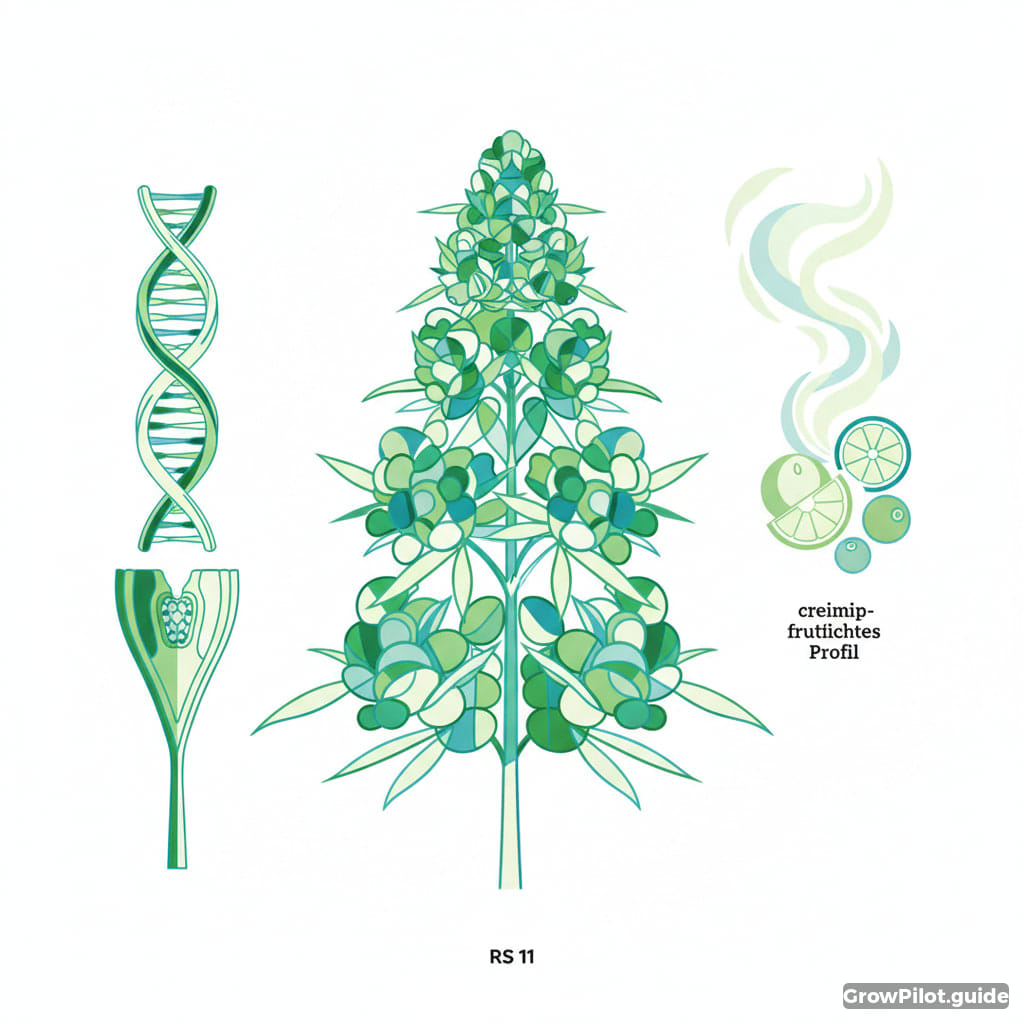
Sunset Sherbet: Genetics, Structure, and Its Creamy, Fruity Profile

Sunset Sherbet has had a major influence on modern dessert genetics. This article provides practical insights into its origins, growth, flowering, terpenes, effects, phenotypes, and key growing tips.
# Sunset Sherbet: Genetics, Structure, and Its Creamy, Fruity Profile
Sunset Sherbet is one of the modern U.S. hybrid strains that have had a particularly strong influence on today’s dessert and cream genetics. In strain archives, breeder descriptions, and grow reports, it is usually listed as a descendant of the Girl Scout Cookies family with additional fruity and sherbet-like notes. For growers, the strain is particularly interesting because it often combines a distinctive aroma profile with dense resin production, moderate stretching, and, in some cases, a sensitive reaction to environmental and nutritional issues.
At the same time, “Sunset Sherbet” is not a name that consistently refers to a completely identical strain worldwide. As with many well-known U.S. genetics, seed lines, clone versions, and later reworks can differ noticeably. Nevertheless, a reliable core set of characteristics can be derived from international seed bank data, archival sources, and recurring user reports. It is precisely this core that is more important in practice than marketing terms.
What is known for certain about the genetics of Sunset Sherbet?
The most commonly cited description historically is: Sunset Sherbet is a cross between Girl Scout Cookies and Pink Panties. This classification appears in several strain archives and has been widely and consistently adopted over the years by breeders and community sources. However, the tradition is not entirely free of variations. Some providers describe slightly different lines or use the name more as a family term for specific selections.
For classification as a strain, it is more important to consider which characteristics plausibly emerge from this lineage:
- Girl Scout Cookies often contributes the dense bud structure, the creamy-sweet flavor profile, and the heavy resin production
- Fruiter, softer, and sometimes berry-like or citrus-creamy notes are derived from the Pink Panties lineage
- In terms of growth, a compact to medium-vigorous hybrid structure is usually evident rather than extreme Haze-style stretching
How does Sunset Sherbet typically grow?
In everyday cultivation, Sunset Sherbet is usually described as a medium-sized, bushy hybrid. During the vegetative phase, it often grows with shorter internodes than strongly sativa-dominant strains, but can still exhibit a noticeable stretch during early flowering. It typically does not grow extremely tall; rather, it is a plant that develops well in width and produces abundant side shoots.
Growth Profile at a Glance
- Indoor height: often about 80 to 140 cm, depending on pot size, veg duration, and phenotype
- Outdoor height: often about 150 to 220 cm under good conditions
- Structure: bushy to semi-open, with vigorous side shoots
- Stretch: usually moderate to medium, often about 1.5 to 2 times its height after the transition to flowering
- Flower structure: dense, resinous, often rounded to stacked rather than long and airy
What flowering time and yield can you realistically expect?
For photoperiodic Sunset Sherbet strains, many sources cite a flowering time of about 8 to 10 weeks, often centered around 9 weeks. Faster phenotypes may mature slightly earlier, while plants with particularly complex aromas may take a bit longer.
When it comes to yield, it’s best to be realistic. Manufacturer claims can sometimes be high, but grow reports generally paint a picture of solid to good yields—though not necessarily extreme ones.
Realistic yield range
- Indoor: often about 350 to 500 g/m² with a well-regulated environment and sufficient light
- Outdoor: frequently about 400 to 700 g per plant, highly dependent on growing season length, root space, and sunlight exposure
Why is Sunset Sherbet’s terpene profile so distinctive?
Sunset Sherbet is considered one of the strains that has strongly shaped the modern image of creamy, fruity cannabis aromas. Descriptions from archives, seed banks, and user reports strikingly often repeat the same scent profiles:
- sweet berries
- citrus or orange
- creamy, dessert-like notes
- subtle earthy or herbal undertones
- occasionally gassy or spicy undertones in certain phenotypes
Sensory-wise, Sunset Sherbet is often less harshly diesel-like than OG-derived strains and less candy-like than some Zkittlez or Runtz selections. Its profile is often described as creamy, well-rounded, and “mellow”. This is precisely why it has become so attractive to breeders: it offers sweetness and complexity without necessarily leaning too heavily toward a single flavor profile.
How are the effects described?
Descriptions from user reviews and strain archives generally point to a balanced to somewhat relaxing hybrid character. Frequently mentioned effects include:
- calm, physically noticeable relaxation
- mental clarity or mild euphoria at the onset
- later, a softer, more serene progression
- at higher intensities, sometimes significant sedation
Who is Sunset Sherbet suitable for when growing?
The level of difficulty generally ranges from beginners with solid basic skills to advanced growers. According to many reports, the strain isn’t completely unforgiving, but it is often less tolerant of environmental and fertilization mistakes than very robust classics.
Typical Challenges
- Dense buds may be more susceptible to mold if humidity is too high
- Some phenotypes are sensitive to over-fertilization, especially an excess of nitrogen
- Compact foliage can reduce airflow inside the plant
- In the late weeks of flowering, the risk of moisture-related problems increases significantly
Practical Growing Tips
- Temperature: Keep it moderate during the light phase; extreme heat can compromise terpene quality and bud density
- Humidity: Keep it moderate in the early phase; reduce it significantly during late flowering to keep dense colas dry
- Training: LST, topping, or a light SCROG often help open up the canopy and provide more even light exposure to side shoots
- Defoliation: Use sparingly but selectively; the main goal is to improve air circulation in the flowering zone
- Nutrients: Increase feed levels gradually rather than aggressively; many dessert strains thrive on a clean, uncluttered EC profile
- Harvest window: Don’t just go by the calendar; check the maturity of the trichomes and the overall appearance of the flowers
What sets Sunset Sherbet apart from similar dessert strains?
Compared to Gelato, Sunset Sherbet is described in many reviews as having a slightly fruiter and airier flavor profile, while Gelato is often described as heavier, creamier, and denser. Compared to Runtz, Sherbet is generally less about pure candy-like sweetness and more about a blend of fruit, cream, and light spice. Compared to Ice Cream Cake, it often exhibits a bit more vibrancy in its aroma and slightly less of that purely Kush-like creamy heaviness.
It is precisely this middle ground that explains its influence on breeding: Sunset Sherbet combines Cookies-like substance, fruity brightness, and good resin production in a way that has remained attractive for many crosses.
Conclusion: Why Does Sunset Sherbet Remain Relevant?
Sunset Sherbet is neither a pure yield machine nor a completely hassle-free strain for beginners. It remains relevant nonetheless because it possesses a clearly recognizable genetic fingerprint: compact to medium-sized hybrid growth, typically about 8 to 10 weeks of flowering, dense, resinous buds, and an aroma profile ranging from berries, citrus, cream, and a hint of spice.
It’s particularly appealing to growers who value not just yield, but also terpene profile, resin quality, and breeding history. Those who have a firm grasp of climate, airflow, and nutrient management will find in Sunset Sherbet a strain that exemplifies the transition from the Cookies era to modern dessert genetics.
Frequently asked questions about Sunset Sherbet
What genetics is Sunset Sherbet most commonly attributed to?
Sunset Sherbet is most commonly classified as a cross between Girl Scout Cookies and Pink Panties. However, the article also emphasizes that there may be variations depending on the supplier and strain, and that the name does not always refer to exactly the same genetics worldwide.
How does Sunset Sherbet typically grow when cultivated indoors?
Sunset Sherbet is usually described as a medium-sized, bushy hybrid with vigorous side shoots. When grown indoors, it typically reaches a height of about 80 to 140 cm and usually exhibits moderate to medium stretching rather than extreme vertical growth.
How long does Sunset Sherbet typically bloom?
Many sources cite a flowering time of about 8 to 10 weeks for photoperiodic Sunset Sherbet strains, often with a focus on 9 weeks. Depending on the phenotype, some plants may appear to mature slightly earlier, while others may take a little longer to develop greater flavor complexity.
How is the flavor of Sunset Sherbet described?
The profile is primarily described as creamy and fruity, often featuring sweet berries, citrus, or orange, along with dessert-like notes. Depending on the phenotype, there are also subtle earthy and herbal notes, as well as, in some cases, gassy or spicy undertones.
What should you pay special attention to when growing Sunset Sherbet?
A clean environment, good air circulation, and controlled nutrient management are important. The article points out that dense flower clusters may be more susceptible to mold in high-humidity conditions, and that some phenotypes are sensitive to over-fertilization.