RS 11: Genetics, Structure, and the Creamy, Fruity Profile
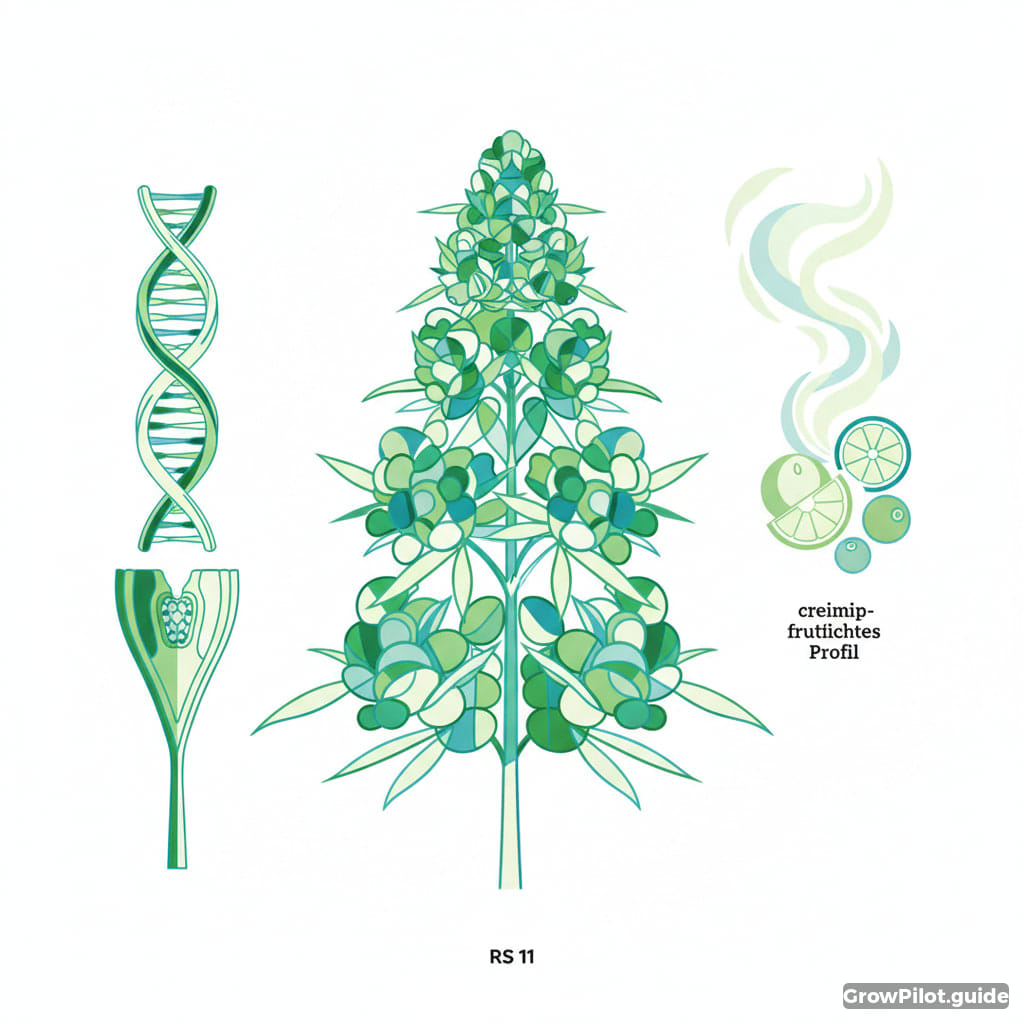
RS 11 is one of the most striking modern dessert hybrids. This article provides a critical, source-based analysis of its origin, typical phenotypes, growth, flowering, terpenes, effects, and key growing considerations.
# RS 11: Genetics, Structure, and the Creamy, Fruity Profile
RS 11, often referred to as Rainbow Sherbert #11, is one of the more modern U.S. hybrid strains that has become known primarily for its distinctive flavor profile, heavy resin production, and visual appeal. In strain archives, breeder descriptions, and grower reports, the strain has appeared for several years with a relatively clear set of defining characteristics, though not always as a completely uniform line. This is precisely what is crucial for a clear classification.
For growers, RS 11 is particularly interesting because the strain often combines three characteristics: dessert-like sweetness, fruity-creamy to slightly gassy terpenes, and moderate to vigorous hybrid growth. At the same time, many reports indicate that RS 11 doesn’t tolerate every growing condition equally well. Those who grow it should therefore focus less on hype and more on reliable factors such as structure, stretch, flowering duration, climate requirements, and phenotypic variation.
What is RS 11 genetically?
At its core, RS 11 is described in several breeder and archival sources as a cross between Pink Guava and Sunset Sherbet. This places the strain genetically within the context of modern Sherbet, Dessert, and fruit strains. The name Rainbow Sherbert #11 refers to a selected line or a specific phenotype within this breeding project.
However, as with many well-known U.S. genetics, not every plant offered under the name RS 11 is necessarily genetically identical. Differences may arise between clone-only lineages, later seed versions, and breeder-specific reconstructions. For practical growing, this means:
- The name alone isn’t enough to set reliable expectations
- The breeder’s background and line description are crucial
- Phenotypes can vary in terms of stretch, color, flower density, and ripening time
How does RS 11 grow?
RS 11 is usually described in grower reports as a medium-sized to moderately vigorous hybrid plant. In many cases, it is neither as extremely compact as some heavy Kush strains nor as sprawling as varieties with strong Haze influence. It typically has a bushy to well-branched structure with moderate to, at times, more pronounced stretching after the transition to flowering.
Typical Growth Characteristics
Frequently mentioned traits include:
- medium internode spacing
- vigorous lateral branching
- strong apical dominance, but easy to train
- moderate stretch during the first weeks of flowering
- dense, often rounded inflorescences
What flowering time and yield are realistic?
For photoperiodic RS-11 lines, the flowering time is usually listed in many descriptions as about 8 to 10 weeks. Some phenotypes may finish slightly faster, while others take a little longer to reach full maturity, especially if you wait for the color, resin maturity, and aroma development to fully develop.
It’s wise to be conservative when estimating yield. Although RS 11 is often described as productive, it is not typically considered a pure high-yield strain in the style of classic Critical lines. Under good indoor conditions, the following yields are generally realistic:
- 350 to 500 g/m² with a well-maintained canopy
- outdoors, often moderate to good per-plant yields, heavily dependent on season length and plant structure
Why is the terpene profile of RS 11 so distinctive?
The aroma profile is one of the main reasons why RS 11 has garnered so much international attention. The following impressions are particularly common in descriptions by growers and consumers:
- sweet candy notes
- creamy sherbet undertones
- tropical-fruity components
- a light citrus freshness
- occasionally gassy or solvent-like undertones
It’s important to note: Aroma descriptions are sensory impressions, not precise chemical guarantees. The specific final profile is also influenced by genetics, climate, light intensity, nutrient management, harvest time, and drying.
How do users describe the effects?
User reports often describe RS 11 as typically hybrid—balanced to distinctly relaxing, often with an initial lighter, mood-enhancing, or talkative component that can later transition into a calmer physical sensation. Recurring terms in user descriptions include:
- euphoric
- relaxed
- creative or social
- physically soothing
- mentally alert at first, then calmer
Who is RS 11 suitable for when growing?
RS 11 is usually not the most difficult, but also not the most forgiving modern hybrid strain. This makes it particularly suitable for:
- advanced beginners with a stable climate
- Advanced growers who actively manage plant structure and ripening
- Growers who prioritize aroma and resin quality over maximum yield
What growing tips are particularly important for RS 11?
Climate and Airflow
Due to its often dense buds, RS 11 benefits from careful climate management. The following are recommended:
- Constant airflow in the canopy
- Moderate humidity during mid- and late flowering
- avoiding overcrowded canopies without pruning or selection
Training and Structure
According to many reports, RS 11 responds well to:
- topping during the vegetative stage
- LST to open up the canopy
- moderate lollipopping for better light distribution
- early canopy management to prevent uneven stretching
Nutrition
Many modern dessert strains are sensitive to over-fertilization, especially when EC levels are high during mid-flowering. With RS 11 as well, growers frequently report that a controlled, non-overloaded feeding schedule yields better results than maximum nutrient applications. Common mistakes include:
- too much nitrogen in early flowering
- defoliating too late in dense structures
- harvesting too early before full flavor development
- drying in conditions that are too humid, resulting in flavor loss
Conclusion: What sets RS 11 apart?
RS 11 is a modern hybrid line with dessert and sherbet-like characteristics, clearly focused on aroma, resin, and visual quality. Its robust foundation of Pink Guava x Sunset Sherbet explains its frequently described profile of creamy sweetness, fruit, and a light gassy note, as well as its typically medium-vigor, well-branched growth.
RS 11 is particularly appealing to growers who are seeking not just bulk yield, but a distinctive end product with character. Those who carefully manage climate, canopy structure, and ripening can achieve very attractive results with RS 11. On the other hand, those looking for a strain with maximum tolerance for mistakes or one focused purely on yield will often find a less complicated path with other strains.
Frequently asked questions about RS 11
What is the genetic makeup of RS 11?
In the "Resilient Core," RS 11 is described in several breeder and archive sources as a cross between Pink Guava and Sunset Sherbet. The name Rainbow Sherbert 11 refers to a selected line or a specific phenotype within this breeding project.
How does RS 11 grow indoors?
RS 11 is usually described as a medium-sized hybrid plant with medium growth vigor and a bushy to well-branched structure. It typically features medium internode spacing, vigorous lateral branching, and moderate to, at times, more pronounced stretching after the transition to flowering.
How long does RS 11 bloom?
For photoperiodic RS-11 strains, the flowering period is generally listed as about 8 to 10 weeks in many descriptions. Some phenotypes may reach maturity slightly faster, while others take a little longer to fully mature.
What does RS 11 typically smell and taste like?
Descriptions of RS 11 often mention sweet candy notes, creamy sherbet hints, tropical fruit components, and, in some cases, gassy undertones. However, according to the article, which impression stands out most depends significantly on the phenotype and degree of ripeness.
For whom is the RS 11 suitable for mounting?
RS 11 is generally not considered the most difficult modern hybrid strain, but neither is it the most forgiving. It is therefore best suited for advanced beginners with a stable climate and for growers who want to actively control the plant’s structure, maturity, aroma, and resin quality.
Matching seeds from our partner
PARTNER OFFER
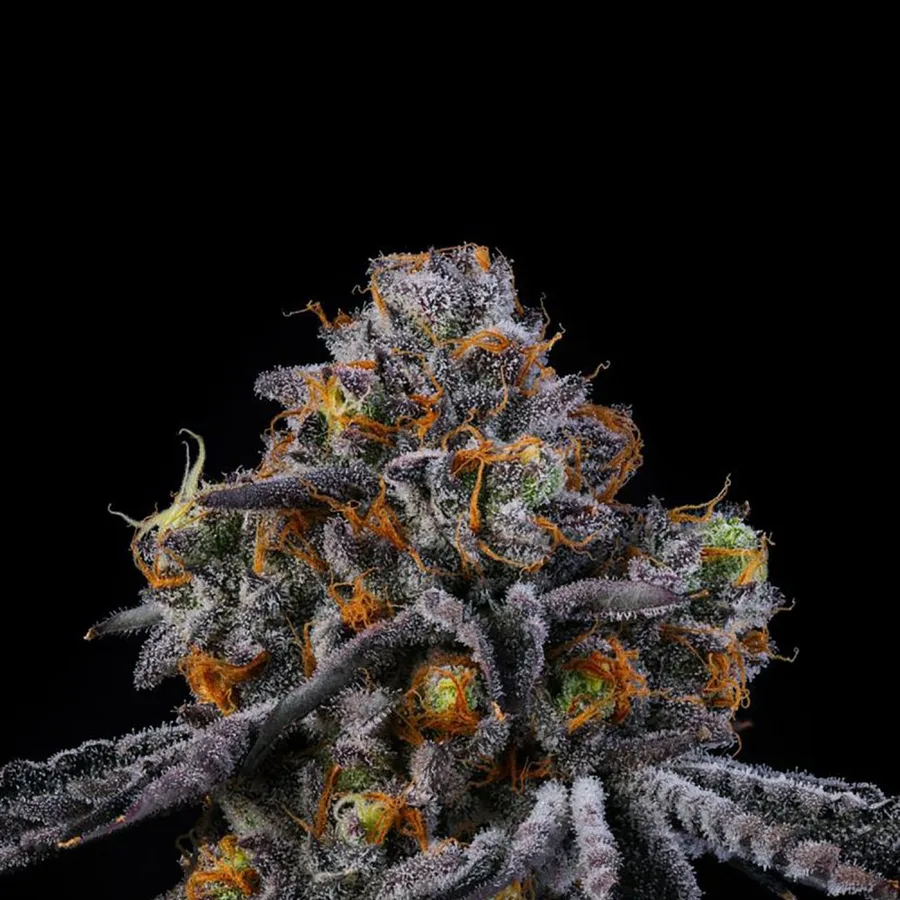
RS 11:11 - Feminisierte Cannabis-Samen
Available from 10 % Vorteil bei CANA TRAVA – exklusiv für GrowPilot.guide Nutzer
Sherb, Gas. Feminized; 60/40 Indica/Sativa. 9-week flowering period. Indoor yield: 450–550 g/m²; high outdoor yield. Breeding goal: approx. 25% THC.
Product details and prices supplied by the partner.


