Mimosa: Genetics, Citrus Terpenes, and Its Vigorous Hybrid Growth
Mimosa combines the characteristics of Clementine and Purple Punch to create a fruit-forward hybrid strain. This article provides a factual overview of its genetics, growth, flowering, terpenes, effects, and growing practices.
# Mimosa: Genetics, Citrus Terpenes, and Its Vigorous Hybrid Growth
Mimosa is one of the modern hybrid strains that has made a name for itself primarily through a clearly recognizable aromatic profile: light citrus notes, sweet-fruity undertones, and an overall “juicy” aroma profile that is described in many grow reports as reminiscent of orange, mandarin, or breakfast juice. For growers, the strain is interesting not only because of this profile, but also because of its typically vigorous growth, good resin production, and its role as a starting point for further breeds such as Mimosa Evo or Purple Mimosa.
At the same time, the same principle applies here as with many well-known U.S. strains: The name “Mimosa” does not always refer to completely identical genetics on the market. Differences in stretch, flowering time, bud density, and color expression may occur between the original clone-only lineage, later seed versions, and breeder-specific selections. Nevertheless, an analysis of breeder information, strain archives, and international grow reports reveals a reliable core that can be described in practical terms.
What is Mimosa genetically?
In the historically most commonly cited lineage, Mimosa traces back to a cross between Clementine and Purple Punch. This classification is most frequently cited in international strain archives, breeder descriptions, and community documentation. The strain is typically attributed to the realm of modern U.S. genetics; references to selections from the Symbiotic Genetics circle are particularly common. As with many widely used strain names, however, it’s important to note that not every Mimosa line available today necessarily corresponds to the exact same selection.
From a genetic perspective, Mimosa is particularly interesting to growers because it combines two clearly distinct traits:
- Clementine is cited in many descriptions for its bright citrus profile, more vigorous growth, and a hybrid dynamic that seems more active.
- Purple Punch is often associated with a denser flower structure, sweeter undertones, heavier resin production, and occasional coloration.
How does Mimosa grow compared to other modern hybrids?
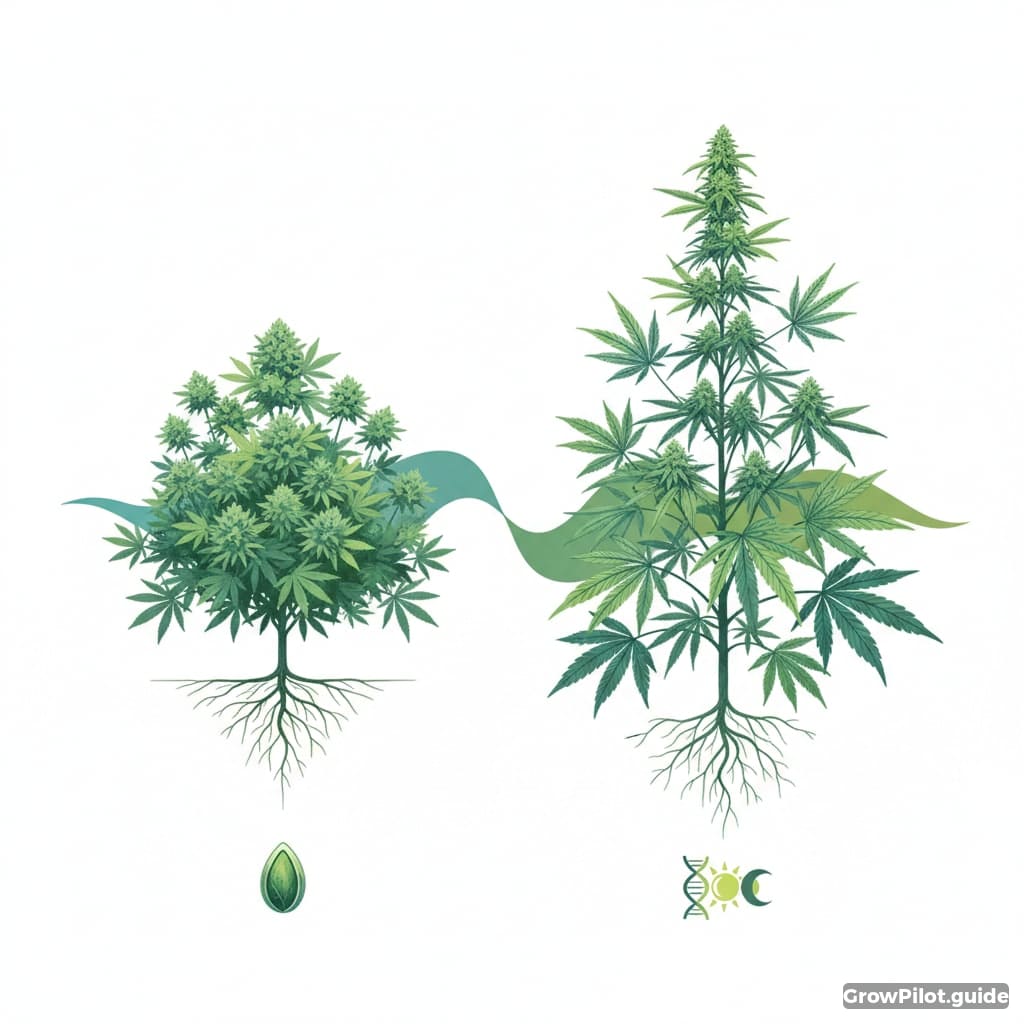
In grow journals and seed bank descriptions, Mimosa is usually described as medium to tall, vigorous, and significantly stretchy during early flowering. Compared to very compact Cookies or Cake strains, it often appears more open and light-seeking. Compared to classic Haze hybrids, however, it generally remains more manageable.
Typical characteristics of its growth behavior include:
- vigorous start in the vegetative phase
- good lateral branching with sufficient light intensity
- moderate to significant stretch after flowering begins
- rather open to semi-compact plant architecture
- well-suited for training when started early
Typical Plant Structure
Many reports describe:
- medium internode spacing
- sturdy, but not extremely thick, main stems
- good development of secondary inflorescences
- decent airflow compared to very densely foliated Indica strains
What flowering time and yield can you realistically expect?
For photoperiodic Mimosa strains, the flowering time is usually listed as 8 to 10 weeks in many sources, with a commonly cited practical range of about 9 weeks. Faster-maturing phenotypes may appear ready earlier, while more pronounced citrus or color phenotypes may sometimes take a bit longer for the aroma and level of ripeness to come together convincingly.
When it comes to yield, it’s best to keep expectations realistic. Marketing claims for modern hybrids are often very optimistic. Realistically, growers tend to report:
- Indoor: approximately 400 to 550 g/m² under good conditions
- Outdoor: often 500 to 800 g per plant, heavily dependent on climate, growing season length, pot volume, or outdoor soil
Why does Mimosa have such a distinct citrus scent?
The aroma profile is the true hallmark of Mimosa. Many descriptions mention orange, mandarin, sweet citrus peel, tropical fruit, light berry notes, and sometimes a creamy, earthy undertone. Compared to Tangie-dominant strains, Mimosa often seems a bit rounder and sweeter; compared to heavy dessert strains, it often remains lighter and fresher.
According to breeder-related information and user reports, the following terpenes are most frequently cited as likely dominant or commonly present:
- Limonene for citrusy, bright, and sweet-fresh notes
- Beta-caryophyllene for spicy, slightly warm undertones
- Myrcene for fruity depth and softer base notes
- sometimes linalool or pinene in smaller proportions, depending on the phenotype
How are Mimosa’s effects described?
Descriptions from strain archives and user reports generally classify Mimosa as uplifting, clear, social, and more functional during the day, without it necessarily having an extremely rapid effect. Frequently mentioned effects include:
- mental alertness
- a tendency toward communication or creativity
- good suitability for everyday use at moderate dosages
- a gentle physical comedown later on
Who is Mimosa suitable for when growing?
The difficulty level is generally beginner to advanced, with a slight tendency toward “easy, if you take the stretch phase seriously.” The strain is often more forgiving than finicky elite clones, but it’s not quite as foolproof as very compact, slower-growing classics.
Mimosa is well-suited for growers who:
- prioritize fruity citrus terpenes
- are looking for a vigorous, trainable hybrid
- don’t want an extremely long flowering period
- value resin and bag appeal
What growing tips are particularly important for Mimosa?
Climate and Environment
According to many reports, Mimosa benefits from a stable, warm climate that isn’t too humid. Recommended conditions include:
- A vegetative phase at 22 to 28 °C
- Good air circulation and controlled humidity during flowering
- Moderate humidity toward the end of flowering, especially with more compact phenotypes
Training and Crown Management
The following are particularly useful:
- Early topping to encourage multiple main shoots
- LST to promote a flat crown
- SCROG when height is limited
- selective defoliation if indoor spaces become too dense
Nutrition and Common Mistakes
Many growers describe Mimosa as quite hungry, but not able to handle unlimited nutrients. Common mistakes include:
- too much nitrogen in late veg or early flower
- switching to flowering too late when plants are already large
- insufficient support for longer side shoots
- harvesting based on appearance rather than actual maturity
Conclusion: What Defines Mimosa as a Strain?
Mimosa is particularly appealing for growers seeking distinct citrus notes, vigorous hybrid growth, and a manageable—though not ultra-short—flowering time. Its genetic core of Clementine x Purple Punch explains well why the strain can come across as fresh, sweet, and resinous all at once. It’s generally not a diva to grow, but it does require careful management of stretching, airflow, and canopy structure.
Those looking for a strain with a heavy Kush high or a maximally compact structure will find more suitable strains elsewhere. On the other hand, those who appreciate orange-forward terpenes, good trainability, and modern hybrid performance will find that Mimosa is a strain whose reputation is well-supported by numerous field reports.