Jack Herer: Genetics, Haze Structure, and Its Balanced Hybrid Growth
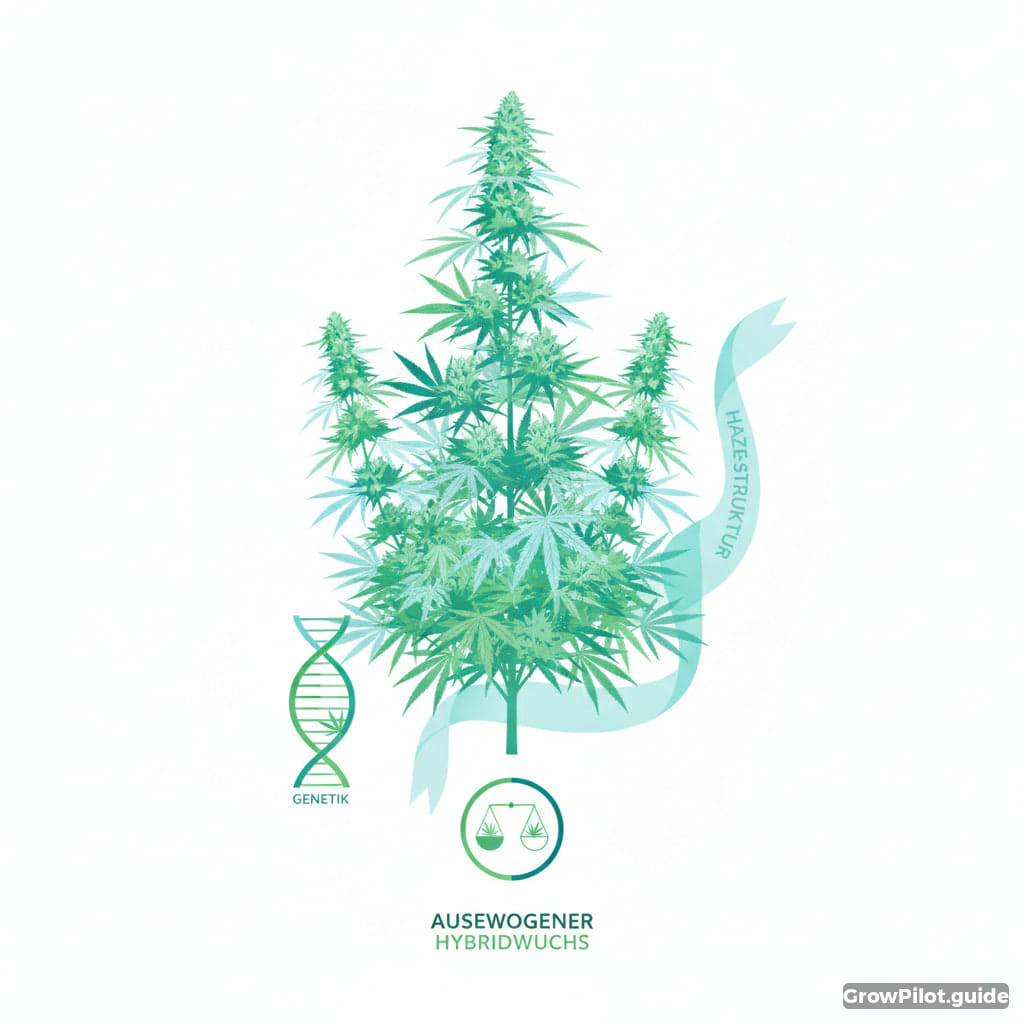
Jack Herer combines Haze, Skunk, and Northern Lights traits to create a defining hybrid strain. This article explains its origins, growth, flowering, terpenes, effects, and growing practices.
# Jack Herer: Genetics, Haze Structure, and Its Balanced Hybrid Growth
Jack Herer is one of the best-known hybrid strains in modern cannabis breeding. Its name is closely linked to the history of Dutch seed banks in the 1990s. At the same time, the strain remains a prime example of how a distinct genetic core can interact with variable phenotypes. In strain archives, breeder descriptions, and grow reports, Jack Herer is usually described as a Haze hybrid with Skunk and Northern Lights influences. It is precisely this combination that explains why the strain is often considered both aromatically complex and structurally vigorous, yet more manageable to cultivate than pure Haze lines.
For growers, Jack Herer is particularly interesting because it often strikes a balance: more energy and stretching than compact Indica hybrids, but generally shorter flowering times and less chaotic growth than classic long-flowering strains from the Haze family. Nevertheless, it is not a “set-and-forget” strain. To achieve good results, growers should be able to read phenotypes, plan for the stretch early on, and maintain a clean environment and precise nutrient management.
What is known for certain about Jack Herer’s genetics and origin?
The historically verifiable core is relatively clear: Sensi Seeds introduced Jack Herer in the 1990s and described the strain as a complex hybrid of Haze, Northern Lights #5, and Skunk #1. This basic information is repeated largely consistently in archives and later strain databases. What is less clear is to what extent individual lines currently available still correspond to the original breeding goal. As with many well-known classics, various selections, offspring, and breeder-specific interpretations are now in circulation.
It is therefore important to distinguish between the strain name and the specific line:
- The name Jack Herer usually refers to a Haze-dominant hybrid core.
- The actual plant can vary significantly depending on the breeder.
- Phenotypic variation is particularly common with seed versions.
- Haze-dominant phenotypes with greater stretch, longer flowering times, and a airier structure
- Skunk-oriented phenotypes with more vigorous growth and slightly more compact buds
- NL-dominant phenotypes with a calmer structure, denser build, and a slightly shorter maturation period
How does Jack Herer grow in a grow room or greenhouse?
Jack Herer is described in many reports as a medium- to large-sized hybrid with noticeable, though usually still manageable, stretching. Indoors, many plants remain within a manageable range with consistent vegetative control and training, while significantly larger specimens are possible outdoors or in a greenhouse.
Typical characteristics of the growth profile are:
- robust main stem with good lateral branching
- moderate to strong stretching during the first weeks of flowering
- relatively open leaf and flower structure in Haze-dominant plants
- Denser foliage canopy in NL- or Skunk-dominant phenotypes
Regarding plant structure: Jack Herer often responds well to topping, LST, and early canopy management. A Screen-of-Green setup can be useful if you want the plant’s growth to be evenly distributed. Plants with a strong Haze influence usually benefit from early structuring, as individual shoots can otherwise quickly dominate the space.
What flowering time and yields are realistic?
Regarding flowering time, data from international breeders and grow reports show a relatively consistent range, but not complete uniformity. For photoperiodic Jack Herer strains, 9 to 11 weeks of flowering are usually cited. Faster, more compact phenotypes tend to fall toward the lower end of this range, while Haze-dominant plants tend to fall toward the upper end.
Outdoors, maturity depends heavily on the breeder, phenotype, and climate. Many reports describe a harvest window in mid- to late fall. This is particularly relevant in regions with early fall moisture, as later-maturing phenotypes require more attention to air circulation and flower health.
When it comes to yield, a level-headed approach is important. Marketing claims are often higher than realistic practical figures. Under good indoor conditions, 400 to 550 g/m² is frequently cited as a plausible range for Jack Herer. Very well-tuned setups and selected phenotypes may exceed this range, but that should not be considered the standard. Outdoors, many reports range from 400 to 700 g per plant, with some large setups yielding even more.
The key point is: Jack Herer is a strain where structural management and light utilization strongly influence yield. Uncontrolled stretching quickly compromises space and uniformity.
How does Jack Herer smell and taste?
The aroma profile of Jack Herer is described in many sources as distinctive: spicy, pine-like, citrusy, herbal, and slightly sweet. Depending on the phenotype, additional earthy, woody, or Haze-typical metallic-fresh notes may also be present.
Terpenes frequently cited in Jack Herer strains include:
- Terpinolene
- Caryophyllene
- Pinene
- Limonene
In practical terms, this means for growers:
- Haze-dominant plants often smell lighter, spicier, and more ethereal.
- Skunk- or NL-dominant phenotypes often have a more earthy and compact aroma profile.
- Late flowering and proper drying are important to preserve the finer top notes.
How do users describe the effects?
When it comes to effects, user reports show a fairly consistent tone: Jack Herer is often described as clear, stimulating, focused, and at the same time not entirely light on the body. It is precisely this blend that is likely partly responsible for its long-standing reputation. In the descriptions of many consumers, it comes across as neither a purely sedative Kush strain nor an extremely jittery, purely heady Haze.
It’s important to clarify: Such descriptions of effects are based on user experiences, not on an effect that is identical for everyone. Perception and tolerance depend, among other things, on dosage, individual sensitivity, method of consumption, and the chemical profile of the specific batch.
Recurring descriptions include:
- mentally stimulating
- creative or talkative
- alert and attentive
- with some phenotypes, additionally mild physical relaxation
Who is Jack Herer suitable for when growing?
Jack Herer is generally not a difficult expert clone, but it’s also not the most obvious choice for completely haphazard first attempts. The level of difficulty often falls within the range of beginners with basic knowledge to advanced growers.
It’s well-suited for growers who:
- are looking for a classic Haze hybrid instead of modern dessert genetics
- can actively manage stretching or want to learn how
- prefer a complex, spicy-fresh terpene profile
- can handle phenotypic variations
What should growers watch out for in terms of climate, training, and common mistakes?
Jack Herer generally rewards clean, fairly precise cultivation practices. Because Haze influence and hybrid vigor combine, the most common problems arise not from extreme sensitivity but from misjudging the plant’s growth.
Climate
During the vegetative phase, a moderate, stable climate usually works well. During flowering, it’s especially important to adjust airflow and relative humidity to the flower density of the specific phenotype. Haze-dominant plants often have a more airy structure, while more compact NL-dominant specimens require more attention when they have dense flower clusters.
The following guidelines are often used as a rough framework:
- Vegetative phase: approximately 22 to 28 °C
- Early flowering: about 21 to 27 °C
- Late flowering: preferably slightly drier and well-ventilated
Training
The following are particularly useful:
- Early topping for strong main shoots
- LST for even height distribution
- Moderate defoliation, not as a drastic measure
- Supports or netting when long side shoots are bearing a lot of flower weight
Common Mistakes
- Vegetation phase that’s too long in low-ceilinged rooms
- Training too late, once the stretch phase has already begun
- Over-fertilization, especially with more sensitive Haze phenotypes
- Excessive humidity in densifying flower zones
- Harvesting too early, which often makes the complex aroma seem flatter
Conclusion: Why Does Jack Herer Remain Relevant?
Jack Herer remains relevant because the strain embodies a rare middle ground: classic Haze character, but in a form that is more practical for many growers than pure Haze lines. Its genetic core of Haze, Skunk #1, and Northern Lights #5 is historically well-established, even if modern versions can vary phenotypically.
Anyone looking for a strain with a spicy-fresh terpene profile, moderate to vigorous stretch, 9 to 11 weeks of flowering, and often a clearly defined hybrid effect will continue to find Jack Herer an interesting option. The key to success lies less in the myth surrounding the name than in careful structural management, realistic phenotype expectations, and controlled flowering management.
Frequently asked questions about Jack Herer
What genetics are Jack Herer typically attributed to?
Jack Herer is usually described as a Haze-dominant hybrid with influences from Haze, Northern Lights 5, and Skunk 1. According to the article, the most historically verifiable fact is that Sensi Seeds introduced the strain in the 1990s and specified exactly this combination. At the same time, depending on the breeder, today’s strains may vary in how closely they align with the original breeding objective.
How tall does Jack Herer grow when cultivated indoors and outdoors?
Jack Herer is described as a medium- to large-sized hybrid with significant, though usually manageable, stretching. Indoors, plants typically reach heights of about 90 to 160 cm, while outdoors they can grow from 1.8 to over 2.5 meters if the climate, root space, and growing season are right.
How long does Jack Herer usually bloom?
For photoperiod Jack Herer strains, the flowering period is usually cited as 9 to 11 weeks. More compact, faster-growing phenotypes tend to fall toward the lower end of this range, while Haze-dominant plants tend to fall toward the upper end.
According to the article, what does Jack Herer smell and taste like?
The flavor profile is described as spicy, piney, citrusy, herbal, and slightly sweet. Depending on the phenotype, earthy, woody, or Haze-typical metallic-fresh notes may also be present.
Is Jack Herer suitable for beginners?
According to the article, Jack Herer is not considered extremely difficult, but neither is it the ideal strain for completely haphazard first attempts. The difficulty level is generally classified as falling between beginners with basic knowledge and advanced growers, primarily because stretching and phenotypic variations should be actively managed.


