Blue Dream: genetics, growth profile and typical phenotypes

Blue Dream combines Haze influence with a fruity profile and vigorous growth. The article soberly classifies origin, stretch, flowering, terpenes, effects and growing practice.
# Blue Dream: genetics, growth profile and typical phenotypes
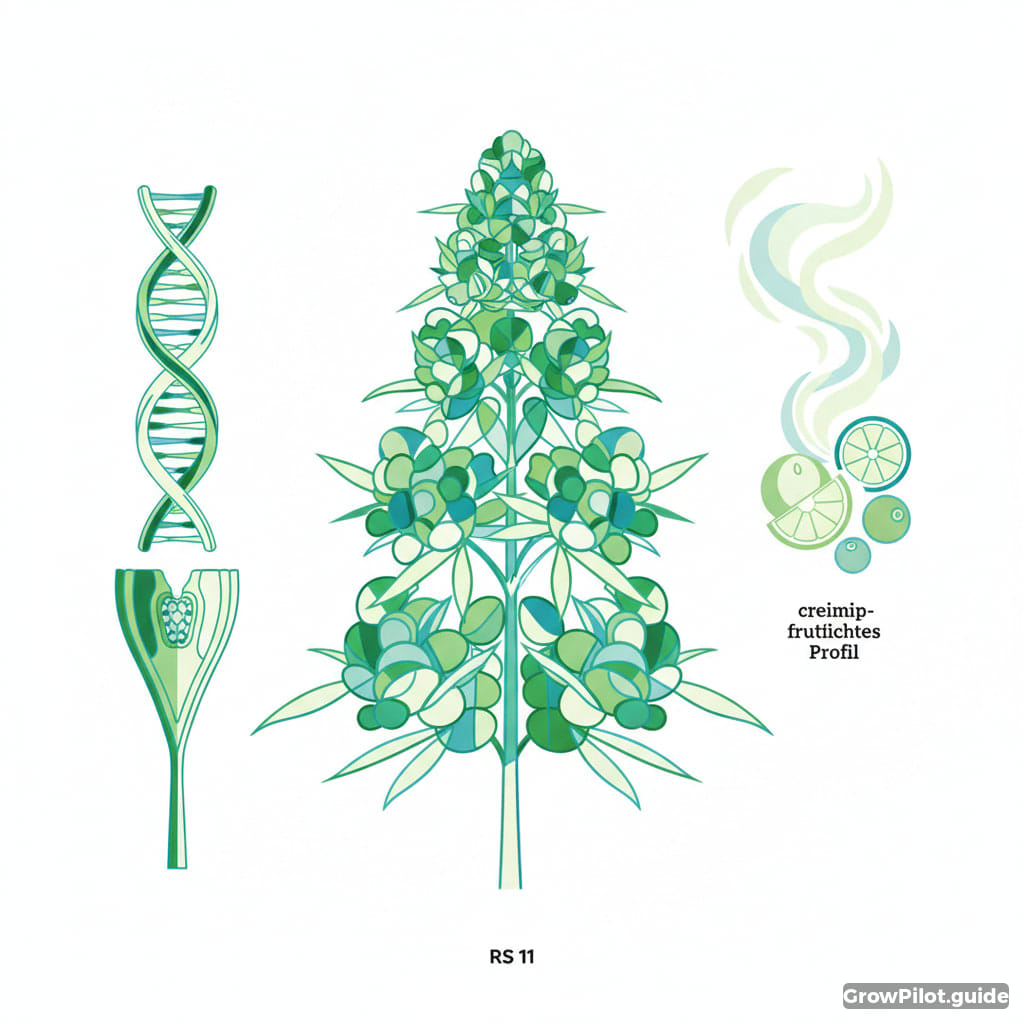
Blue Dream has been one of the best-known US genetics for many years and is also a good example of how far the name of the variety and the actual phenotype can drift apart on the market. The variety is of particular interest to growers because it is often described as a growing hybrid with a clear stretch, fruity-sweet aroma profile and comparatively high fault tolerance. At the same time, Seedbank data, archive data and grow reports show that Blue Dream is not a completely uniform strain. Growers should therefore pay less attention to myths and more to reliable characteristics.
At its core, Blue Dream is usually described as a cross between Blueberry and Haze. This classification can be found in variety archives such as SeedFinder, in descriptions from large seedbanks and in long-term user and grower reports. Historically, the variety is often associated with the Californian West Coast scene. Above all, the recurring genetic assignment is certain; less certain, however, are the many concrete origin stories that are in circulation. In practice, this is more important than it sounds: Those who cultivate Blue Dream usually do not cultivate a tightly stabilized inbred strain, but genetics in which several phenotype expressions are realistic.
What is genetically well documented about Blue Dream?
The most frequently mentioned origin is Blueberry x Haze. This also explains a large part of the typical appearance:
- Blueberry often brings fruity-sweet, berry notes and a more compact flower structure to the line.
- Haze** stands more for vigor, longer internodes, stronger stretch and a clearer, often described as active effect profile.
It is important to note that there are numerous Blue Dream replicas, S1 versions and modified lines in circulation. This means that two plants with the same name do not necessarily grow identically. This observation is regularly confirmed in grow forums, on strain platforms and in seed bank descriptions.
How does Blue Dream grow in the grow room or greenhouse?
Blue Dream is described by many growers as vital, fast and comparatively robust. Typical is a clear stretch after the switch to flowering, especially in phenotypes with a strong haze influence. Indoors, it remains easily controllable, but requires active management of the canopy.
Typical growth behavior
- Growth habit:** medium to tall, often openly branched
- Stretch: often significant, sometimes 1.5 to 2.5 times the height after the start of flowering
- Branching:** usually good, with strong lateral branches in sufficient light
- Flower structure:** depending on phenotype from medium dense to rather spear-shaped and loose
Suitability for indoor, outdoor and greenhouses
- Indoor: well suited if the height is controlled
- Outdoor: usually performs well in warm to temperate climates
- Greenhouse: often very suitable because vigor and use of light work well together
What flowering time and yields are realistic?
For photoperiodic Blue Dream lines, many suppliers and grow reports quote a flowering time of around 9 to 11 weeks. Haze-heavy phenotypes can be towards the upper end of this range. More compact phenotypes may finish a little earlier.
When it comes to yield, it pays to be sober. Marketing claims are often high, but realistic empirical values depend heavily on phenotype, pot volume, light intensity, training and climate.
Realistic margins
- Indoor: often around 400 to 550 g/m² under good conditions
- Outdoor: often 500 to 900 g per plant, with a long season and large root space even more
Why do Blue Dream growers talk so often about phenotypes?
Blue Dream is a good example of why phenotype selection is more than a breeder buzzword in cannabis cultivation. Under the same strain name, plants can appear that are clearly different in several ways:
- Growth height and internodal distance
- Maturation time within the flowering window
- Intensity of the berry scent
- Proportion of spicy, herbal or haze-like notes
- Density and shape of the flowers
- Resin content and leaf/flower ratio
What does Blue Dream typically smell and taste like?
The aroma profile is usually described as fruity, sweet, berry and slightly haze-spicy. Many descriptions also include citrus, herbal, woody or floral notes. This range matches the observed phenotype variability.
Frequently mentioned terpenes
Seedbank data and laboratory profiles of similar Blue Dream cuts repeatedly mention above all
- Myrcene
- Pinene
- caryophyllene**
What effects do users describe with Blue Dream?
User reports often describe Blue Dream as balanced to rather active, with a combination of mental alertness and physical relaxation. In international strain archives, it is often categorized as a strain that is not immediately strongly sedating, but is initially perceived as clear, friendly or creative. Later, depending on the dose, chemotype and individual tolerance, the effect can be much calmer physically.
Such descriptions are not medical statements, but summarized experience reports. The actual effect depends, among other things, on cannabinoid profile, terpene composition, form of consumption, dose and individual sensitivity.
Who is Blue Dream suitable for when growing?
Blue Dream is generally considered to be rather beginner-friendly to moderately difficult, but only if the stretch is taken seriously.
More suitable for
- Growers with some room for improvement
- Growers who want to use training techniques
- Setups with good air movement and solid climate control
- Growers who like fruity-haze-like profiles
Less suitable for
- very low indoor setups without training
- extremely humid environments in late flowering
- Growers who expect maximum uniformity from seed
Which grow tips are particularly important for Blue Dream?
#1 Schedule stretch early
Blue Dream should not be sent into flowering too large. Many growers switch earlier or work with topping and bending to keep the canopy even.
2. keep the climate clean
Stable conditions with good air movement make sense. In vegetation, around 22 to 28 °C is often well tolerated, in flowering a slightly cooler, controlled environment is usually beneficial. The relative humidity is often kept at around 55 to 70 percent during the vegetation phase and at 40 to 50 percent in late flowering to generally reduce the risk of botrytis and mildew.
3. do not defoliate too late
For bushy specimens, moderate thinning helps to allow light and air to reach the middle zones. However, too aggressive intervention in late flowering can unnecessarily stress the plant.
4. observe nutrient application instead of fertilizing schematically
Blue Dream is often described as a heavy feeder, but not every strain reacts in the same way. It makes sense to look at leaf color, tips and substrate behaviour rather than a rigid fertilization scheme according to the label.
Conclusion
Blue Dream is not a legend because it is mysterious, but because it combines several characteristics in one popular genetics: vigorous growth, fruity-spicy profile, good yield prospects and an effect pattern often described as balanced. This is precisely why it is worth taking a realistic look. If you grow Blue Dream, you should expect phenotype differences, significant stretch and a flowering window of around 9 to 11 weeks. However, with proper training, a good climate and a little observation, she can show her potential very convincingly.
Frequently asked questions about Blue Dream
What genetics are Blue Dream most commonly attributed to?
Blue Dream is generally described as a cross between Blueberry and Haze. The article also points out that while this genetic classification is frequently cited, many specific accounts of its origins are less well-established.
How long does Blue Dream usually bloom?
For photoperiod Blue Dream strains, many suppliers and grow reports cite a flowering time of about 9 to 11 weeks. Haze-dominant phenotypes tend to be toward the upper end of this range, while more compact varieties may be ready slightly earlier.
What does Blue Dream typically smell and taste like?
The flavor profile is usually described as fruity, sweet, berry-like, and slightly “haze”-spicy. Depending on the phenotype, citrus, herbal, woody, or floral notes may also be present.
Is Blue Dream suitable for beginners to grow?
Overall, Blue Dream is considered beginner-friendly to moderately difficult, but only if stretching is taken seriously. According to the article, it is less suitable for very low indoor setups without training or for growers who expect maximum uniformity from seeds.