Black Domina: Genetics, short stature, and fast flowering

Black Domina is a classic, Indica-dominant hybrid strain with a compact structure and a short flowering period. This article explains its origins, growth characteristics, terpenes, effects, and practical growing tips.
# Black Domina: Genetics, Short Stature, and Fast Flowering
Black Domina is one of the classic indica-dominant hybrid strains, known primarily for its compact stature, typically rapid flowering, and dense, resin-rich buds. Unlike many newer, hyped-up strains, Black Domina is less about a spectacular marketing narrative and more about a relatively well-defined practical profile. This is precisely what makes the strain appealing to growers looking for a robust structure, manageable stretch, and a relatively short growing time.
As with many older strain names, the same applies here: not every line available today is completely identical. Nevertheless, seed bank archives, strain databases such as SeedFinder, breeder specifications, and numerous grow reports reveal a clearly recognizable core. Black Domina is usually described as a multi-Afghani-influenced Indica hybrid, with dark foliage at suitable temperatures and phenotypes, vigorous side shoot development, and an aroma ranging from earthy and peppery to wood, herbs, and sweet, resinous undertones.
Where does Black Domina come from?
Historically, Black Domina is most commonly associated with Sensi Seeds. In breeder archives and later strain descriptions, it is typically classified as a cross between Northern Lights, Ortega, Hash Plant, and Afghani SA. This combination explains quite well why the strain is described in many reports as compact, leafy, highly resinous, and relatively fast-flowering.
It’s important to make a clear distinction here: The historical breeder’s description outlines the genetic framework, not necessarily every modern line on the market. Depending on conservation efforts, seed batches, and selection, individual phenotypes may differ in leaf width, internode spacing, flower density, and aroma. However, the common characteristics usually remain clearly recognizable:
- Indica-dominant growth
- limited stretch during early flowering
- dense, heavy buds
- distinctly Afghan-influenced aroma
- relatively short flowering time
How does Black Domina grow in practice?
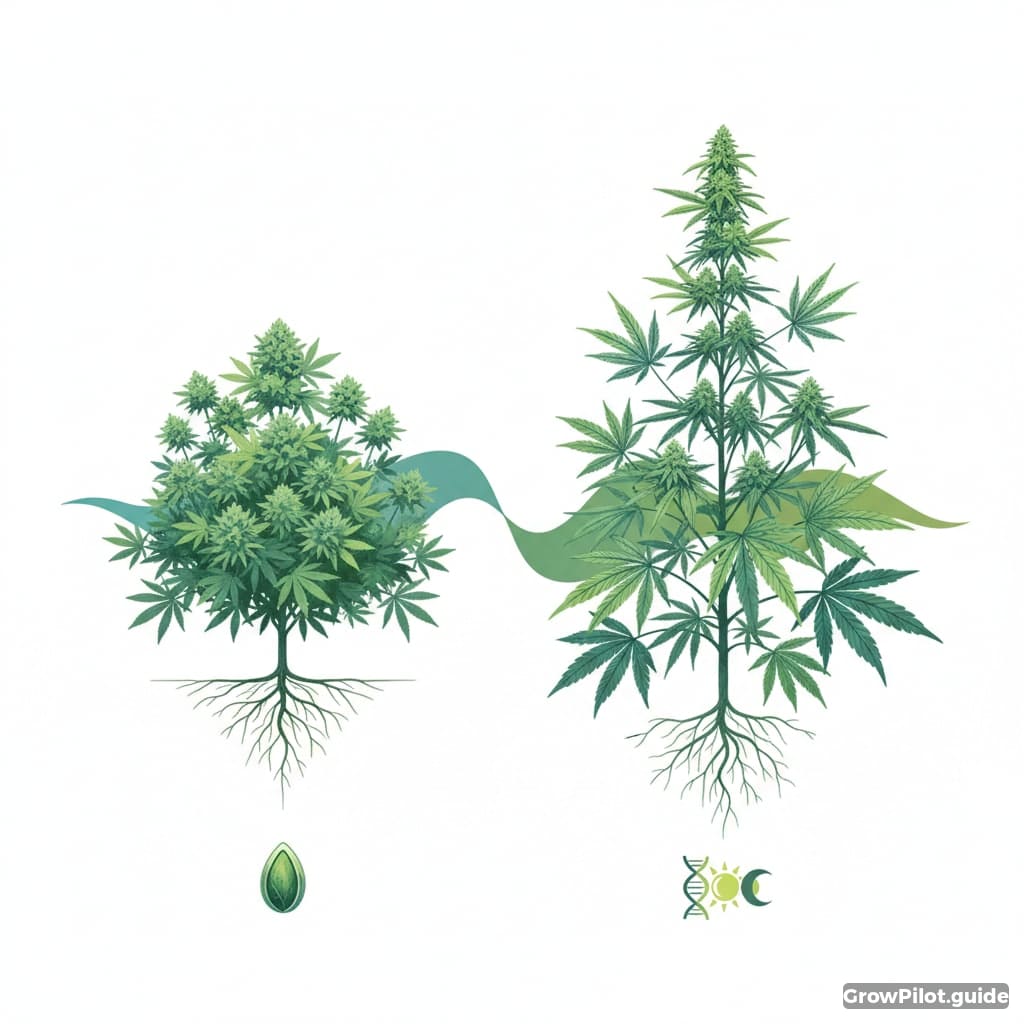
In grow reports, Black Domina is usually described as short to medium-sized. Indoors, many plants remain relatively compact when flowering is initiated early and develop a bushy structure with vigorous side shoots. Outdoors or with a longer vegetative period, it can grow significantly larger, but generally remains stockier compared to many Haze or Diesel strains.
Typical characteristics of its growth profile include:
- wide, fan-shaped leaves
- short to medium internode spacing
- vigorous main stem with good lateral branching
- moderate stretch, often about 1 to 1.8 times its original height after the transition to flowering
- high tendency toward dense canopy formation
What flowering time and yield can you realistically expect?
For photoperiod strains, Black Domina is typically listed in breeder specifications and grow reports as having a flowering time of about 7 to 9 weeks. Many phenotypes mature within 50 to 60 days, while some take a bit longer. This makes it one of the strains that can mature relatively quickly given its structure.
When it comes to yield, it’s best to keep expectations realistic. Marketing claims are sometimes higher than actual results under everyday conditions. Depending on the phenotype, light intensity, pot size, climate, and training methods, growers often report the following realistic yields:
- Indoors: about 350 to 500 g/m² under good conditions
- Outdoors: often 400 to 700 g per plant, and even more with a long growing season and ample root space
What does Black Domina smell and taste like?
Across various sources, the aroma profile is described relatively consistently as earthy, spicy, and hash-like. Unlike modern candy or dessert strains, Black Domina typically doesn’t rely on candy-like sweetness, but rather on a darker, heavier aroma.
Frequently cited aroma and flavor notes include:
- Earth
- Pepper
- Wood
- Herbs
- Resin
- A slight sweetness or musky depth
What effects do growers and users describe?
Black Domina is usually described in user reports as body-focused, calming, and distinctly relaxing. Frequently mentioned are also a heavy, warm bodily sensation, mental relaxation, and—at higher doses—a more sedative effect. Such descriptions are subjective and do not constitute medical statements, but they reflect a relatively consistent core of user experience.
Typical descriptions of the effects include:
- deeply relaxing
- physically heavy
- calm and evening-like
- less energizing than Haze or Diesel strains
- at higher dosages, sometimes significantly sleep-inducing
Who is Black Domina suitable for when growing?
Black Domina is considered in many reports to be somewhat beginner-friendly to moderately challenging. It’s usually easier to control than very stretchy or late-maturing Sativa hybrids. However, it’s not entirely undemanding, as its dense structure requires attention to climate, airflow, and leaf management.
This strain is often a particularly good fit for growers who:
- prefer compact plants
- are looking for a short to medium flowering time
- enjoy earthy, spicy classic terpenes
- work with training in a limited space
- don’t want a strain that grows to extreme heights
What growing tips are particularly important for Black Domina?
Climate and Humidity
Due to its often dense flower and leaf structure, Black Domina benefits from good airflow. During the vegetative phase, moderate humidity is generally well tolerated. In late flowering, humidity should be kept at a controlled low level to reduce the risk of mold in compact buds.Temperature
Many Afghani-dominant strains grow stably at moderate temperatures. Excessive heat can cause the internodes to stretch and impair the aroma. Slightly cooler nighttime temperatures can promote darker leaf and flower colors in suitable phenotypes, but they are no guarantee of “black” plants.Training
According to many reports, Black Domina responds well to:- Topping during the vegetative phase
- LST to open up the canopy
- Moderate defoliation to allow for light and air
- ScrOG in small to medium-sized spaces
Nutrition
Many growers describe Black Domina as reliable but not insatiable. Over-fertilization, especially with nitrogen during later stages of flowering, can lead to very dark foliage, delayed maturity, and heavier foliage. A balanced nutrient profile that focuses on potassium, calcium, and a stable root environment is usually more effective than aggressive feeding.Common Mistakes
Frequent problems arise less from the strain itself than from improper cultivation practices:- overly dense growth without thinning
- excessively high humidity during flowering
- repotting too late or limited root space
- over-fertilization with nitrogen
- insufficient spacing between plants
Conclusion: Why Does Black Domina Remain Relevant?
Black Domina isn’t a trendy strain, but rather a classic, Afghani-influenced hybrid with clear strengths: compact growth, manageable stretching, a short flowering period, and a dark, spicy, resinous aroma profile. Especially in an era when many strains are marketed primarily through buzzwords, this profile seems almost understated. For growers, that’s precisely where the value lies.
Anyone looking for a strain with a controllable structure, solid resin production, and classic Indica aromatics will often find Black Domina to be an interesting option. As always, it’s crucial to take the specific breeder and the actual phenotype seriously, rather than relying solely on the strain name.