Recognize & fix pH lockout in Coco
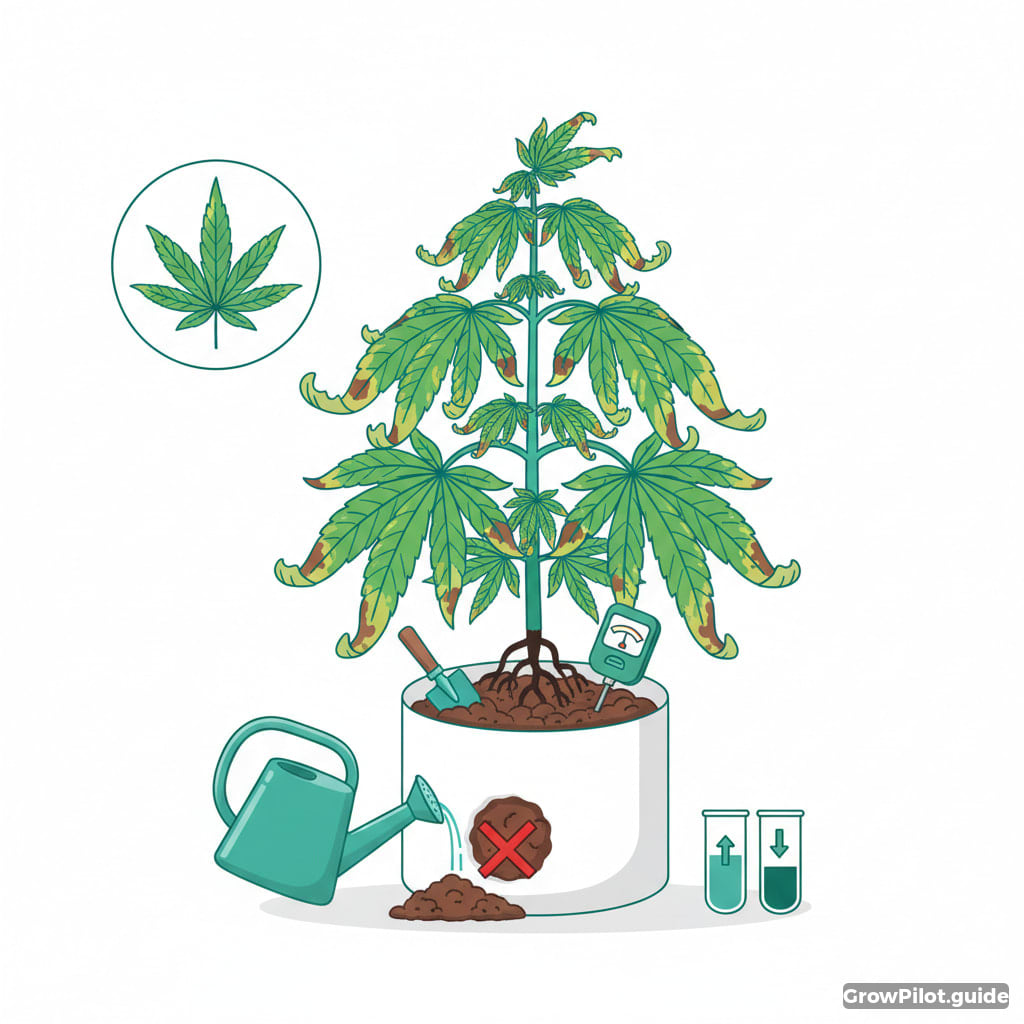
Diagnosis and correction of pH-induced nutrient access deficits in coco cultivation. Learn how to recognize and correct typical symptoms.
## Introduction
The pH value is a critical factor in coco cultivation systems. A pH lockout occurs when the pH value is outside the target range of 5.8 to 6.0. As a result, essential nutrients cannot be absorbed by the plant, even if they are present in sufficient quantities. This leads to deficiency symptoms, even though the nutrient content is correct. In this guide, we explain how to recognize and correct pH-induced deficiencies in coco.
## Symptoms of pH lockout
**Typical visual signs:**
- Leaves show yellow or brownish discoloration, especially in the lower foliage
- Interveinal chlorosis (interveinal patches remain green while the interveinal spaces turn yellow)
- Some leaves may become brittle or feel burnt
- Growth arrest and reduced leaf development
These symptoms are often similar to other nutrient deficiencies, so a reliable pH measurement is essential to pinpoint the problem.
## Diagnostics: Measure pH value in coco
A quick reaction is necessary in the coco medium, as coco hardly buffers at all. For diagnosis:
### 1. measurement of the irrigation water
Make sure that the irrigation water is within the target range of 5.8 to 6.0. Use a reliable pH meter and calibrate it regularly.
### 2. check substrate pH
Measure the pH value directly in the root area. The pH value in coco can change due to the accumulation of nutrient residues. Regular checks help to detect deviations at an early stage.
## Corrective measures for pH lockout in Coco
**Aim:** Keep the pH value stable in the range 5.8 to 6.0 and thus ensure nutrient uptake.
### 1. pH adjustment of the nutrient solution
- pH-down or pH-up:** Adjust the pH value of the nutrient solution depending on the initial value. Use specific products that are suitable for coco.
- Targeted dosing:** Water with a carefully adjusted nutrient solution that systematically brings the pH value into the target range.
### 2. calcium and magnesium supplementation
- In the case of pH lockout, an indirect deficit can also occur with these elements, although they are usually treated separately. Therefore, please note that regular additions of Ca/Mg in Coco are essential.
### 3. gentle flush if necessary
- Flushing in severe cases:** To remove accumulated residues, a targeted flush with pH-controlled water can be useful. Make sure that no nutrients are added during the flush to avoid overwatering.
### 4. regular documentation
- Make a note of pH values and observed symptoms. This facilitates early detection of problems and allows adjustments to be made to the watering and fertilization schedule.
## Preventive measures
To prevent pH-induced nutrient deficiencies, the following points should be observed:
- **Daily or frequent watering:** As Coco hardly buffers, regular watering leads to a rapid adjustment of nutrient availability.
- Regular pH control:** Monitor both the nutrient solution and the pH in the substrate at least weekly, more frequently if growth is rapid.
- Use quality products:** Use pH stabilizers and calcium-magnesium supplements specifically formulated for coco.
- Gradual adjustments:** Avoid abrupt changes as these cause stress to the plants. Small, repeated adjustments are the key here.
## Summary
A pH lockout in the Coco medium leads to perceived nutrient deficiencies, even though all nutrients are sufficiently present. These problems can be avoided by **regular measurement** and **targeted correction** of the pH value. It is important to keep the pH value of the nutrient solution and the substrate constant in the range of 5.8 to 6.0 and to react quickly with appropriate measures in the event of deviations. This will ensure optimum absorption of all essential nutrients and promote healthy plant growth without deficiency symptoms.
**Note:** This guide refers exclusively to deficiency symptoms and their correction in coco cultivation. Other phases such as vegetation, flowering or harvesting are not covered here.
## Pro Tips
- Calibrate your pH meter regularly.
- Check the pH values at minimum watering intervals.
- Use products that have been specially developed for Coco.
- Document all pH values and adjustments.
- Avoid abrupt changes and adapt gradually.
🌿 More Growing Knowledge & AI Grow Help
GrowPilot.guide is the cannabis grow tracker and weed cultivation app with smart plant analysis, indoor cannabis growing guide, grow diary, community, cups and autoflower grow tracker for growers worldwide.
Open GrowPilot.guide App →