Mastering climate dynamics in soil cultivation
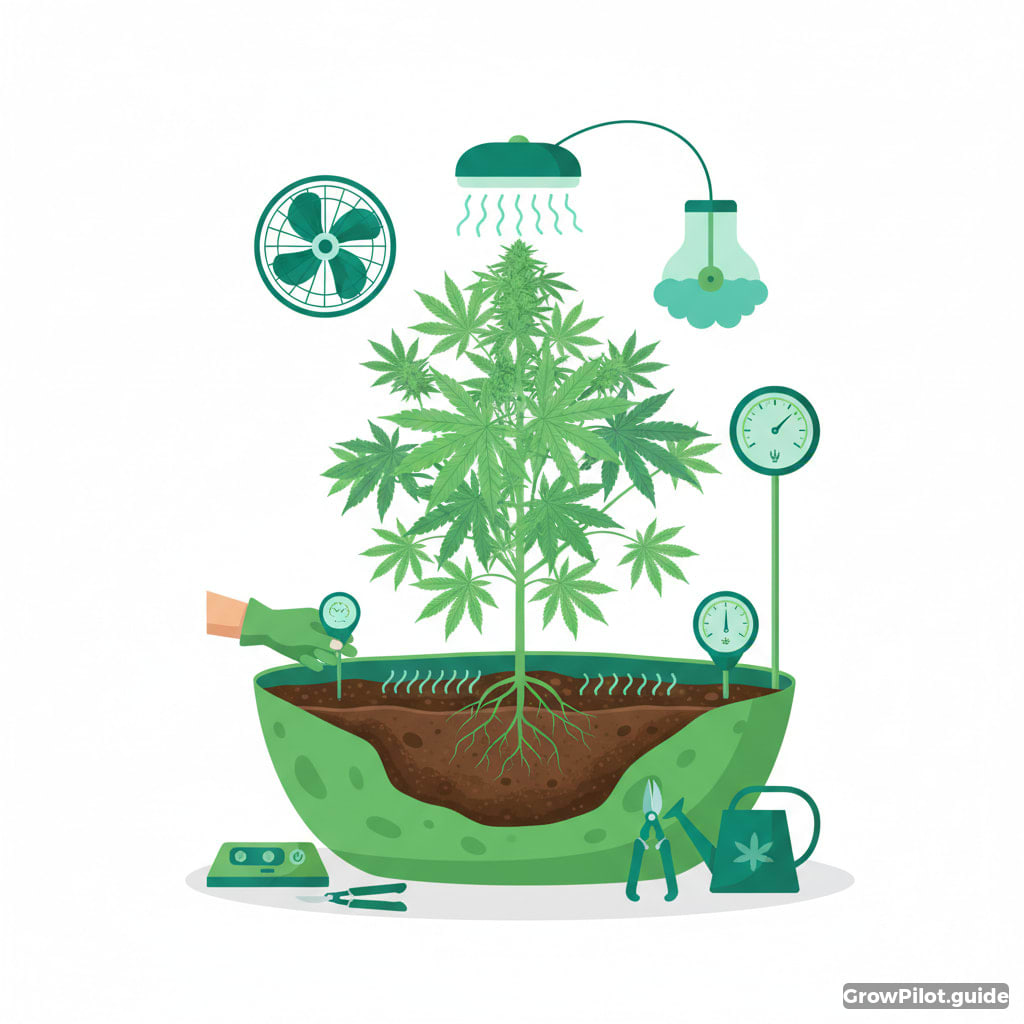
Learn how to recognize and manage sudden climate deviations in indoor soil cultivation to effectively compensate for temperature and humidity fluctuations.
## Introduction
The indoor climate plays a central role in indoor soil cultivation. Unlike hydroponic systems, soil provides a natural buffer for nutrients, but not always for sudden climate fluctuations. In particular, unexpected changes in temperature and humidity can increase plant stress. This guide sheds light on how you as a grower can recognize these dynamics and compensate for them with targeted measures.
## Recognizing climate dynamics
Precise monitoring of the indoor climate is essential. Use reliable sensors placed at plant height and near the soil surface to detect relevant fluctuations at an early stage. Pay attention:
- **Sudden drops or rises in temperature:** Although the earth's thermal mass mitigates small fluctuations, extreme changes can still affect microclimate protection.
- Changes in humidity profile:** Changes in relative humidity, especially in conjunction with temperature changes, can indicate an unstable climate. Continuous monitoring using a hygrostat and thermometer is therefore essential.
- Air circulation patterns:** Even if good ventilation is already known as a general measure, analyzing the air flow helps to identify hotspots or cold zones in the grow room.
## Active measures for stabilization
If fluctuations are detected, coordinated control management is required. The aim is to stabilize the indoor climate in harmony with the earth's natural buffer functions.
### Temperature regulation
- Use buffers:** The thermal mass of the earth helps to mitigate short-term temperature peaks. Nevertheless, a mechanical system (e.g. targeted heating or cooling devices) should be activated in the event of extreme deviations.
- Room-to-ground correlation:** Monitor not only the air temperature, but also the ground temperature. Soil that is too cold can inhibit root activity even though the air temperature appears to be optimal.
### Moisture management
- Moisture adjustment:** Use dehumidifiers or humidifiers for localized humidity peaks. Uniform distribution is particularly important near the floor area to prevent mold growth.
- Vapor Pressure Deficit (VPD) monitoring:** Although VPD is often used to control temperature and humidity together, this metric also helps to better understand the interaction in sudden scenarios. A short-term deviation can indicate an urgent need for action in climate control.
### Ventilation and air exchange
- Flexible systems:** Use systems that adapt dynamically to the environment. Variably controllable fans and a hybrid supply and exhaust air system enable continuous adaptation to changing climate data.
- Air circulation checks:** Regularly check the functionality of the exhaust air systems. In earthworks, stagnant air has a negative effect on the microclimate, especially in combination with sudden temperature changes.
## Emergency management and protocols
Despite all precautionary measures, unexpected system failures or extreme environmental influences can occur. Clearly defined emergency protocols are crucial here:
- **Alerting systems:** Integrate smart monitoring systems that raise the alarm in the event of critical deviations from preset threshold values. Ideally, these should provide information both acoustically and via mobile apps.
- Manual interventions:** Have emergency plans ready to take short-term countermeasures through manual ventilation or heating interventions. Document all interventions to better understand and minimize future failures.
- Recovery strategy:** After drastic climate deviations, it is advisable to conserve the earth's atmospheric buffer. Check soil temperatures and moisture levels to ensure there are no after-effects on root growth.
## Conclusion
Controlling sudden climate deviations in indoor soil cultivation requires a combination of precise sensor technology, flexible control strategies and clearly defined emergency protocols. While the earth's natural buffer can cushion certain fluctuations, extreme changes must be actively corrected. A holistic approach that continuously monitors temperature, humidity and air circulation ensures that your plants can grow under optimal conditions even in stressful situations. Remember that regular maintenance of the technology and good documentation of the measures contribute to climate stability in the long term and thus ensure a sustainable yield.
## Pro Tips
- Position sensors close to the plant crown and on the ground.
- Use smart systems for real-time monitoring.
- Create a detailed emergency plan.
- Check all mechanical systems regularly.
- Document climate deviations and response measures.
🌿 More Growing Knowledge & AI Grow Help
GrowPilot.guide is the cannabis grow tracker and weed cultivation app with smart plant analysis, indoor cannabis growing guide, grow diary, community, cups and autoflower grow tracker for growers worldwide.
Open GrowPilot.guide App →