Fungicides in cannabis cultivation: application and selection
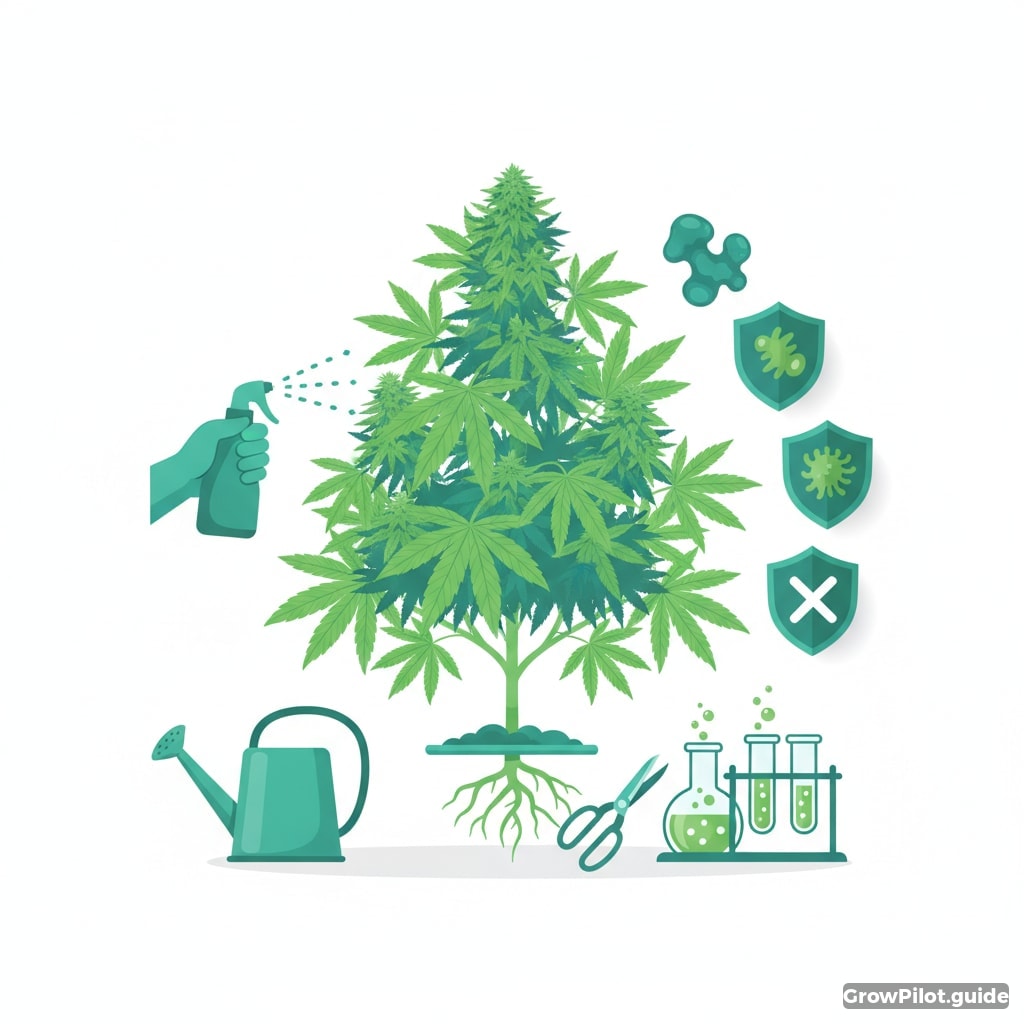
In this guide, you will learn how to use fungicides safely and effectively in cannabis cultivation to combat and prevent fungal diseases.
## Introduction
Fungal diseases pose a serious threat to cannabis cultivation. The most common diseases include powdery mildew, botrytis (gray mold) and root rot. Fungicides are chemical or biological agents that are used to combat fungal infections. In this guide, you will learn how to select and apply fungicides correctly to maintain healthy plants.
#1 Selecting a fungicide
Choosing the right fungicide is crucial. There are different types of fungicides that target different types of fungi:
- **contact fungicides**: These work by killing the fungal spores that are attached to the plant surface. They must be applied directly to the affected areas.
- **Systemic fungicides**: These are absorbed by the plant and work from the inside out. They are often more effective when the infection is already advanced.
- Biological fungicides**: These contain natural microorganisms or their products that fight harmful fungi. They are often more environmentally friendly and less harmful to beneficial organisms.
## 2 Prepare for application
Before you start applying a fungicide, you should consider the following steps:
- **Wear protective clothing**: Gloves, respirator and goggles are important to protect yourself from chemicals.
- **Determine target area**: Check plants thoroughly for symptoms of fungal disease, such as discolored leaves or moldy spots.
- **Check weather conditions**: Do not apply fungicides in direct sunlight or rain as this may reduce effectiveness.
## 3. Apply fungicide
Correct application is crucial for success:
- **Note mixing ratio**: Read the instructions on the fungicide label carefully and follow the recommended mixing ratios.
- **Apply evenly**: Use a spray bottle or sprayer to apply the fungicide evenly to the affected plants. Pay particular attention to the undersides of the leaves, where fungal spores often hide.
- Repeat intervals**: Many fungicides require multiple applications over a period of time. Follow the recommendations on the product label.
## 4. Carry out aftercare
After application, it is important to continue to monitor the plants:
- **monitor symptoms**: Watch for symptoms to diminish or worsen. If problems persist, a change of fungicide may be necessary.
- **Optimize environmental conditions**: Fungi thrive in humid environments. Ensure good ventilation and adequate humidity to prevent future infections.
- Cleanliness in the grow room**: Keep the grow room clean to prevent the spread of fungal spores. Remove dead leaves and plant debris immediately.
## Conclusion
Applying fungicides can be an effective way to combat fungal diseases in cannabis cultivation. Choose the right product, prepare the application carefully and pay attention to the health of your plants. With the right care and prevention, you can grow healthy, vigorous plants.
## Pro Tips
- Choose biological fungicides for environmentally friendly options.
- Pay attention to the correct dosage to avoid overdosing.
- Avoid overwatering to prevent root rot.
- Keep the humidity in the growing room under control.
- Check regularly for the first signs of fungal diseases.
🌿 More Growing Knowledge & AI Grow Help
GrowPilot.guide is the cannabis grow tracker and weed cultivation app with smart plant analysis, indoor cannabis growing guide, grow diary, community, cups and autoflower grow tracker for growers worldwide.
Open GrowPilot.guide App →