Runtz: Genetics, candy terpenes and sensitive phenotypes

Runtz shaped the modern candy wave, but is often genetically inconsistent. The article explains origin, growth, flowering, terpenes, effects and typical grow traps.
# Runtz: Genetics, candy terpenes and sensitive phenotypes
Runtz is one of the strain names that have gone from being a trendy term to a global reference for sweet and fruity cannabis genetics in just a few years. This is precisely why it is worth taking a sober look. As with other highly sought-after US strains, the name on the market does not always stand for clearly standardized genetics. However, archive data, breeders' descriptions, seed bank catalogs and grow reports point to a relatively consistent core: Runtz is usually described as a cross between Zkittlez and Gelato, i.e. as a combination of two already strongly aromatic and resin-rich lines.
The strain is of particular interest to growers because it often exhibits a compact to medium vigorous growth profile, conspicuous trichome production and a distinctly candy-fruity terpene profile. At the same time, many growers report that Runtz is not always as fault-tolerant as the hype suggests. It often reacts more sensitively to nutrition, climate and ripening time than robust classics.
Where does Runtz come from genetically?
Historically, Runtz is usually associated with US breeding work from California. The combination Zkittlez x Gelato appears repeatedly in breeders' data and variety archives. This parentage also matches the characteristics described by many growers:
- from Zkittlez often come the sweet-fruity, candy-like aromas
- from Gelato often rich resin, dense flowers and a creamy undertone
- both parent lines contribute to a strong phenotype dispersion
In practice, this means that anyone growing Runtz should rely less on advertising images and more on reliable information about the respective line, generation and selection.
How does Runtz typically grow?
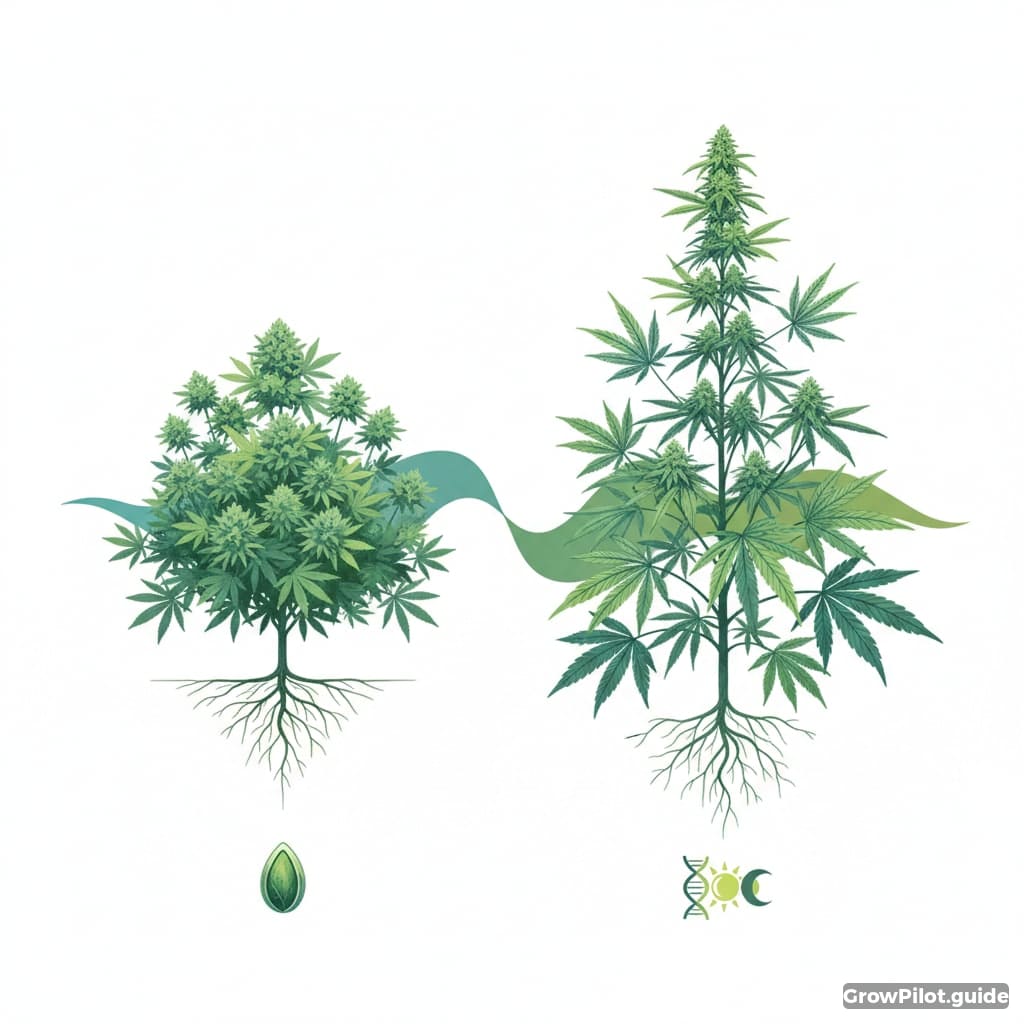
In grow reports, Runtz is usually described as a medium-sized hybrid. Indoors, it often remains easy to control, but depending on the phenotype, shows a moderate to sometimes significant stretch in early flowering. It is typically a plant with relatively narrow to medium internodal spacing, solid lateral branching and a dense flower structure.
Growth profile
- Indoor height: often around 80 to 140 cm, depending on pot size, vegetation period and training
- Outdoor height: often 150 to 220 cm, in long seasons even higher
- Structure:** bushy to medium-open, with strong side shoots
- Stretch:** usually around 1.5 to 2-fold after the flowering transition, individual phenotypes above this
What flowering time and yields are realistic?
Seedbanks and grow archives usually quote a flowering time of 8 to 10 weeks for photoperiodic Runtz lines. In practice, many phenotypes tend to end up in the 9 to 10 weeks range if flavor development and full maturation are a priority. Harvests that are too early are more often associated in reports with a flatter profile and less differentiated terpene expression.
Yield
Runtz is not considered a high yielding variety in every expression. Realistic expectations make more sense than catalog values.
- Indoor: often around 350 to 500 g/m² under good conditions
- Outdoor:** often around 400 to 700 g per plant, even more with a large root area and a long season
- Difficulty:** medium, sometimes rather advanced
Why does Runtz smell so conspicuously sweet?
The typical Runtz profile is often described in reports as candy-like, tropical, creamy and fruity. This is not due to a single aroma molecule, but the interaction of several terpenes and other volatile plant substances. Manufacturer information and laboratory profiles of individual batches often show increased levels of:
- limonene for citrusy, sweet-fresh notes
- Caryophyllene** for spicier, slightly peppery depth
- Linalool** for floral, soft accents
- humulene and partly myrcene as an earthy or herbal base
How do growers describe the effects?
Effect descriptions are always subjective and depend on chemotype, dose, tolerance and form of consumption. Nevertheless, user reports across different archives show some recurring patterns. Runtz is often described as:
- euphoric and mood-boosting at the beginning
- then often physically relaxing
- in some phenotypes mentally focused, in others rather heavy and calm
- in higher quantities sometimes significantly more sedating
Who is Runtz suitable for when growing?
Runtz is not automatically a beginner's strain, even if it often appears uncomplicated on social media. Those who already have a feel for the climate, nutrient management and harvest window will usually get on better.
Suitability according to experience
- Beginners:** only suitable to a limited extent if environmental parameters are easy to control
- Advanced: well suited, especially for quality focus and phenotype selection
- Experts: interesting for selection for aroma, color and resin content
Which grow tips are particularly important for Runtz?
Keep the climate clean
Runtz usually benefits from moderate temperatures and stable humidity during vegetation. In late flowering, a drier, well-moved microclimate is particularly important to limit the risk of mold in dense buds.
- Vegetation often good at around 24 to 28 °C
- early flowering with controlled humidity
- late flowering rather drier, with good air circulation in the canopy
Do not fertilize too heavily too early
Many reports describe Runtz as a line that can react sensitively to over-fertilization, especially with nitrogen. Dark foliage, burnt tips and slowed flower development are typical warning signs.
- Increase nutrients gradually
- Adjust EC not only according to the schedule, but also according to plant reaction
- Reduce nitrogen during late flowering
Training targeted, but not brutal
Depending on the phenotype, Runtz responds well to:
- Topping in the vegetation
- LST for a more even light distribution
- selective defoliation when the canopy becomes too dense
- SCROG when a flat, efficient canopy is desired
Judge maturity not only by the calendar
As many Runtz lines develop their full aroma profile towards the end, it is worth checking the trichome maturity and the overall impression of the flowers. If you only harvest after the minimum flowering time, you are often giving away quality.
Conclusion: Why does Runtz remain relevant for growers?
Runtz is more than just a hype name, but it is also not a standardized clone. The variety or variety family is exemplary for modern US hybrids, in which aroma, resin and bag appeal are strongly emphasized. It is particularly interesting for growers looking for a sweet and fruity profile, good trichome formation and phenotypes worthy of selection.
However, anyone growing Runtz should remain realistic: medium yields, sometimes sensitive nutrition, dense flowers and variable phenotypes are more likely than the perfect social media plant from every seed. It is precisely with this sober expectation that the genetics can be classified most sensibly.